
エアロジニー — あなたのインテリジェントな副操縦士。

現在のトレンド
Categories
FAA Launches Program to Introduce Air Taxis in Washington State
FAA Launches Program to Introduce Air Taxis in Washington State
Advancing Urban Air Mobility Through Federal and State Collaboration
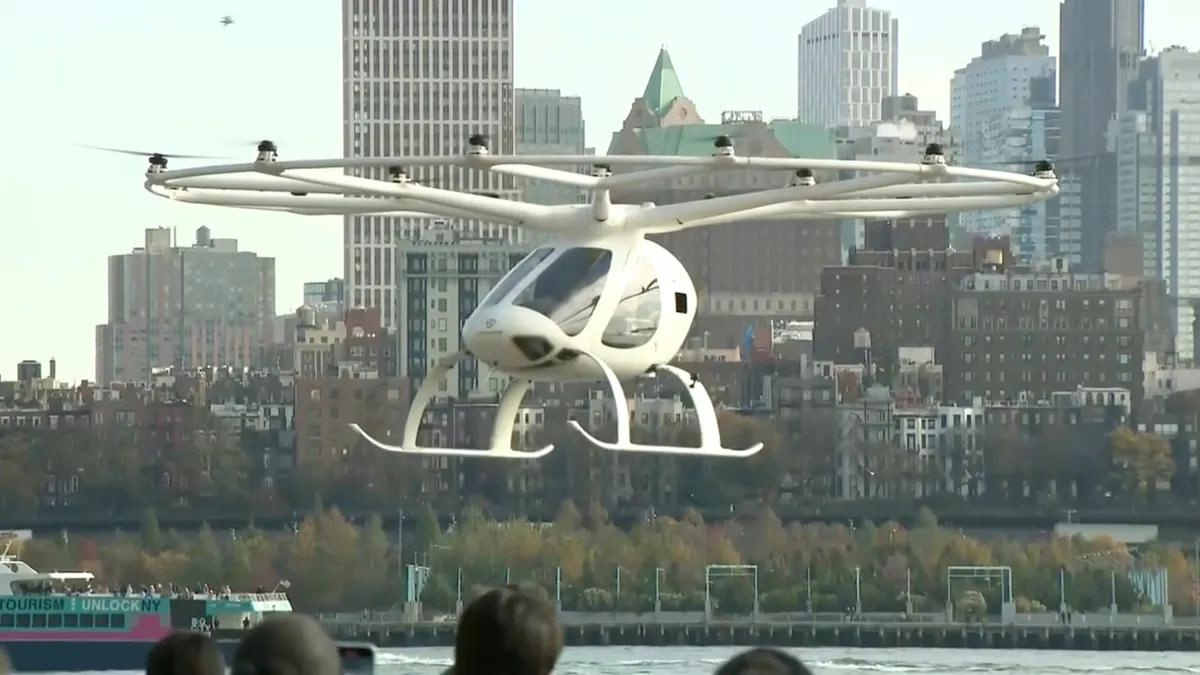
Washington State is poised to become a key player in the emerging air taxi industry as it joins a Federal Aviation Administration (FAA) pilot program aimed at accelerating the development and certification of electric vertical take-off and landing aircraft (eVTOLs). This initiative, involving 26 states, seeks to facilitate testing and data collection for these innovative aircraft as early as this summer. Unlike conventional airplanes, air taxis are compact vehicles designed primarily for short urban trips, typically accommodating fewer than ten passengers. Many models feature vertical take-off and landing capabilities similar to helicopters and are powered by rechargeable batteries rather than traditional jet fuel. While most eVTOLs currently require pilots, some companies, including Boeing subsidiary Wisk Aero, are pioneering autonomous versions.
Although Washington has yet to establish concrete plans for operational air taxi services, the Washington State Department of Transportation (WSDOT) remains engaged and optimistic. David Ison, WSDOT’s emerging aviation technology and airport land use planner, acknowledged the current uncertainty surrounding deployment timelines, noting the limited availability of aircraft and the intense competition among states eager to host early demonstrations. WSDOT is actively negotiating with manufacturers to position Washington as a favorable location for initial trials and showcases.
The FAA’s Pilot Program and Industry Challenges
The FAA’s pilot program, initiated following an executive order issued last year, aims to create a comprehensive testing environment for eVTOLs by fostering collaboration between state transportation agencies and aircraft manufacturers. The program explores a range of potential applications beyond urban air taxis, including cargo delivery and emergency medical response. Washington’s participation is part of a multistate effort led by Pennsylvania’s Department of Transportation, in partnership with Vermont-based Beta Technologies and Virginia-based Electra.aero. While the program does not provide direct funding, it offers states the opportunity to host demonstrations and influence the development of urban air mobility infrastructure and regulations.
The aerospace sector’s enthusiasm for eVTOLs is tempered by significant challenges. Progress has been uneven, with some startups facing financial difficulties and others falling short of development milestones. Regulatory complexities, safety concerns, and technological hurdles continue to impede rapid advancement. Nonetheless, the market has reacted positively to the FAA’s initiative, with shares of prominent air taxi developers such as Joby Aviation and Archer Aviation experiencing notable gains. In response, industry players are accelerating testing efforts and forging strategic partnerships, exemplified by Archer Aviation’s collaboration with Nvidia to incorporate artificial intelligence into their aircraft systems.
As the FAA’s program progresses, Washington’s involvement may serve as a foundation for future air taxi demonstrations and, ultimately, passenger services. While the timeline for commercial operations remains uncertain, the state is actively positioning itself at the forefront of this transformative technology.
Comments
LEVEL Suspends San Francisco Flights Due to Engine Shortage
China Conducts First Flight Test of Megawatt Hydrogen Turboprop Engine
Oklahoma’s Aerospace Industry Expands and Its Impact on the State Economy
Archer Aviation Confronts Setbacks Amid Declining Air Taxi Interest

FAA and EASA Mandates to Influence Flight Line Testing Equipment Market Through 2035
Willis Lease Operates as a Leveraged Spread Business with Moderate Returns
Chinese Team Develops First Flight Control Software for Bamboo Drones
Government Moves Forward with Boeing Purchase, Considers Airbus Leasing
SkyHope Appoints Aviation Industry Leader to Board
The Challenges of Certifying Autonomous Aircraft
