
エアロジニー — あなたのインテリジェントな副操縦士。

現在のトレンド
Categories
FAA and EASA Mandates to Influence Flight Line Testing Equipment Market Through 2035

FAA and EASA Mandates to Influence Flight Line Testing Equipment Market Through 2035
The global Flight Line Testing Equipment market is poised for significant transformation through 2035, driven by a recovering commercial aviation sector, accelerating military modernization, and increasingly stringent regulatory mandates from the Federal Aviation Administration (FAA) and the European Union Aviation Safety Agency (EASA). As the industry moves into 2026, demand fundamentals are broadening, procurement practices are becoming more disciplined, and supply chains are diversifying on a regional basis.
Market Evolution and Regulatory Impact
The market is shifting from a traditional hardware-centric model toward an integrated, data-driven service paradigm. This transition is fueled by the imperative to maintain operational readiness and reduce aircraft turnaround times amid projections that global air traffic will surpass pre-pandemic levels and continue to grow. The sector is bifurcating into two primary segments: a high-volume market for standardized, cost-effective test sets that support frequent maintenance, repair, and overhaul (MRO) operations, and a premium segment focused on advanced, connected diagnostic systems designed for next-generation aircraft.
Regulatory pressures from the FAA and EASA are emerging as persistent demand drivers. New mandates requiring enhanced testing protocols compel manufacturers and operators to upgrade existing equipment, resulting in increased compliance costs and necessitating significant technological adaptation. While these requirements are expected to stimulate demand for advanced testing solutions, they also introduce challenges related to budget constraints and the pace of innovation.
In response, equipment suppliers are intensifying competition by accelerating innovation, investing in advanced testing technologies, and exploring collaborative approaches to share compliance burdens. Airlines and third-party MRO providers, facing cost pressures, are consolidating purchasing power through procurement consortia, further steering the market toward efficient and cost-effective solutions.
Growth Drivers and Market Challenges
The forecast period is expected to be characterized by steady, technology-driven growth anchored in global fleet expansion and heightened maintenance intensity. Commercial aviation, the largest segment, will see demand closely linked to the growth of narrow-body fleets and the retirement of older, less efficient aircraft, which require more frequent and complex testing. Military aviation demand will be shaped by specific modernization programs and the integration of sophisticated avionics, necessitating specialized testing equipment.
A notable trend is the increasing digitization of maintenance processes, which elevates the importance of testing equipment capable of seamless integration with airline health monitoring systems. This development creates a premium for connectivity and software capabilities, even as demand persists for reliable, portable test sets that fulfill basic operational requirements.
However, the market faces significant constraints. Compliance with evolving FAA and EASA mandates raises costs for both manufacturers and operators, while supply chain resilience and the availability of skilled technicians remain critical challenges. The baseline forecast assumes no major global economic disruptions and anticipates a gradual resolution of supply chain bottlenecks affecting critical electronic components.
Profit pools are expected to shift gradually from pure hardware sales toward integrated service contracts that encompass calibration, software updates, and technical support. The market’s trajectory will not be uniform, with regional divergence and sector-specific cycles influencing growth patterns.
In conclusion, the Flight Line Testing Equipment market is set for disciplined, innovation-driven growth through 2035, as regulatory mandates, technological advancement, and evolving procurement strategies collectively redefine the competitive landscape.

Oklahoma’s Aerospace Industry Expands and Its Impact on the State Economy

Archer Aviation Confronts Setbacks Amid Declining Air Taxi Interest
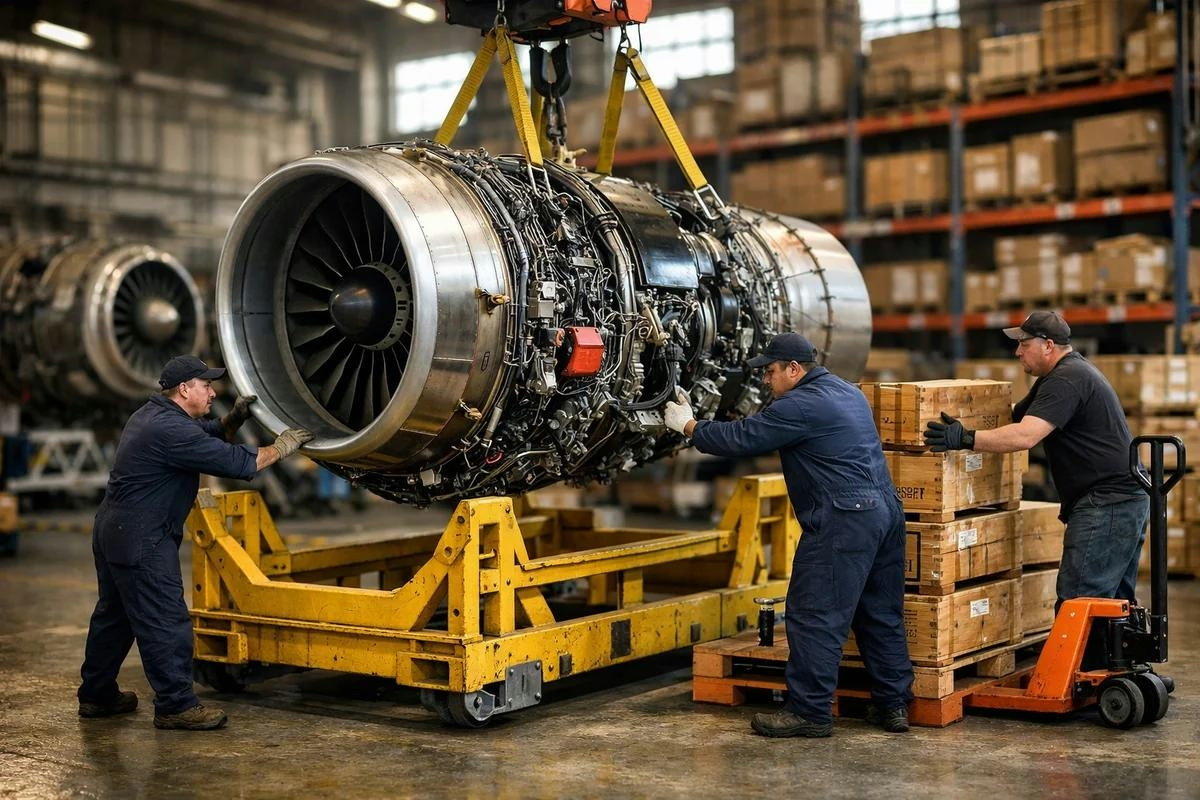
Willis Lease Operates as a Leveraged Spread Business with Moderate Returns

Chinese Team Develops First Flight Control Software for Bamboo Drones
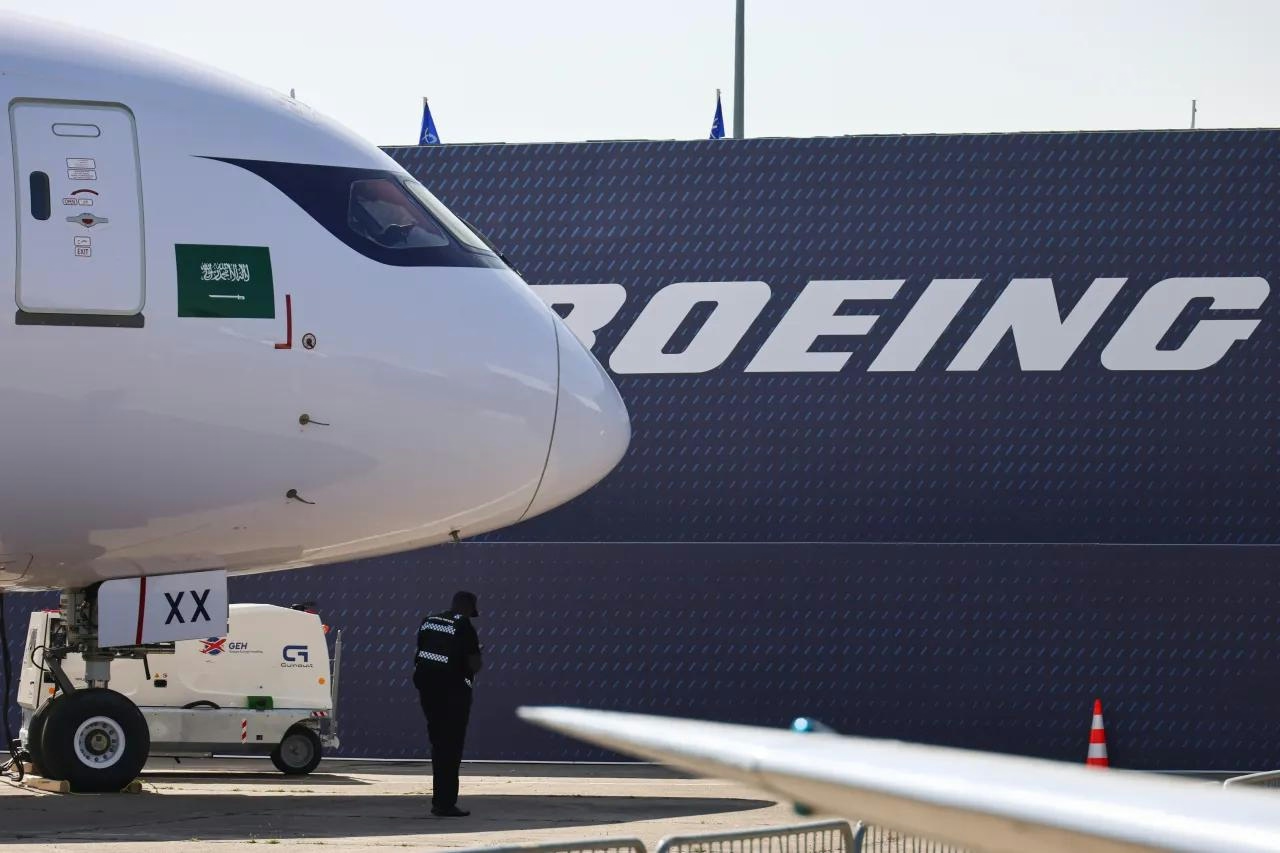
Government Moves Forward with Boeing Purchase, Considers Airbus Leasing

SkyHope Appoints Aviation Industry Leader to Board
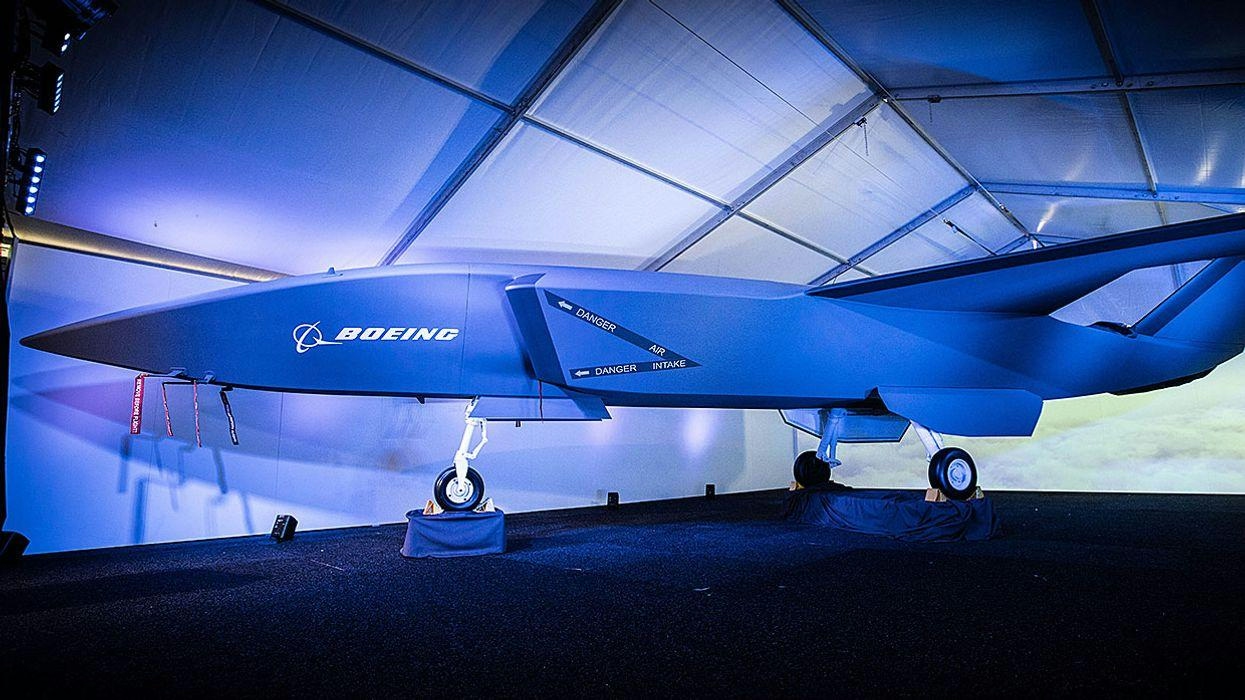
The Challenges of Certifying Autonomous Aircraft
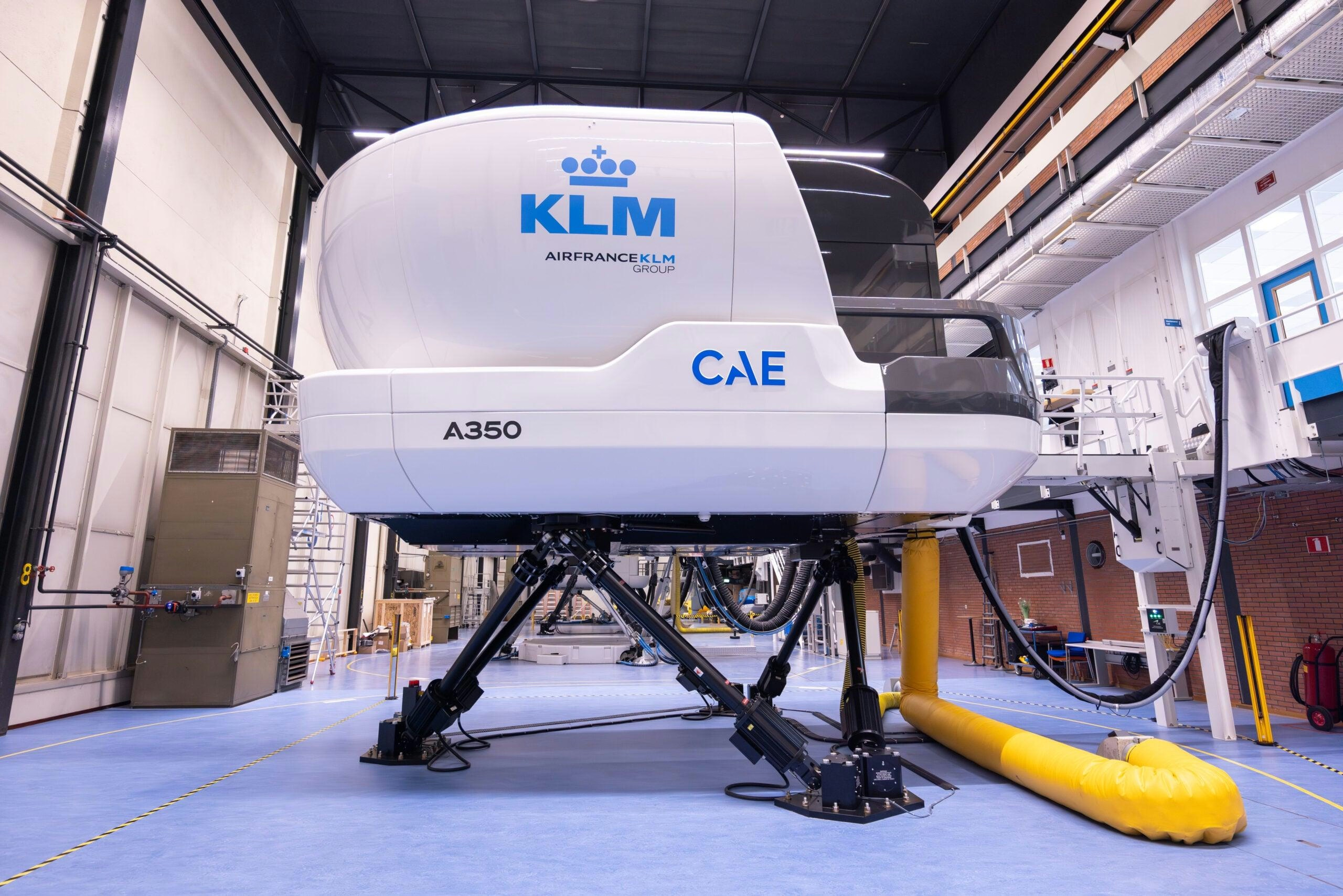
KLM to Receive First Airbus A350, Announces Initial Routes

Saxon Air Receives Clean and Green Energy Innovation Award
How BEB Tax Policies Impact Airlines’ International Leasing Contracts
