
エアロジニー — あなたのインテリジェントな副操縦士。

現在のトレンド
Categories
Crews Contain Brush Fire Triggered by Plane Engine Malfunction
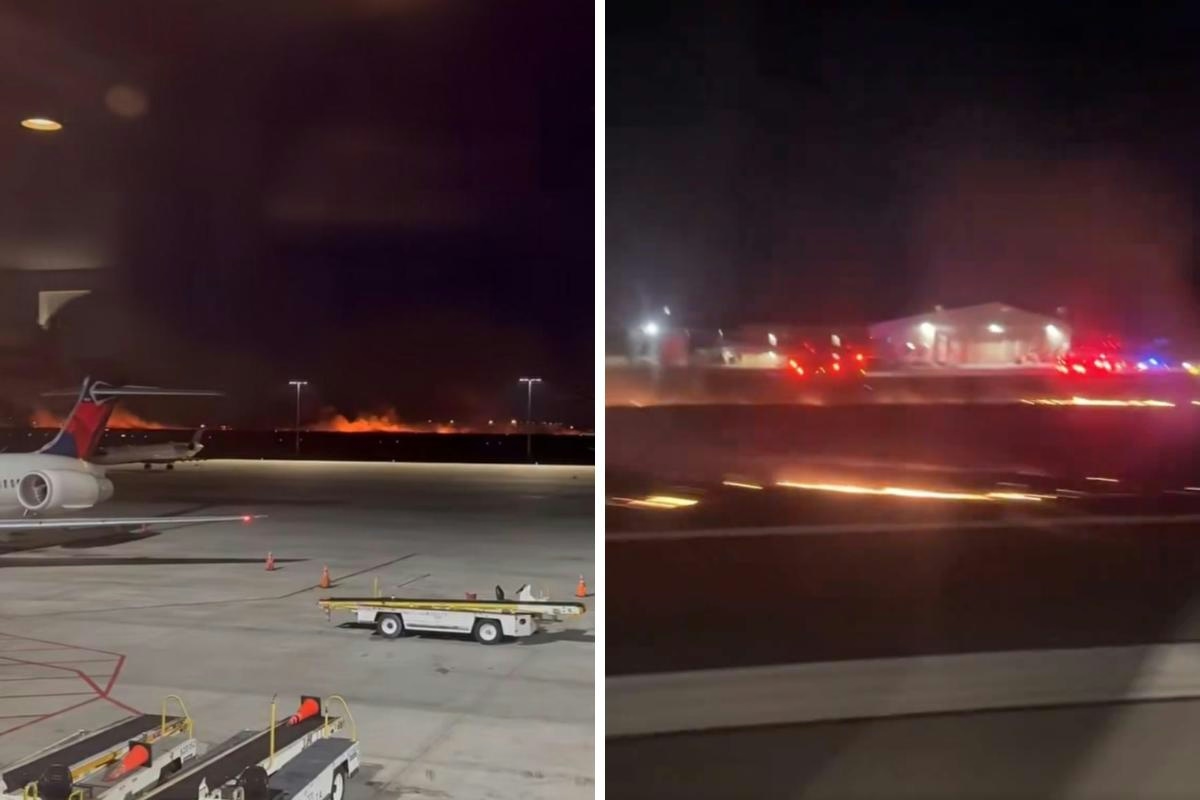
Crews Contain Brush Fire Triggered by Plane Engine Malfunction
A brush fire ignited by a malfunctioning aircraft engine was swiftly contained on Sunday following an emergency involving Delta Flight 1067. The flight, departing from Savannah to Atlanta, experienced an engine failure during takeoff at Savannah Hilton Head International Airport, prompting a rapid and coordinated multi-agency response to secure the runway and control the spreading fire.
Emergency Response and Fire Containment
The 165th Airlift Wing Fire Department, the airport’s primary fire response unit, was initially dispatched to address the in-flight emergency. Upon arrival, crews encountered a rapidly expanding grass fire driven by strong winds near the runway. Master Sergeant Steven Tharrington, Fire Installation Chief for the 165th Airlift Wing, described the situation as unusual, noting the challenge of managing both an in-flight emergency and a large open-area fire simultaneously. The aircraft, which had initially not planned to return to Savannah, reversed course and required the runway to be cleared promptly.
The complexity of the incident necessitated assistance from additional fire departments from Pooler, Savannah, and Garden City, alongside Chatham EMS. Despite the high winds exacerbating the fire’s spread, the combined efforts of the responding teams successfully contained the blaze within a short timeframe. Tharrington emphasized the scale of the fire and the critical role of interagency cooperation in bringing the situation under control.
Safe Landing and Passenger Response
As Flight 1067 returned to Savannah Hilton Head International Airport, fire crews remained on standby to ensure the safety of passengers and crew during landing. The aircraft touched down safely, and after a brief delay to allow the plane’s hot tires to cool, passengers were able to disembark at the gate without incident. No injuries were reported.
Passengers praised the professionalism and composure of the flight crew throughout the emergency. One traveler remarked on the crew’s ability to maintain calm and reassure everyone on board during the ordeal.
Broader Context and Ongoing Investigation
This incident echoes similar events at other airports, such as a recent JetBlue engine failure at Newark Airport that caused temporary disruptions. Such occurrences highlight the critical importance of robust emergency response protocols and the expertise of both pilots and first responders in managing complex emergencies involving multiple hazards.
Authorities continue to investigate the precise cause of the engine malfunction. Meanwhile, officials have commended the coordinated response that ensured passenger safety and minimized operational disruption at the airport.

Oklahoma’s Aerospace Industry Expands and Its Impact on the State Economy
Archer Aviation Confronts Setbacks Amid Declining Air Taxi Interest

FAA and EASA Mandates to Influence Flight Line Testing Equipment Market Through 2035
Willis Lease Operates as a Leveraged Spread Business with Moderate Returns

Chinese Team Develops First Flight Control Software for Bamboo Drones
Government Moves Forward with Boeing Purchase, Considers Airbus Leasing
SkyHope Appoints Aviation Industry Leader to Board
The Challenges of Certifying Autonomous Aircraft

KLM to Receive First Airbus A350, Announces Initial Routes

Saxon Air Receives Clean and Green Energy Innovation Award
