
AeroGenie — 您的智能副驾驶。

热门趋势
Categories
Turkish Airlines Fleet Projected to Reach 450 Aircraft by 2025

Turkish Airlines Fleet Projected to Reach 450 Aircraft by 2025
Once regarded as a secondary player in European aviation, Turkish Airlines has swiftly emerged as a global aviation powerhouse. Headquartered in Istanbul, the carrier now serves more destinations than any other airline worldwide, connecting 352 cities across 131 countries. This remarkable expansion reflects one of the fastest growth trajectories in the industry today.
Fleet Composition and Modernization
Turkish Airlines’ growth is underpinned by a modern and diverse fleet that has evolved significantly over the decades. From operating McDonnell Douglas DC-10s, Airbus A310s, and Boeing 727s in the 1970s and 1980s, the airline now commands nearly 450 aircraft, with hundreds more on order to meet its ambitious 2025 target.
The narrowbody fleet, once composed of older models such as the Avro RJ and Douglas DC-9, has been streamlined to primarily Airbus and Boeing aircraft. Current narrowbody types include Airbus A319-100, A320-200, A321-200, A320neo, and A321neo, alongside Boeing 737-800, 737 MAX 8, 737-900ER, and 737 MAX 9 variants. The airline is actively phasing out older aircraft like the Airbus A319s and A320-200s, which average 14.5 and 16.2 years in service respectively, in favor of newer, more fuel-efficient models such as the A320neo and A321neo. The A321-200, seating 178 passengers in a two-class configuration, remains a key component of the fleet but is gradually being replaced.
The widebody fleet includes Airbus A330-200, A330-300, A350-900, and Boeing 777-300ER and 787-9 aircraft. Turkish Airlines also operates a freighter fleet consisting of Airbus A330-200F and Boeing 777F cargo planes, supporting its growing cargo operations.
Expansion Challenges and Strategic Initiatives
Despite its rapid expansion, Turkish Airlines faces several challenges common to the global aviation sector. Delays in aircraft deliveries, particularly from Boeing due to ongoing production issues, have affected airlines worldwide, including Turkish Airlines. Competitors such as Wizz Air have responded to market uncertainties by reducing orders and postponing deliveries, signaling a cautious industry outlook.
Regulatory developments also pose potential constraints. The Federal Aviation Administration’s plans to reduce air traffic volumes could impact operational capacity for international carriers, including Turkish Airlines, complicating growth prospects.
In response to these challenges, Turkish Airlines is pursuing strategic initiatives to strengthen its market position. The airline recently selected General Electric’s GEnx engines for a new batch of Boeing 787 aircraft, underscoring a commitment to reliable and efficient engine partnerships. Furthermore, its investment in Spain’s Air Europa reflects a broader strategy to expand regionally and diversify its market presence.
As Turkish Airlines advances toward its goal of a 450-aircraft fleet by 2025, its modernization and expansion efforts position it as a formidable competitor on the global stage. However, the airline must carefully navigate supply chain disruptions, regulatory changes, and shifting market dynamics to maintain its growth momentum.
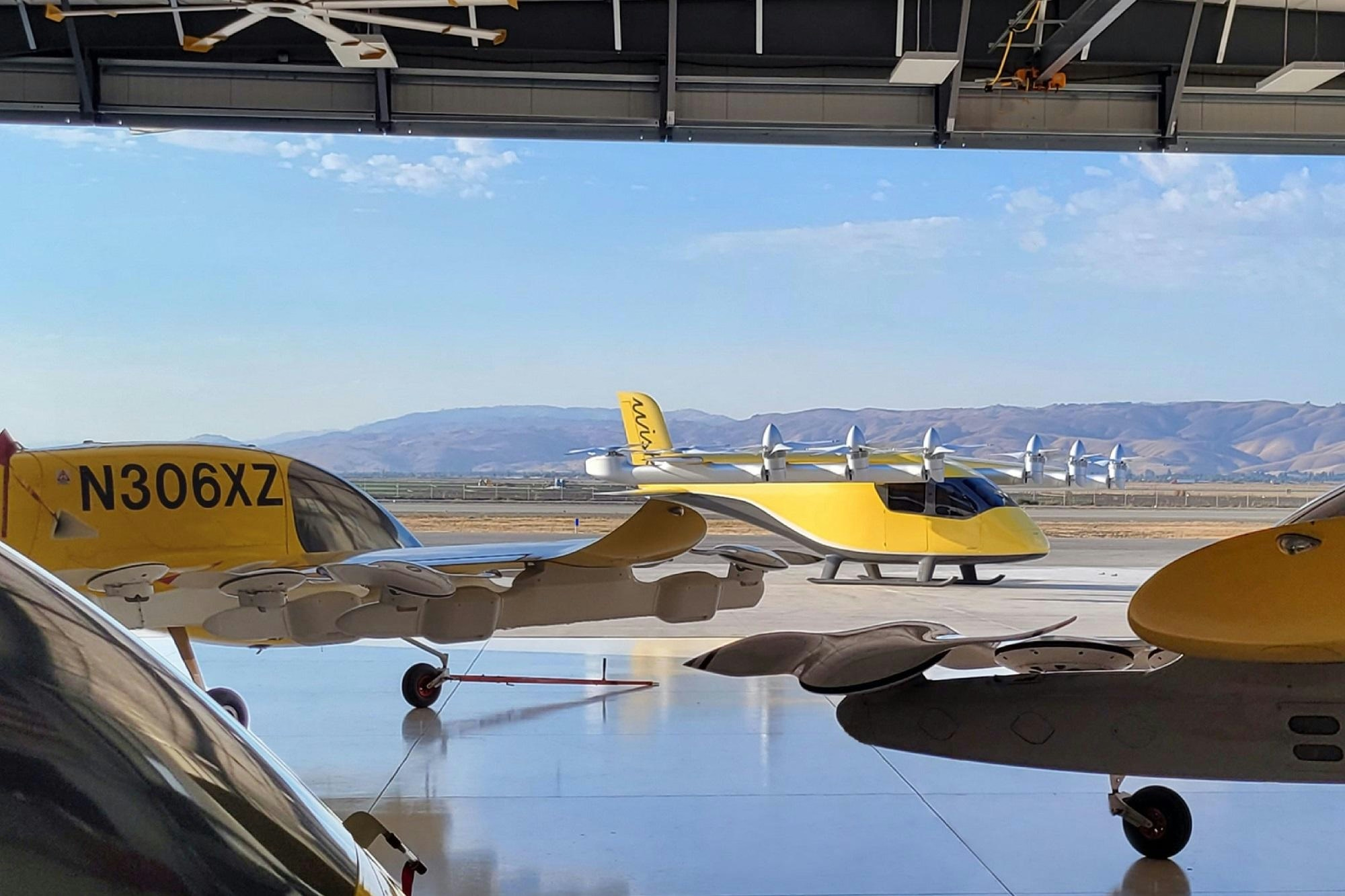
Archer Aviation Confronts Setbacks Amid Declining Air Taxi Interest

Chinese Team Develops First Flight Control Software for Bamboo Drones
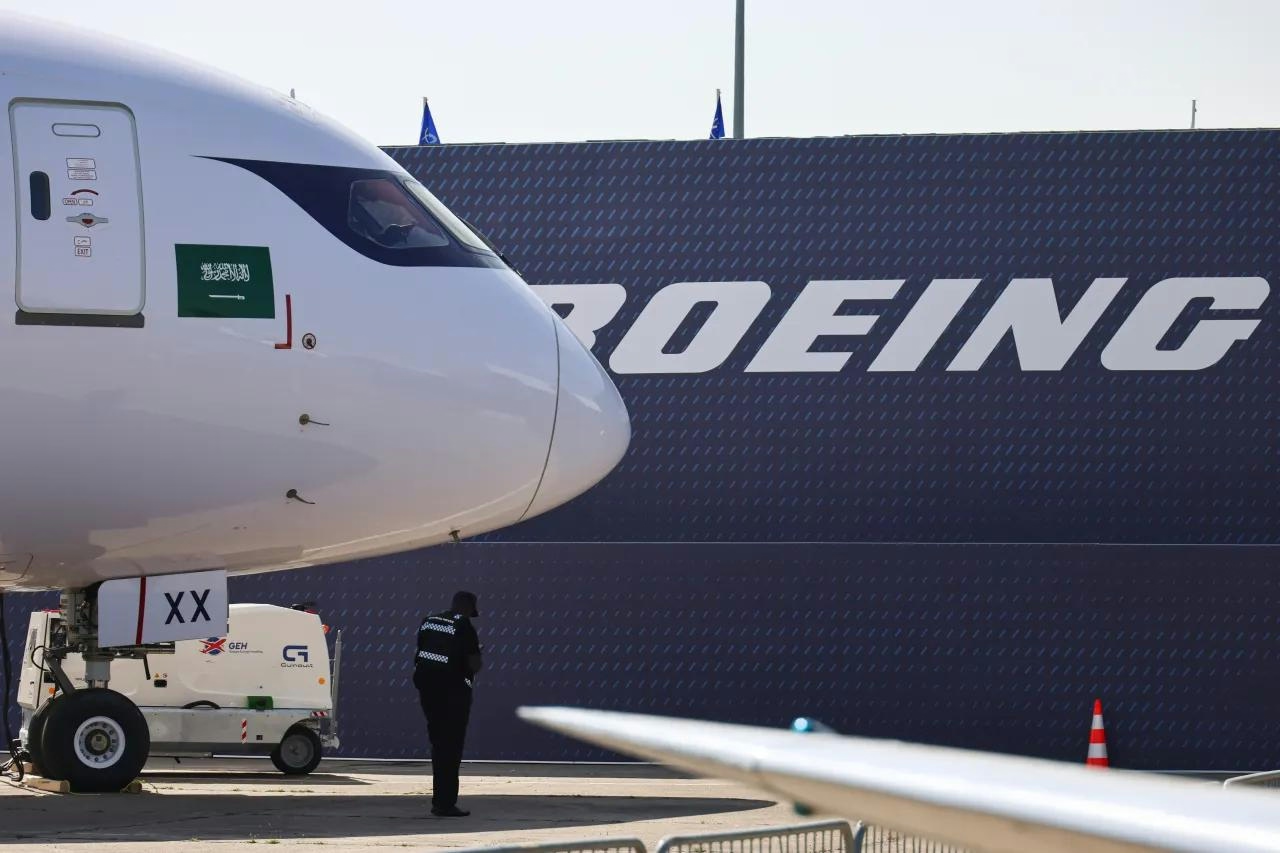
Government Moves Forward with Boeing Purchase, Considers Airbus Leasing
SkyHope Appoints Aviation Industry Leader to Board
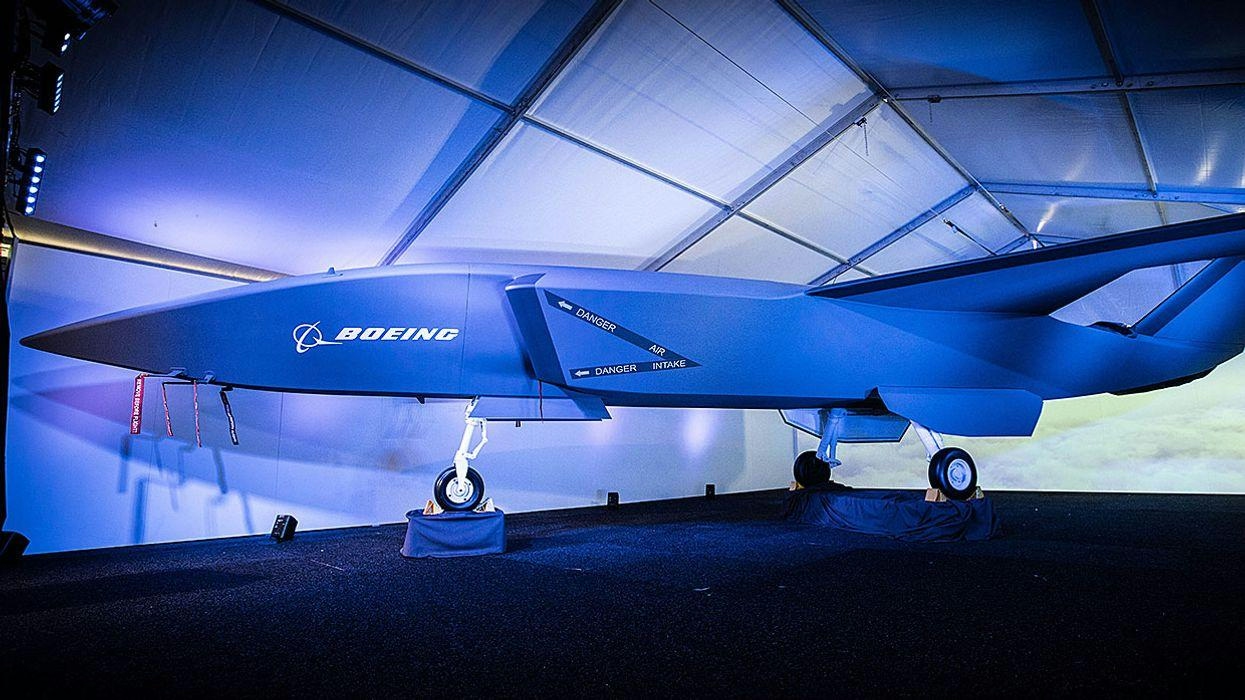
The Challenges of Certifying Autonomous Aircraft
KLM to Receive First Airbus A350, Announces Initial Routes
Saxon Air Receives Clean and Green Energy Innovation Award
How BEB Tax Policies Impact Airlines’ International Leasing Contracts

Indonesia’s Danantara and Mandiri Partner with SMBC to Launch $800 Million Aviation Leasing Fund
South Korea’s SUM Air Places Order for New ATR Aircraft
