
AeroGenie — 您的智能副驾驶。

热门趋势
Categories
The Cost of a Boeing 777X Engine
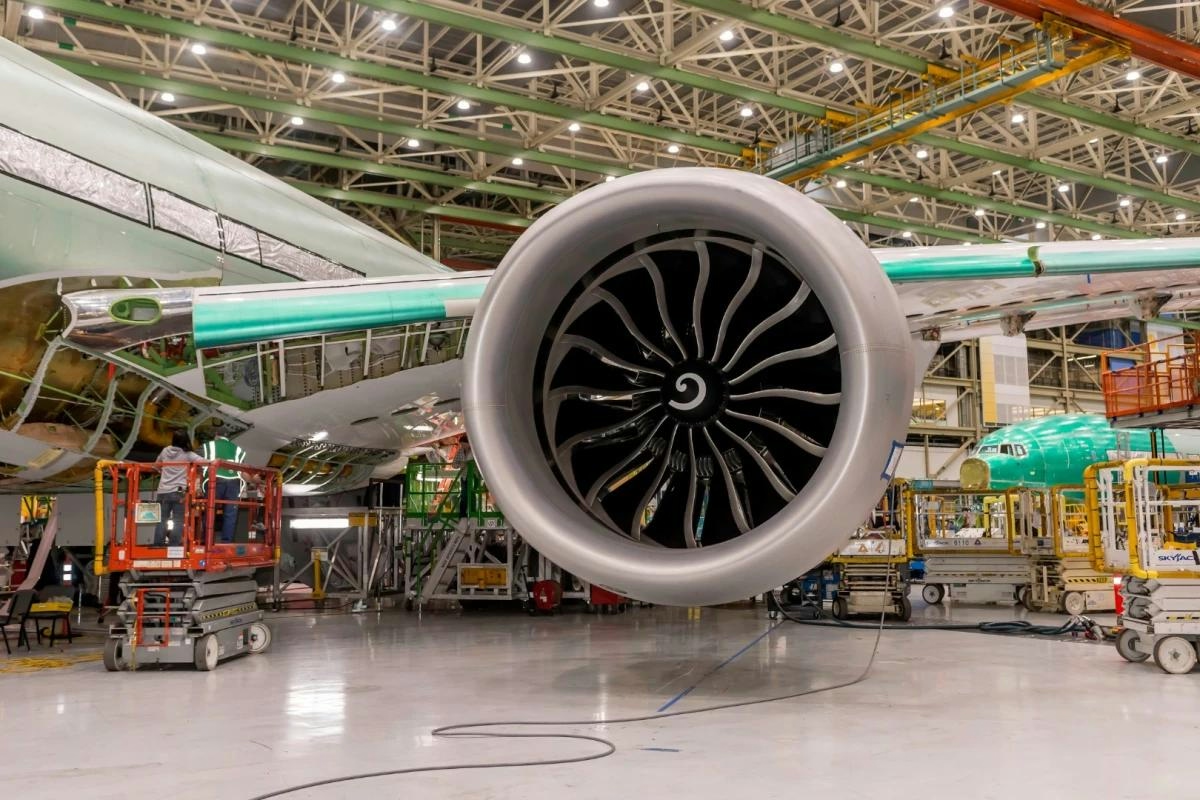
The Cost of a Boeing 777X Engine
Engineering Marvel and Financial Commitment
GE Aerospace’s GE9X engine stands as the largest and most powerful jet engine ever constructed, comprising over 35,000 components and capable of delivering up to 134,300 pounds of thrust. As the exclusive engine for Boeing’s upcoming 777X—the world’s longest passenger jetliner—the GE9X represents a significant technological achievement and a substantial financial commitment for both manufacturers and airlines.
The price of the GE9X engine reflects its advanced engineering. Officially, the list price exceeds $40 million per unit, but actual costs vary considerably depending on factors such as the customer, order volume, and the inclusion of long-term maintenance agreements. For instance, Singapore Airlines’ 2022 order for 22 GE9X engines, which included a 12-year maintenance contract, was valued at $2.8 billion at list price. This followed an earlier 2017 order for 20 Boeing 777X aircraft and 40 GE9X engines, highlighting the scale of investment required for next-generation fleets.
Pricing Variations Among Major Customers
Emirates, the largest customer for the 777X with 270 aircraft on order, reportedly paid approximately $53.3 million per engine in its initial 2013 agreement. This deal, covering 300 engines, was collectively valued at $16 billion, excluding maintenance costs. The airline subsequently committed an additional $16 billion in 2015 for a 12-year maintenance, repair, and overhaul (MRO) contract. Qatar Airways, meanwhile, placed an order in 2015 for 20 GE9X and eight GE90-115B engines, with a combined list price exceeding $1.1 billion, equating to just under $39.3 million per engine. However, these figures often combine engine and service costs, making precise per-unit pricing difficult to ascertain.
This lack of transparency is intentional. GE Aerospace, like many players in the aviation sector, keeps detailed pricing confidential to maintain negotiation leverage and avoid establishing pricing precedents for future contracts. Consequently, official list prices function more as reference points than definitive costs.
Economic Impact and Maintenance Prospects
The cost of the GE9X engine is a critical element in the overall economics of the Boeing 777X program. MTU Aero Engines, a key development partner for the GE9X, anticipates strong demand for maintenance services as the 777X enters commercial service. Although the aircraft’s debut has been delayed until 2027, MTU expects increased deliveries of new engines, including the GE9X, as production rates accelerate.
MTU’s commercial maintenance business has recently been influenced by ongoing challenges with Pratt & Whitney’s GTF engines, which accounted for roughly 40 percent of its maintenance revenue last year. This proportion is expected to remain stable, while demand for servicing GE90 engines—used on earlier Boeing 777 models—continues to grow. The eventual introduction of the 777X and its GE9X engines is projected to further expand MTU’s maintenance portfolio, underscoring the long-term financial importance of these high-value powerplants.
While the exact price of the GE9X remains closely guarded, its central role in powering the 777X and driving future maintenance business highlights its significance to airlines and the broader aerospace industry.

Oklahoma’s Aerospace Industry Expands and Its Impact on the State Economy

Archer Aviation Confronts Setbacks Amid Declining Air Taxi Interest

FAA and EASA Mandates to Influence Flight Line Testing Equipment Market Through 2035
Willis Lease Operates as a Leveraged Spread Business with Moderate Returns

Chinese Team Develops First Flight Control Software for Bamboo Drones
Government Moves Forward with Boeing Purchase, Considers Airbus Leasing

SkyHope Appoints Aviation Industry Leader to Board
The Challenges of Certifying Autonomous Aircraft
KLM to Receive First Airbus A350, Announces Initial Routes

Saxon Air Receives Clean and Green Energy Innovation Award
