
AeroGenie — 您的智能副驾驶。

热门趋势
Categories
Rolls-Royce Pushes Trent 1000 XE to Win Back 787 Customers
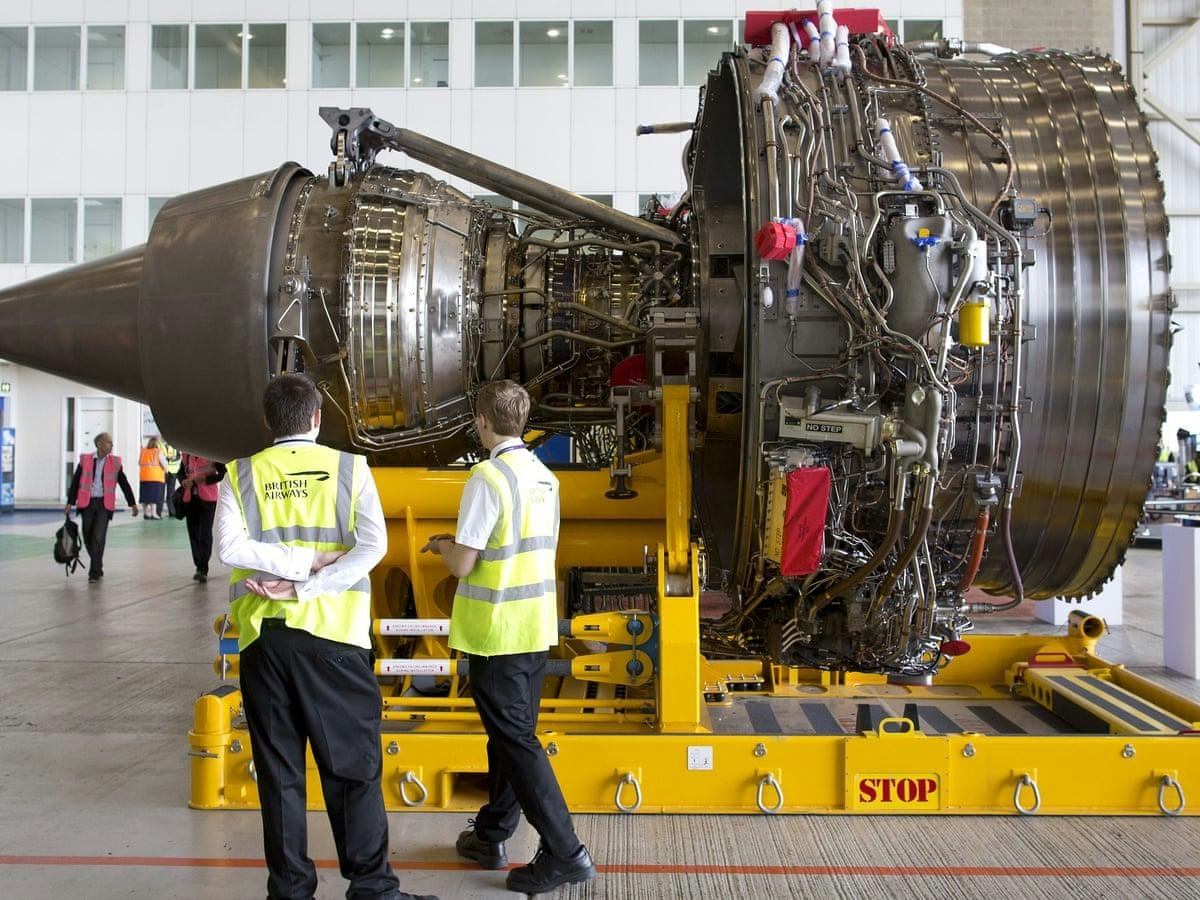
Rolls-Royce Advances Trent 1000 XE to Reclaim 787 Market Share
Rolls-Royce Holdings Plc is intensifying its efforts to regain a stronger foothold in Boeing’s 787 Dreamliner program by actively promoting its upgraded Trent 1000 XE engine. At the Singapore Airshow, Rob Watson, head of civil aerospace at Rolls-Royce, emphasized the company’s commitment to winning back customers and securing new contracts after years of trailing GE Aerospace, whose GEnx-1B engine has dominated the 787 market.
Enhancing Durability and Market Presence
The Trent 1000 XE, which entered production in late 2023, is marketed primarily for its improved durability—a critical factor as Rolls-Royce seeks to restore confidence among airlines. The engine’s recent introduction into Lufthansa’s fleet marks a significant milestone in the company’s campaign to increase its share of the 787 market. Despite this progress, Watson cautioned that it remains too early to determine whether the engine is fully meeting all performance targets.
Historically, Rolls-Royce has held a minority position on the 787, with over 1,200 aircraft in service predominantly powered by GE’s GEnx-1B. The company’s renewed sales push includes targeting carriers such as Malaysia Airlines, aiming to rebuild momentum after losing key customers like British Airways, which opted for GE engines in its latest 787 deliveries.
Broader Durability Initiatives and Industry Challenges
This sales initiative is part of a wider £1 billion program focused on enhancing durability across Rolls-Royce’s largest engine families, including the Trent XWB series that powers Airbus’s A350 widebody jets. Durability issues, particularly with the larger XWB-97 variant, have posed challenges in recent years. Public criticism from Emirates President Tim Clark notably influenced the airline’s decision to forgo orders for Airbus’s largest production aircraft.
Rolls-Royce’s efforts to upgrade the Trent 1000 XE come amid broader industry challenges such as supply chain disruptions and geopolitical uncertainties. The company has defended recent price increases as necessary to maintain competitiveness in this complex environment. Market response has been cautiously optimistic, with Lufthansa’s adoption of the upgraded engine viewed as a positive development. However, GE Aerospace is expected to respond by enhancing its own engine offerings to counter Rolls-Royce’s advances, particularly as the latter invests heavily in improving Trent engine durability.
Strategic Outlook and Future Prospects
Following its exit from the single-aisle market in 2012, Rolls-Royce has concentrated on widebody and business jet segments while exploring potential re-entry into narrowbody aircraft through strategic partnerships. Under CEO Tufan Erginbilgic, the company’s financial performance has improved significantly, with shares nearly quadrupling since early 2024. Rolls-Royce continues to develop its Ultrafan platform, integrating durability-focused technologies into existing Trent engines as it strives to reclaim a competitive position in the widebody engine market.

Chinese Team Develops First Flight Control Software for Bamboo Drones
SkyHope Appoints Aviation Industry Leader to Board
The Challenges of Certifying Autonomous Aircraft
KLM to Receive First Airbus A350, Announces Initial Routes

Saxon Air Receives Clean and Green Energy Innovation Award

How BEB Tax Policies Impact Airlines’ International Leasing Contracts

Indonesia’s Danantara and Mandiri Partner with SMBC to Launch $800 Million Aviation Leasing Fund
South Korea’s SUM Air Places Order for New ATR Aircraft
Benoît Rollier Named Vice President of KLM Engine Service
Azorra Expands Engine Portfolio Through Deal with DAE
