
AeroGenie — 您的智能副驾驶。

热门趋势
Categories
Pratt & Whitney to Invest $200 Million in U.S. Engine Facility Expansion

Pratt & Whitney Commits $200 Million to Expand Columbus Engine Facility
Pratt & Whitney has announced a $200 million investment to expand its engine manufacturing operations in Columbus, Georgia, aiming to increase production capacity in response to growing demand from both commercial and military sectors. The expansion is projected to create 15 new jobs initially, with further employment opportunities expected as the project advances.
Expansion of a Strategic Manufacturing Hub
This investment builds on a recent expansion that added nearly 400 jobs and 81,000 square feet to the Columbus Engine Center. Established in 1984, the Columbus facility encompasses both the Columbus Engine Center and Columbus Forge, which collectively support a broad range of Pratt & Whitney’s commercial and military engine programs.
The Columbus Engine Center serves as a critical maintenance hub for Pratt & Whitney’s geared turbofan (GTF) engines, which power prominent aircraft such as the Airbus A320neo family, Airbus A220, and Embraer E-Jets E2. Additionally, the facility services the F117 engine used in the Boeing C-17 Globemaster III, as well as the F100 engine that powers the McDonnell Douglas F-15 Eagle and Lockheed Martin F-16 Fighting Falcon. The Columbus Forge specializes in manufacturing compressor airfoils and disks for both commercial and military engines, including components for the F135 engine that powers all variants of the Lockheed Martin F-35 Lightning II fighter.
Addressing Supply Chain Challenges and Market Competition
Industry analysts have welcomed the expansion as a strategic initiative to enhance Pratt & Whitney’s manufacturing capabilities and reinforce supply chain resilience. The investment arrives at a critical juncture, as engine shortages have recently affected key customers such as Airbus, which was compelled to reduce aircraft delivery targets due to limited supplies of GTF engines. By augmenting capacity in Columbus, Pratt & Whitney aims to mitigate these shortages and better support its customers’ production requirements.
The expansion also highlights intensifying competition within the aerospace sector. Rival engine manufacturers may respond by increasing their own production capacities or investing in advanced forging technologies to maintain competitiveness.
While the $200 million project underscores Pratt & Whitney’s commitment to meeting rising market demand, the company faces the challenge of scaling production efficiently to fulfill both commercial and defense contracts. Nevertheless, the investment is broadly regarded as a proactive measure to secure the company’s position in a rapidly evolving global aerospace market.

Plane lands on Pennsylvania highway due to ‘engine issues,’ FAA says
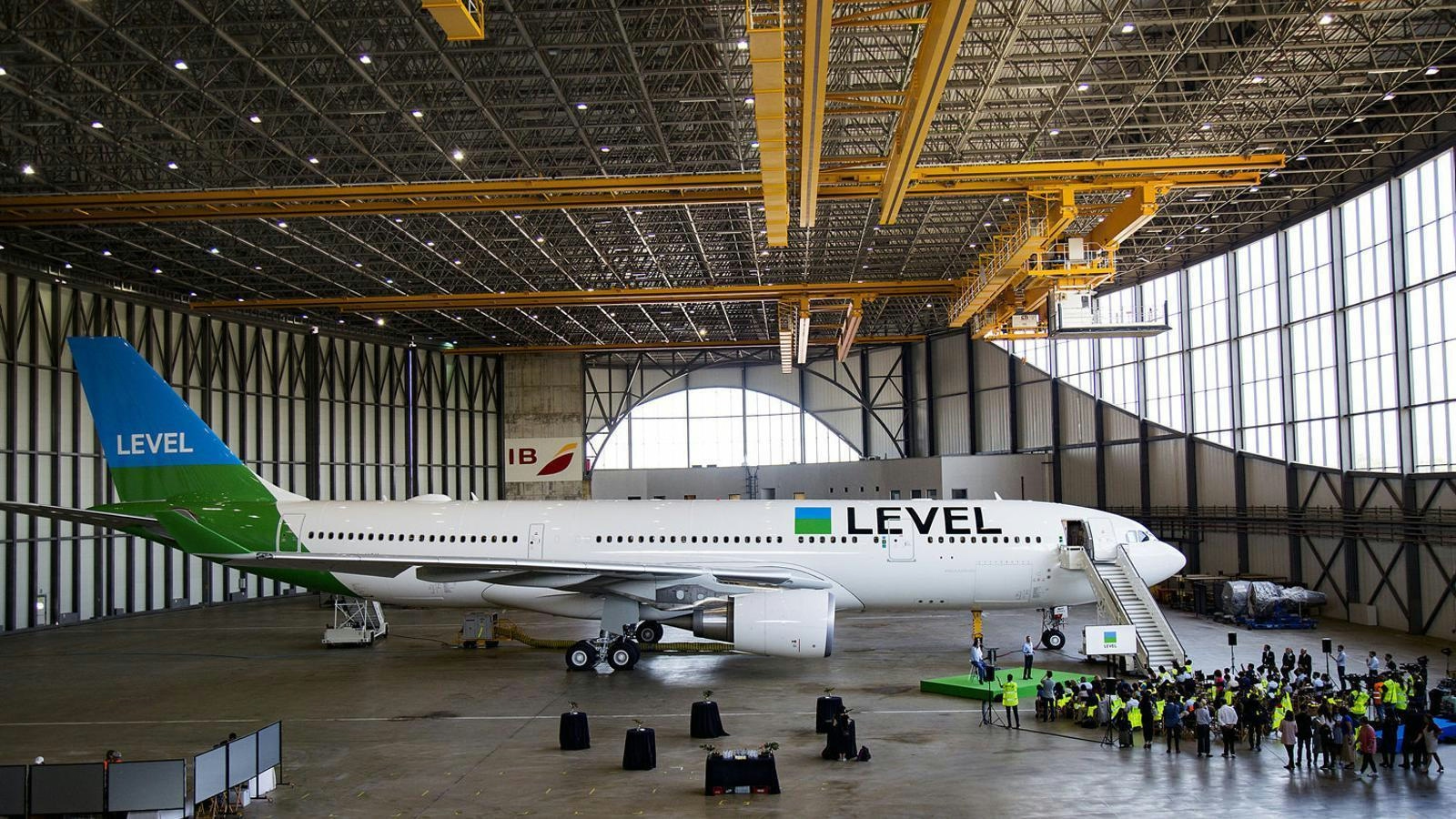
LEVEL Suspends San Francisco Flights Due to Engine Shortage
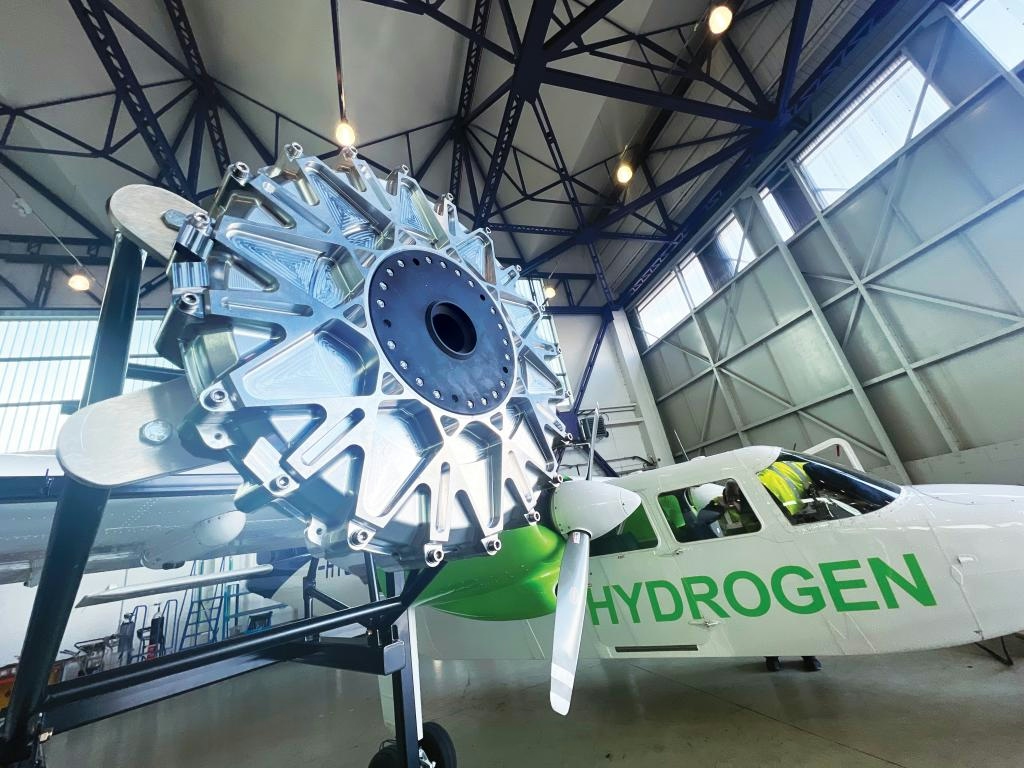
China Conducts First Flight Test of Megawatt Hydrogen Turboprop Engine

Oklahoma’s Aerospace Industry Expands and Its Impact on the State Economy

Archer Aviation Confronts Setbacks Amid Declining Air Taxi Interest

FAA and EASA Mandates to Influence Flight Line Testing Equipment Market Through 2035
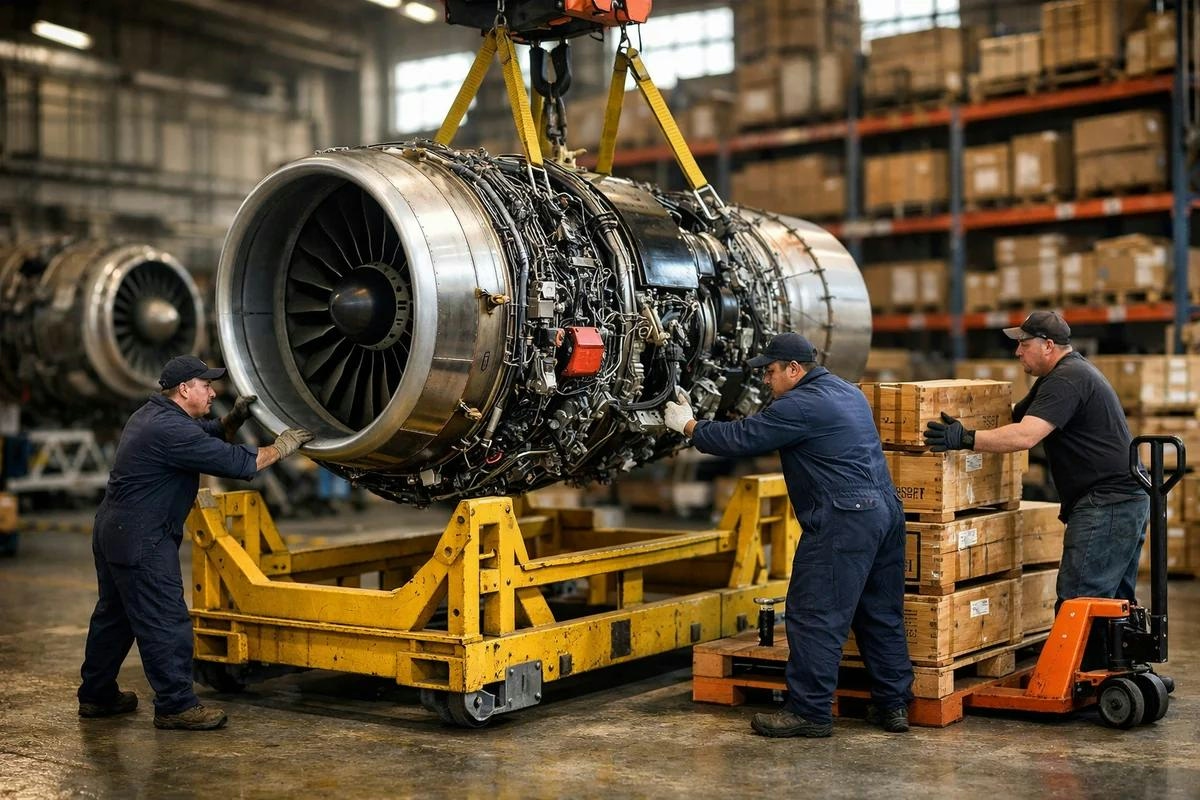
Willis Lease Operates as a Leveraged Spread Business with Moderate Returns

Chinese Team Develops First Flight Control Software for Bamboo Drones
Government Moves Forward with Boeing Purchase, Considers Airbus Leasing

Changes in Airline Industry Leadership, Alliances, and AI
