
AeroGenie — 您的智能副驾驶。

热门趋势
Categories
Is the Airline Industry Ready for Agent-Led Bookings?

Is the Airline Industry Ready for Agent-Led Bookings?
Agentic artificial intelligence (AI) is rapidly reshaping the way travelers search for and book flights. Historically, travelers have grappled with challenges such as overwhelming choices, limited ability to compare options comprehensively, and an excessive focus on headline prices. AI agents, however, offer a more holistic evaluation of fares, ancillary services, and travel constraints, prioritizing total value rather than cost alone. This evolution is fundamentally altering how travel options are curated and selected, signaling a shift toward more sophisticated, AI-driven decision-making processes.
As AI agents increasingly assume responsibility for flight discovery and booking decisions, transparent and dynamically bundled offers are expected to surpass traditional static, price-led merchandising—especially for complex or high-value itineraries. The next phase of agentic AI could enable bookings with minimal or no human intervention. This raises a critical question: is the airline industry prepared to embrace this emerging paradigm?
Testing Agent-Led Flight Discovery and Booking
To evaluate the industry’s readiness, two practical tests were conducted focusing on flight discovery and booking. The discovery test involved three major European full-service carriers (FSCs) and their ten most relevant markets. Three leading large language models (LLMs) were prompted with 60 nonbranded queries to book flights between various country or city pairs. The findings revealed that LLMs accessed airline websites directly in only about 5% of cases. Instead, they predominantly directed users to online travel agencies (OTAs), which provide cleaner, more structured, and agent-readable data. Even when an FSC was the optimal choice, LLMs frequently recommended OTAs over airline websites. Airlines appeared among the top three results primarily when queries involved their home markets, but their visibility declined sharply for transit routes. This pattern underscores a new challenge for airlines: the need to optimize their offers not only for human customers but also for AI agents that now mediate much of the discovery process. Currently, OTAs dominate this crucial initial stage of customer engagement.
The booking test assessed the ability to complete purchases across several major European and North American airlines, including both FSCs and low-cost carriers (LCCs), alongside two leading OTAs. Using OTA action tools, browser-automation agents, and prompt-generated airline links, a booking was considered successful if the tool reached the payment page. The results showed that no single tool could reliably complete bookings on airline websites, whereas OTAs demonstrated greater success. This disparity highlights a significant technical and structural gap between airline and OTA platforms in supporting agent-led transactions.
Industry Challenges and Competitive Pressures
The swift rise of generative and agentic AI is intensifying competition within the travel sector. Airlines now confront new risks, including AI-powered competitors, data scraping, and liability concerns associated with third-party AI tools. Some carriers acknowledge that they lag behind in deploying advanced agentic features, even as market data indicates a robust rebound in transatlantic bookings, with both premium and economy segments stabilizing—particularly from the United States.
As competitors adapt rapidly, airlines must accelerate their digital transformation efforts. The industry’s capacity to optimize for AI-driven discovery and booking will be a decisive factor in determining leadership in the next era of travel. For the moment, OTAs hold a clear advantage, but the race to adapt to agent-led booking technologies is well underway.

Oklahoma’s Aerospace Industry Expands and Its Impact on the State Economy
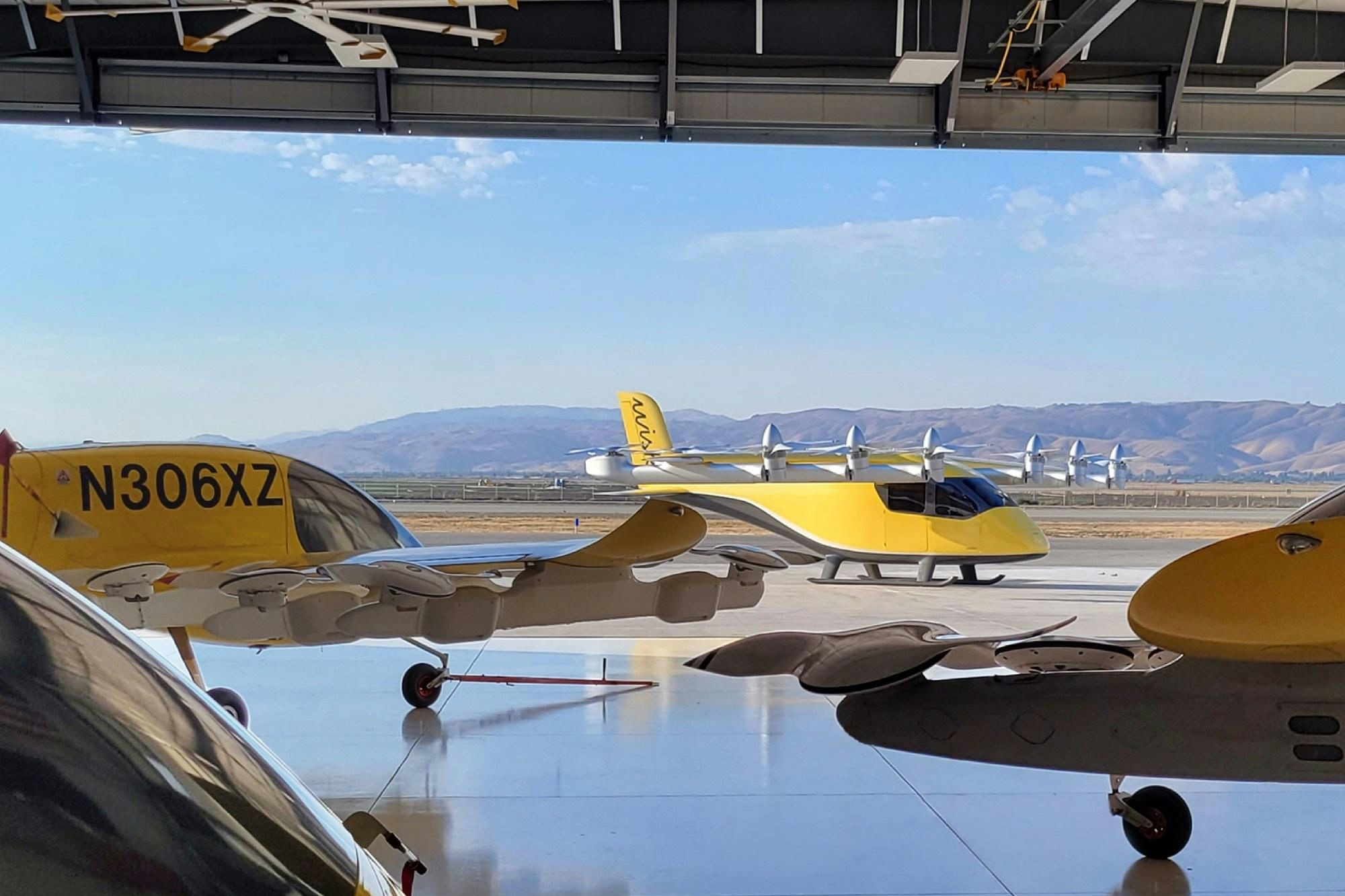
Archer Aviation Confronts Setbacks Amid Declining Air Taxi Interest
FAA and EASA Mandates to Influence Flight Line Testing Equipment Market Through 2035
Willis Lease Operates as a Leveraged Spread Business with Moderate Returns

Chinese Team Develops First Flight Control Software for Bamboo Drones
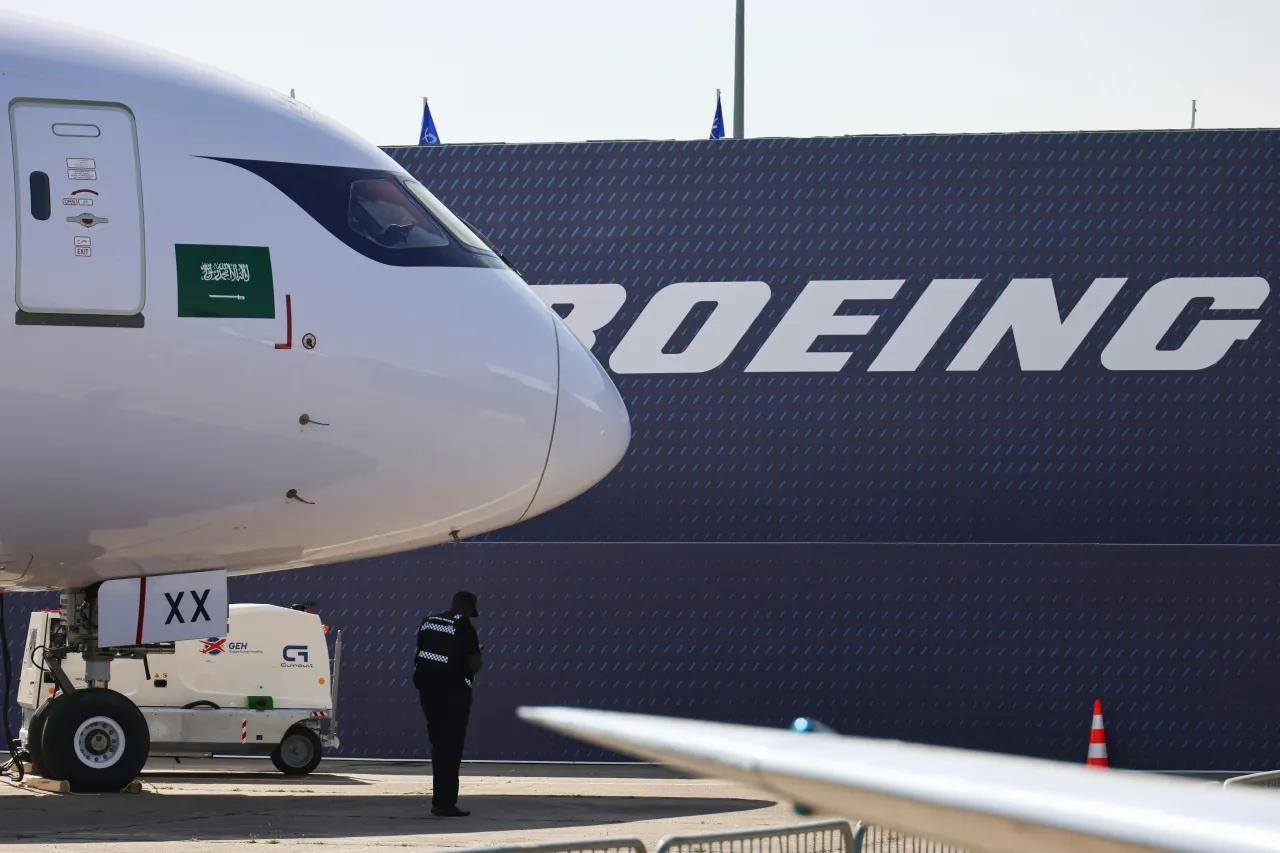
Government Moves Forward with Boeing Purchase, Considers Airbus Leasing
SkyHope Appoints Aviation Industry Leader to Board
The Challenges of Certifying Autonomous Aircraft
KLM to Receive First Airbus A350, Announces Initial Routes
Saxon Air Receives Clean and Green Energy Innovation Award
