
AeroGenie — 您的智能副驾驶。

热门趋势
Categories
From Sewing Machines to Sky Ships: The Lycoming-Zeppelin Connection
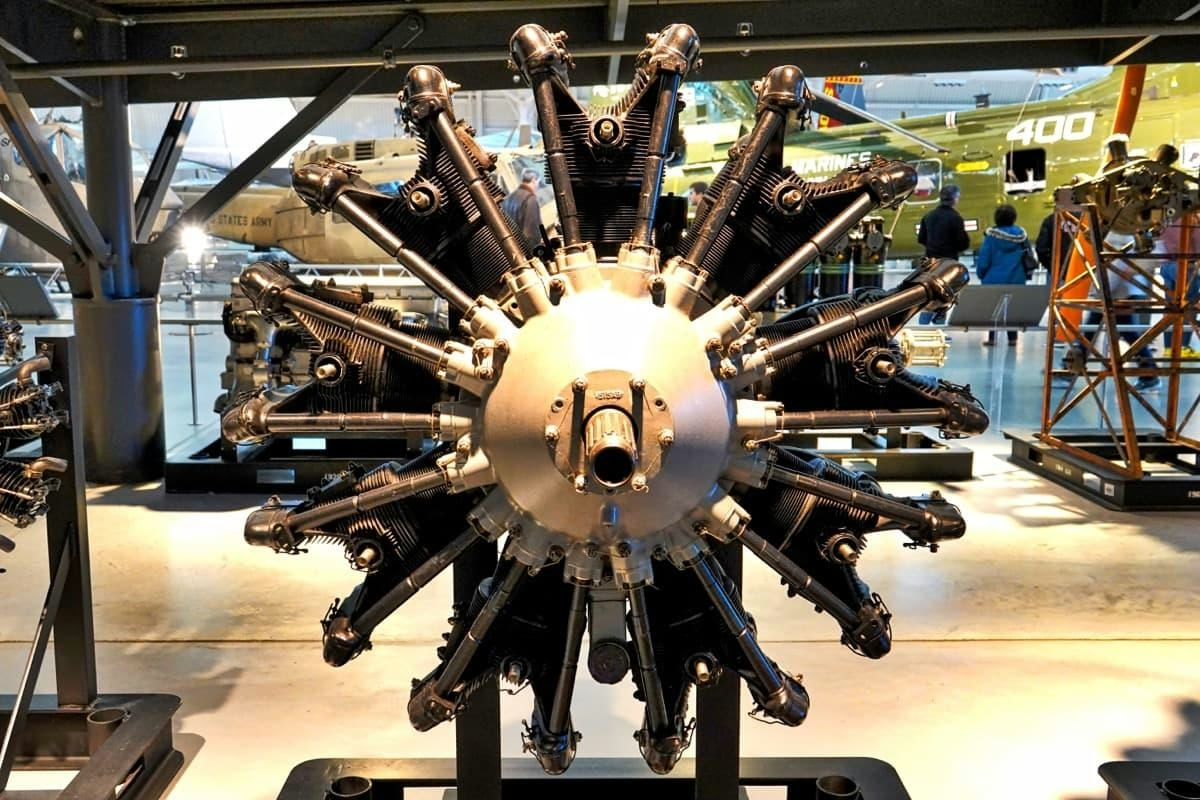
From Sewing Machines to Sky Ships: The Lycoming-Zeppelin Connection
As the nation recovers from a harsh winter, it is an opportune moment to reflect on a distinctive chapter in aviation history—one that bridges the “Golden Age” of flight with contemporary technological advancements. The story of how the iconic Goodyear Airship came to be powered by Lycoming IO-360 engines is not merely an engineering narrative but also a tale of unexpected partnerships and evolving industry dynamics.
The Evolution of the Goodyear Blimp and the Zeppelin NT
The Goodyear blimp is a familiar sight to many Americans, often seen hovering over major sporting events or at prominent aviation gatherings such as EAA AirVenture Oshkosh and SUN ‘n FUN. In Williamsport, Pennsylvania, the blimp holds a special local significance, making annual appearances during the Little League Baseball World Series near the home of Lycoming Engines.
The transition from the classic “GZ-20” blimp to the advanced Zeppelin NT (New Technology) airship began with a fortuitous encounter in 1993 at AERO Friedrichshafen, Europe’s leading general aviation exhibition. Lycoming’s Munich-based team, including engineer Pierre Cornaz, sought out Zeppelin’s engineering group, who were then deeply engaged in designing a revolutionary semi-rigid airship. At the time, Zeppelin had yet to select an engine for their new craft.
Unlike earlier blimps powered by two Continental IO-360 engines, the Zeppelin NT required three engines to operate its innovative thrust-vectoring system. This system allows the propellers to swivel 90 degrees, enabling vertical takeoff and precise hovering capabilities even in challenging crosswinds. After extensive technical discussions, the 200-horsepower Lycoming IO-360 was chosen as the optimal engine, providing the ideal combination of power, weight, and fuel-injected reliability necessary for extended flights. Today, the Zeppelin NT’s three engines—two mounted on forward pylons and one positioned transversely at the tail—are central to its distinctive performance.
From Sewing Machines to Aerospace Innovation
The partnership between Lycoming and Zeppelin represents more than a technical milestone; it embodies a broader transformation from Lycoming’s origins in sewing machine manufacturing to its current role at the forefront of aerospace technology. This evolution, however, is accompanied by significant challenges. Integrating traditional manufacturing expertise with cutting-edge aerospace innovation raises questions about market acceptance and scalability. Industry analysts have noted skepticism regarding the feasibility of such integration, while established aerospace competitors are likely to intensify research and development efforts to maintain their market positions. Additionally, regulatory compliance and the substantial investments required for new technologies and infrastructure add layers of complexity to this transition.
A subsequent visit to Zeppelin’s flight test facility highlighted the global interconnectedness of the aviation industry. During this visit, an introduction to chief test pilot Scott Danneker—whose family roots trace back to Williamsport, just steps from the Lycoming plant—underscored the close-knit nature of the aviation community, where innovation and personal histories frequently intersect.
The Lycoming-Zeppelin collaboration stands as a testament to technological ingenuity and the enduring spirit of cooperation, bridging continents, industries, and generations in the ongoing pursuit of flight.
Comments
LEVEL Suspends San Francisco Flights Due to Engine Shortage
China Conducts First Flight Test of Megawatt Hydrogen Turboprop Engine
Oklahoma’s Aerospace Industry Expands and Its Impact on the State Economy
Archer Aviation Confronts Setbacks Amid Declining Air Taxi Interest

FAA and EASA Mandates to Influence Flight Line Testing Equipment Market Through 2035
Willis Lease Operates as a Leveraged Spread Business with Moderate Returns
Chinese Team Develops First Flight Control Software for Bamboo Drones
Government Moves Forward with Boeing Purchase, Considers Airbus Leasing
SkyHope Appoints Aviation Industry Leader to Board
The Challenges of Certifying Autonomous Aircraft
