
AeroGenie — 您的智能副驾驶。

热门趋势
Categories
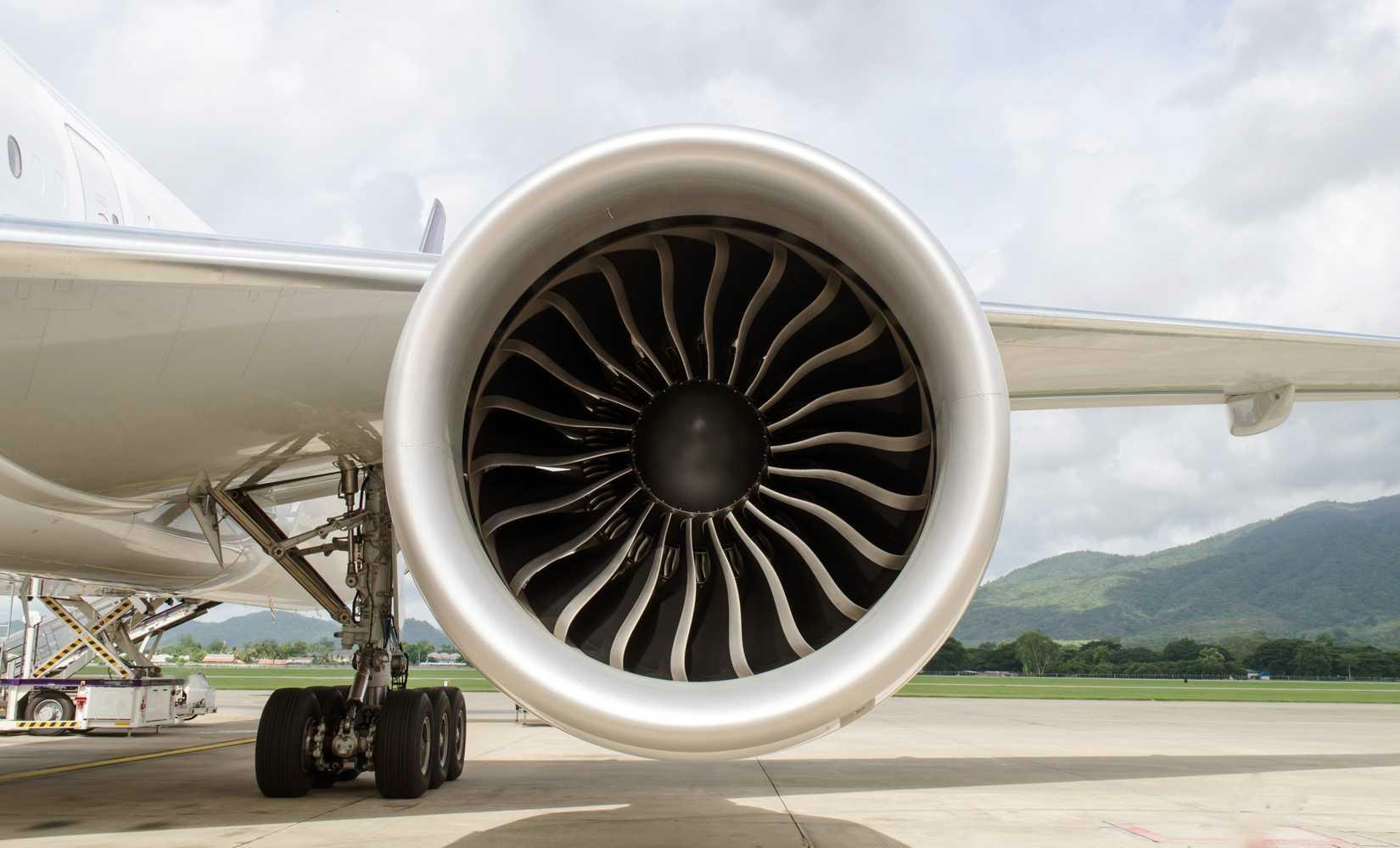
First GE90-94B Engines Surpass 100,000 Flight Hours
First GE90-94B Engines Surpass 100,000 Flight Hours
The GE90 engine program marked a significant milestone this October as the first two GE90-94B engines surpassed 100,000 flight hours each. Operated by Austrian Airlines and KLM Royal Dutch Airlines, these engines join an elite group of fewer than 500 GE Aviation and CFM International engines worldwide to have reached this level of operational endurance, equivalent to more than 11 years of continuous flying.
Endurance and Operational History
This achievement highlights the exceptional durability and reliability of the GE90-94B model, placing it alongside other long-serving engines such as the CF6-6, CF6-50, CF6-80C2, CF6-80E1, and CFM56-5C in terms of longevity. Additional GE90-94B engines are anticipated to reach the 100,000-hour milestone in the near future.
Jim Elliott, principal engineer for GE90 Services Systems Engineering, emphasized the significance of this milestone, stating that reaching 100,000 flight hours is a testament to the fundamental design of the engine. He noted that the GE90-94B design has served as the foundation for all of GE’s commercial turbofan engines introduced since its debut. Elliott also highlighted how the GE90 program helped establish enhanced customer and product support operations that continue to benefit GE’s latest engine programs.
The Austrian Airlines engine, delivered in September 1997, has completed approximately 11,500 flight cycles and transported around three million passengers globally. The KLM engine, originally delivered to Air France in March 1998, has completed 12,574 cycles. Following the 2004 merger of Air France and KLM, the airlines’ GE90-94B and GE90-115B fleets have been managed jointly. The milestone KLM engine accumulated roughly 49,000 flight hours with Air France and 51,000 hours with KLM. KLM’s Boeing 777 fleet currently includes 15 777-200 aircraft powered by GE90-94B engines and 16 777-300 aircraft equipped with GE90-115B engines.
Program Legacy and Industry Context
The GE90 program celebrated its 25th service anniversary in 2020, with the entire fleet—comprising both GE90-94B and GE90-115B variants—surpassing 100 million engine flight hours. To date, more than 2,800 GE90 engines have been delivered worldwide.
This milestone arrives at a critical juncture for GE Aviation. While the GE90 continues to power Boeing 777-300ERs and 777 Freighters globally, the introduction of the next-generation GE9X engine for the long-delayed Boeing 777X faces market scrutiny, particularly concerning a potential seal issue. These delays have extended the operational relevance of the GE90, as airlines maintain reliance on the engine for their widebody fleets.
Meanwhile, competitors are advancing in response to evolving market demands. ST Engineering recently unveiled a business aviation thrust reverser demonstrator, and MTU Aero Engines is experiencing robust demand for maintenance services, especially for Pratt & Whitney’s geared turbofan (GTF) engines. These developments underscore the dynamic nature of the commercial aviation propulsion sector, where proven reliability and continuous innovation remain paramount.
CFM International is a 50-50 joint venture between GE and Safran Aircraft Engines.

Oklahoma’s Aerospace Industry Expands and Its Impact on the State Economy
Archer Aviation Confronts Setbacks Amid Declining Air Taxi Interest

FAA and EASA Mandates to Influence Flight Line Testing Equipment Market Through 2035
Willis Lease Operates as a Leveraged Spread Business with Moderate Returns

Chinese Team Develops First Flight Control Software for Bamboo Drones
Government Moves Forward with Boeing Purchase, Considers Airbus Leasing
SkyHope Appoints Aviation Industry Leader to Board
The Challenges of Certifying Autonomous Aircraft
KLM to Receive First Airbus A350, Announces Initial Routes
Saxon Air Receives Clean and Green Energy Innovation Award
