
AeroGenie — 您的智能副驾驶。

热门趋势
Categories
Boeing Increases 737 MAX Production Amid Airbus Delivery Challenges
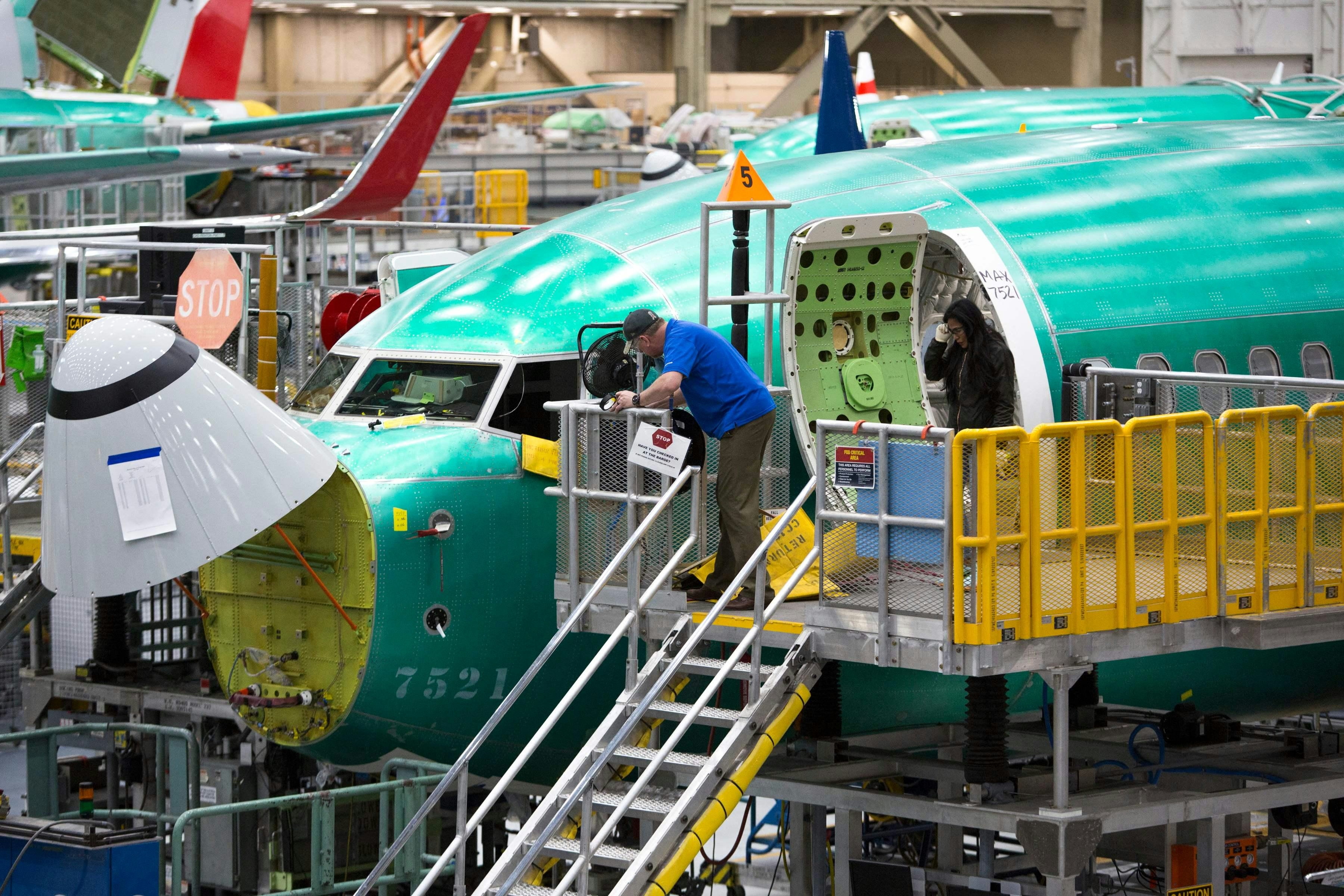
Boeing Increases 737 MAX Production Amid Airbus Delivery Challenges
Boeing has announced a significant increase in the production rate of its 737 MAX aircraft, raising output to 42 units per month. This decision follows the Federal Aviation Administration’s (FAA) recent removal of previous production restrictions, a development that has been positively received by the market and contributed to a notable rise in Boeing’s stock price.
Strategic Response to Market Dynamics
The production ramp-up occurs at a pivotal moment for Boeing, as its primary competitor, Airbus, continues to encounter delivery challenges. Airbus’s A320 family recently overtook the Boeing 737 as the most-delivered aircraft in history, highlighting the fierce competition within the commercial aviation sector. By accelerating 737 MAX production, Boeing aims to reinforce its market position and address strong demand, particularly from airlines seeking to modernize their fleets with more efficient aircraft.
Industry analysts emphasize that while the FAA’s approval grants Boeing greater operational flexibility, the company must carefully balance increased production rates with the need to maintain stability and safety. The aerospace industry has been under intense scrutiny in recent years, and Boeing’s capacity to uphold rigorous quality control standards will remain under close observation by regulators and customers alike.
Renewed Confidence and Future Outlook
The decision to boost output is further supported by a surge in new orders, reflecting renewed confidence in the 737 MAX program. Boeing’s move is widely viewed as a strategic effort to recover momentum lost during earlier production slowdowns and to capitalize on favorable market conditions in the commercial aircraft sector.
As Boeing advances this production increase, its performance will serve as a critical measure of its ability to compete effectively with Airbus and meet the evolving demands of the global aviation industry. The coming months will be crucial as the company strives to balance accelerated manufacturing with the imperative of maintaining safety and reliability across its fleet.

Oklahoma’s Aerospace Industry Expands and Its Impact on the State Economy
Archer Aviation Confronts Setbacks Amid Declining Air Taxi Interest

FAA and EASA Mandates to Influence Flight Line Testing Equipment Market Through 2035
Willis Lease Operates as a Leveraged Spread Business with Moderate Returns
Chinese Team Develops First Flight Control Software for Bamboo Drones
Government Moves Forward with Boeing Purchase, Considers Airbus Leasing
SkyHope Appoints Aviation Industry Leader to Board
The Challenges of Certifying Autonomous Aircraft
KLM to Receive First Airbus A350, Announces Initial Routes

Saxon Air Receives Clean and Green Energy Innovation Award
