
AeroGenie — 您的智能副驾驶。

热门趋势
Categories
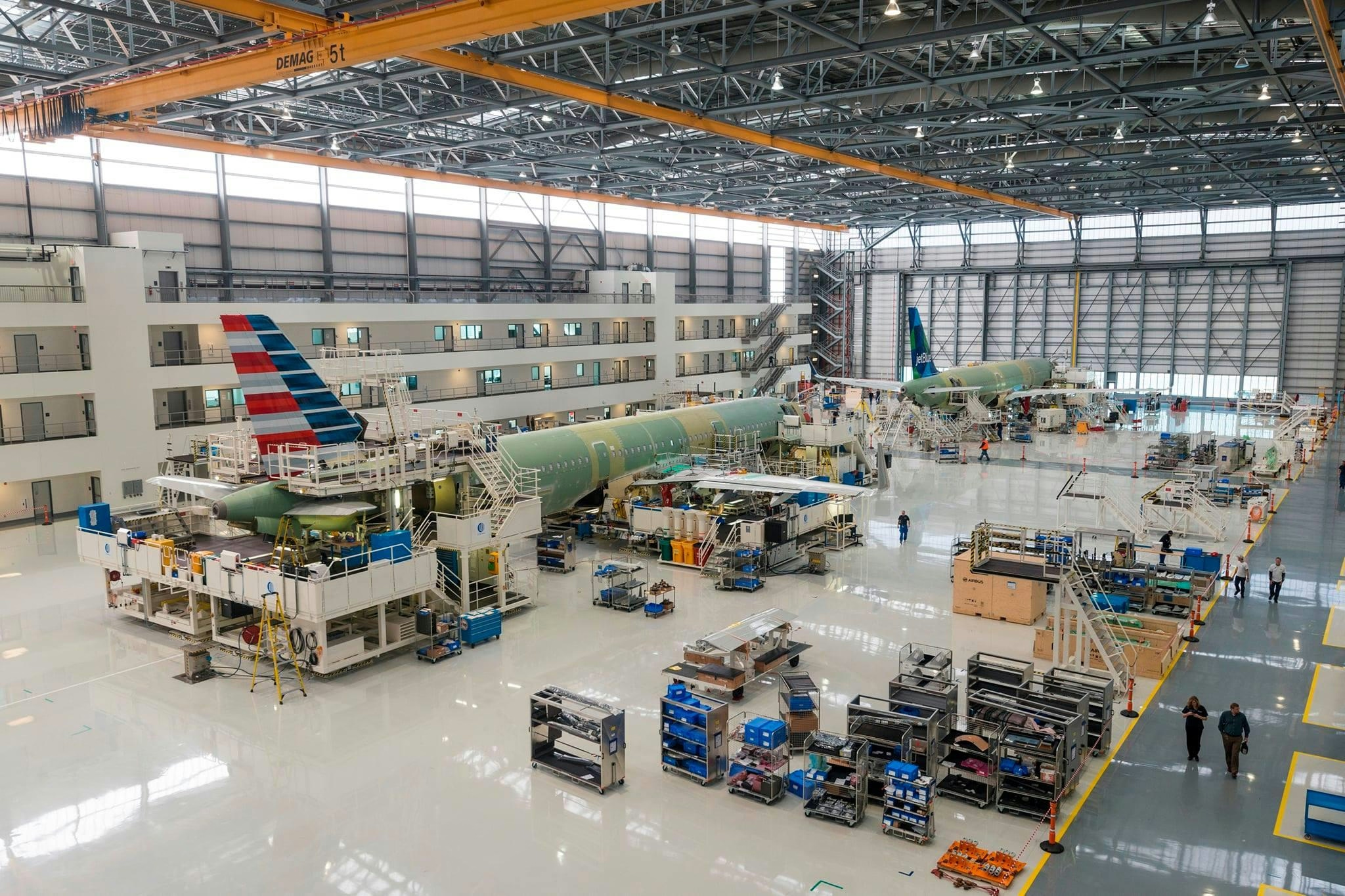
Airbus Faces Delivery Challenges for 2026
Airbus Faces Delivery Challenges for 2026
Slow Start and Competitive Pressure
Airbus is encountering significant challenges in meeting its commercial aircraft delivery targets for 2026, grappling with a sluggish start to the year compounded by ongoing supply chain disruptions. Internal data from Forecast International reveals that Airbus has delivered only 6.2% of its 870-aircraft target so far this year, a pace that lags behind its historical performance. By comparison, at the end of February 2025, Airbus had achieved 7.9% of its annual delivery goal, which was subsequently revised downward from 820 to 790 aircraft.
This underperformance is particularly notable in light of Boeing’s stronger delivery figures. Boeing has nearly doubled Airbus’s deliveries in the same period and secured more net orders in January, intensifying competitive pressures. This dynamic underscores the urgency for Airbus to accelerate its production and delivery rates if it is to meet its 2026 objectives.
Production Constraints and Forecast Adjustments
Airbus’s forecast of delivering 870 commercial aircraft in 2026 falls slightly short of analyst expectations, which hover around 880 units. Despite maintaining a record backlog of orders, the company has moderated its planned production ramp-up for the A320neo family, primarily due to engine delivery constraints from supplier Pratt & Whitney. These supply chain challenges continue to hamper Airbus’s ability to meet its production targets, particularly for its high-demand passenger jets.
Although the current delivery pace does not yet necessitate a formal downward revision of the annual target, it raises the possibility that such an adjustment may become unavoidable if production does not accelerate. To remain on course, Airbus will need to significantly increase deliveries in the second half of the year, facing an even steeper climb than in 2025.
Outlook Amidst Uncertainties
As 2026 progresses, Airbus confronts a complex environment characterized by persistent supply chain uncertainties and heightened competition. The combination of a weaker start and ongoing production headwinds suggests that achieving the company’s initial delivery target will be more challenging than in previous years. The coming months will be critical in determining whether Airbus can overcome these obstacles and fulfill its ambitious delivery goals.

Oklahoma’s Aerospace Industry Expands and Its Impact on the State Economy
Archer Aviation Confronts Setbacks Amid Declining Air Taxi Interest

FAA and EASA Mandates to Influence Flight Line Testing Equipment Market Through 2035
Willis Lease Operates as a Leveraged Spread Business with Moderate Returns
Chinese Team Develops First Flight Control Software for Bamboo Drones
Government Moves Forward with Boeing Purchase, Considers Airbus Leasing
SkyHope Appoints Aviation Industry Leader to Board
The Challenges of Certifying Autonomous Aircraft
KLM to Receive First Airbus A350, Announces Initial Routes
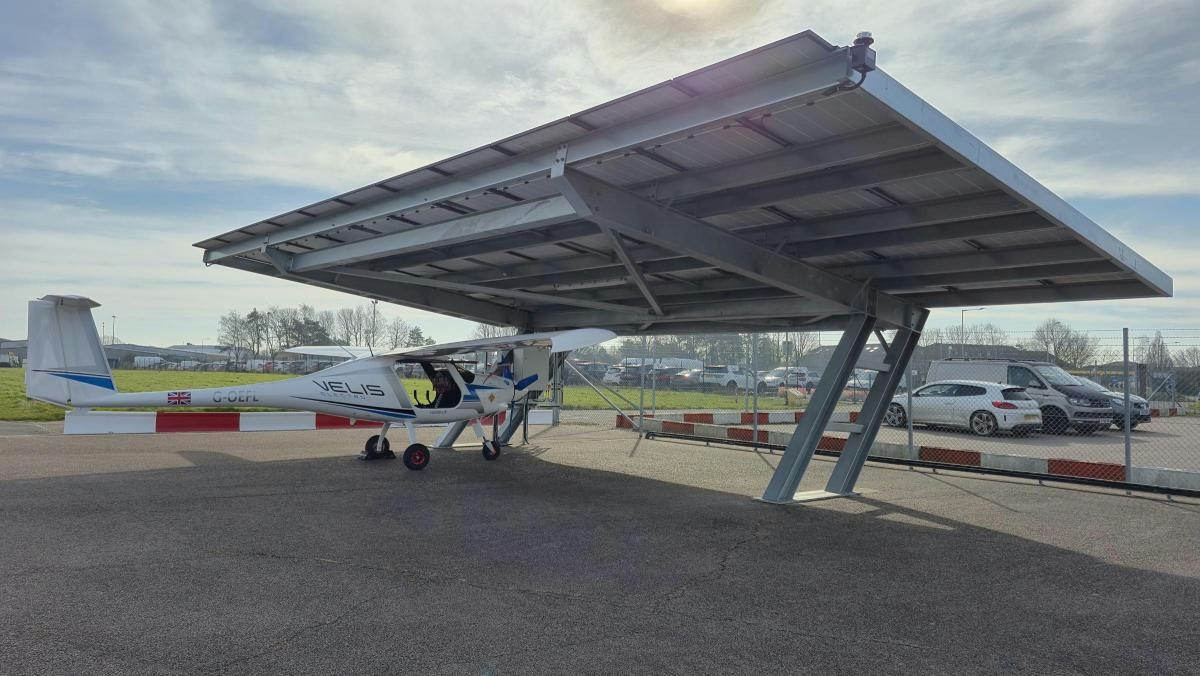
Saxon Air Receives Clean and Green Energy Innovation Award
