
AeroGenie — Ваш интеллектуальный второй пилот.

В тренде
Categories
Riyadh Air Orders 25 Airbus A350-1000 Aircraft
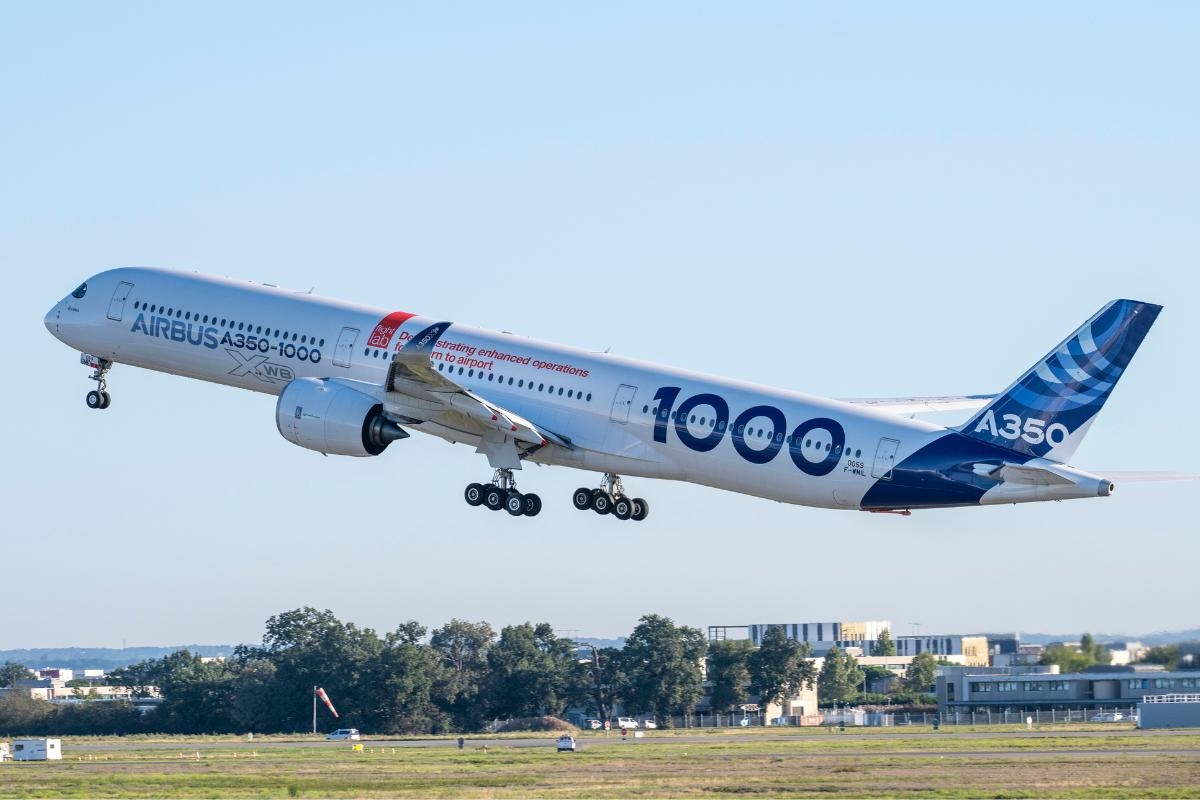
Riyadh Air Commits to 25 Airbus A350-1000 Aircraft
Riyadh Air, the newly established national carrier of Saudi Arabia, has announced an order for 25 Airbus A350-1000 aircraft, signaling a decisive move in its strategy to emerge as a significant contender in the global aviation sector. This agreement, revealed on Wednesday, highlights the airline’s determination to expand rapidly as it prepares to commence operations and challenge established regional competitors.
Strategic Fleet Expansion and Market Ambitions
The acquisition of the Airbus A350-1000, renowned for its long-range capabilities and cutting-edge technology, aligns with Riyadh Air’s objective to develop a modern, fuel-efficient fleet tailored for extensive international routes. The aircraft is expected to serve as the cornerstone of the airline’s long-haul services, supporting its vision to connect Saudi Arabia with key global destinations.
Despite the promising outlook, Riyadh Air confronts a series of challenges inherent in launching a new airline. These include navigating complex regulatory frameworks, cultivating brand recognition, and attracting both passengers and strategic partners. Furthermore, ongoing supply chain disruptions within the aviation industry pose potential risks to the timely delivery of the ordered aircraft.
Competitive Landscape and Industry Implications
Industry analysts are closely monitoring Riyadh Air’s expansion, recognizing that the airline’s capacity to implement its growth strategy effectively will be pivotal to its success. The substantial aircraft order reflects confidence in anticipated market demand but also raises questions regarding the airline’s ability to scale operations swiftly and achieve high load factors on its new routes.
Established Middle Eastern carriers such as Emirates and Qatar Airways are likely to respond strategically to Riyadh Air’s market entry. Potential countermeasures may include expanding their route networks, enhancing customer service, or investing in fleet modernization to maintain their competitive positions.
Nonetheless, Riyadh Air’s leadership remains optimistic about the airline’s prospects. The carrier intends to leverage Saudi Arabia’s strategic geographic location as a global transit hub and capitalize on the nation’s broader economic diversification and tourism development initiatives.
As Riyadh Air advances with its fleet expansion, industry observers will be attentive to how the airline addresses operational challenges and market dynamics, and whether it can fulfill its ambition to reshape the aviation landscape in the region.

Oklahoma’s Aerospace Industry Expands and Its Impact on the State Economy

Archer Aviation Confronts Setbacks Amid Declining Air Taxi Interest

FAA and EASA Mandates to Influence Flight Line Testing Equipment Market Through 2035
Willis Lease Operates as a Leveraged Spread Business with Moderate Returns

Chinese Team Develops First Flight Control Software for Bamboo Drones
Government Moves Forward with Boeing Purchase, Considers Airbus Leasing
SkyHope Appoints Aviation Industry Leader to Board
The Challenges of Certifying Autonomous Aircraft
KLM to Receive First Airbus A350, Announces Initial Routes

Saxon Air Receives Clean and Green Energy Innovation Award
