
AeroGenie — Ваш интеллектуальный второй пилот.

В тренде
Categories
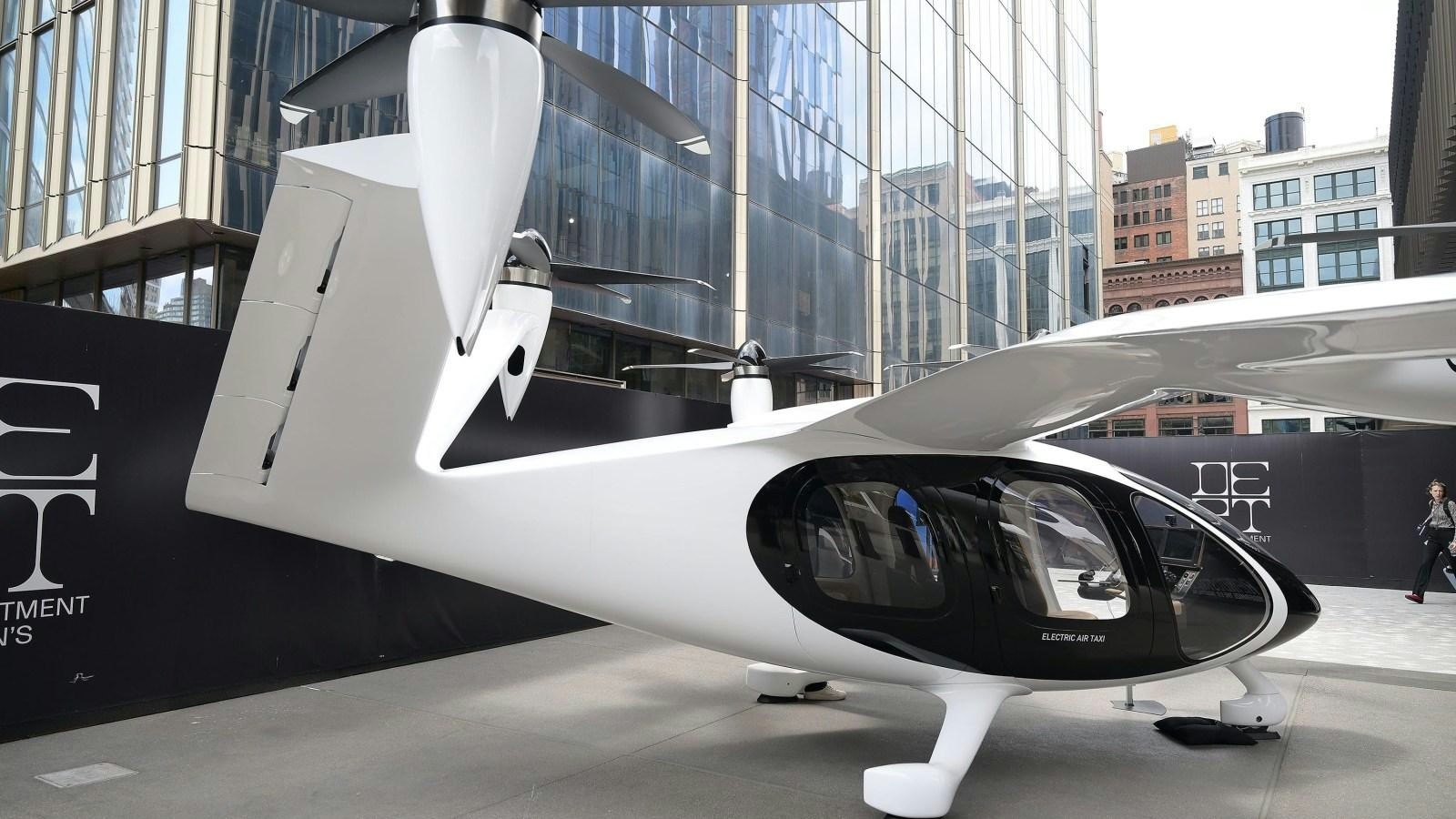
Joby Aviation Positioned to Lead Air Taxi Market by 2026
Joby Aviation Positioned to Lead Air Taxi Market by 2026
Strategic Partnerships and Technological Advancements
Joby Aviation (NYSE: JOBY) is rapidly establishing itself as a leading contender in the emerging air taxi industry, driven by a combination of global partnerships and government backing. Central to its vision is the development of electric vertical take-off and landing (eVTOL) aircraft, which is gaining momentum through high-profile agreements and public demonstrations. A significant milestone was achieved with an exclusive agreement with Dubai’s Road and Transport Authority, granting Joby the rights to operate air taxis in the city beginning in 2026. This partnership was underscored by the public unveiling of Joby’s S4 eVTOL aircraft at the Dubai Airshow, signaling both technological readiness and growing international interest. These developments have generated optimism among investors and analysts, many of whom anticipate substantial growth as Joby expands its global presence.
Business Model and Operational Initiatives
Joby’s vertically integrated business model aims to streamline operations by controlling key aspects of the air taxi value chain. This approach is exemplified by strategic acquisitions such as Blade Air Mobility, which enhance Joby’s operational capabilities. The company is also making significant investments in pilot training programs to ensure a skilled workforce is prepared for the commercial launch of its services. These initiatives are considered essential for scaling operations and maintaining a competitive advantage as the eVTOL market evolves.
Regulatory and Market Challenges
Despite its progress, Joby faces considerable challenges. The company must navigate a complex regulatory environment, with the U.S. Federal Aviation Administration (FAA) scheduled to begin certification tests for Joby’s aircraft in 2026. Certification is a critical prerequisite for commercial operations, and any delays or complications could affect Joby’s timeline and investor confidence. Furthermore, the demands of extensive pilot training and the integration of advanced technologies introduce operational risks that require careful management.
Market responses to Joby’s advancements have been mixed. While some analysts emphasize the company’s strong positioning and potential for significant returns, others warn that regulatory and technological obstacles may limit near-term gains. The air taxi sector is also attracting increased competition, with rivals expected to intensify their efforts as the eVTOL market develops.
As of December 15, 2025, Joby’s stock reflected cautious optimism, buoyed by recent achievements but tempered by the inherent risks of pioneering a new mode of urban transportation. The upcoming year will be critical as Joby seeks to secure certification, broaden its operational footprint, and address mounting competitive pressures.
Joby Aviation remains at the forefront of the air taxi revolution, with its global partnerships and technological progress positioning it for potential market leadership by 2026. Nonetheless, the company must overcome significant regulatory, operational, and competitive challenges to realize its ambitious vision.

Archer Aviation Confronts Setbacks Amid Declining Air Taxi Interest

Chinese Team Develops First Flight Control Software for Bamboo Drones
Government Moves Forward with Boeing Purchase, Considers Airbus Leasing
SkyHope Appoints Aviation Industry Leader to Board
The Challenges of Certifying Autonomous Aircraft
KLM to Receive First Airbus A350, Announces Initial Routes
Saxon Air Receives Clean and Green Energy Innovation Award
How BEB Tax Policies Impact Airlines’ International Leasing Contracts

Indonesia’s Danantara and Mandiri Partner with SMBC to Launch $800 Million Aviation Leasing Fund
South Korea’s SUM Air Places Order for New ATR Aircraft
