
AeroGenie — Ваш интеллектуальный второй пилот.

В тренде
Categories
Finkenwerder Innovation Park Highlights Collaboration Between Airbus and TUHH
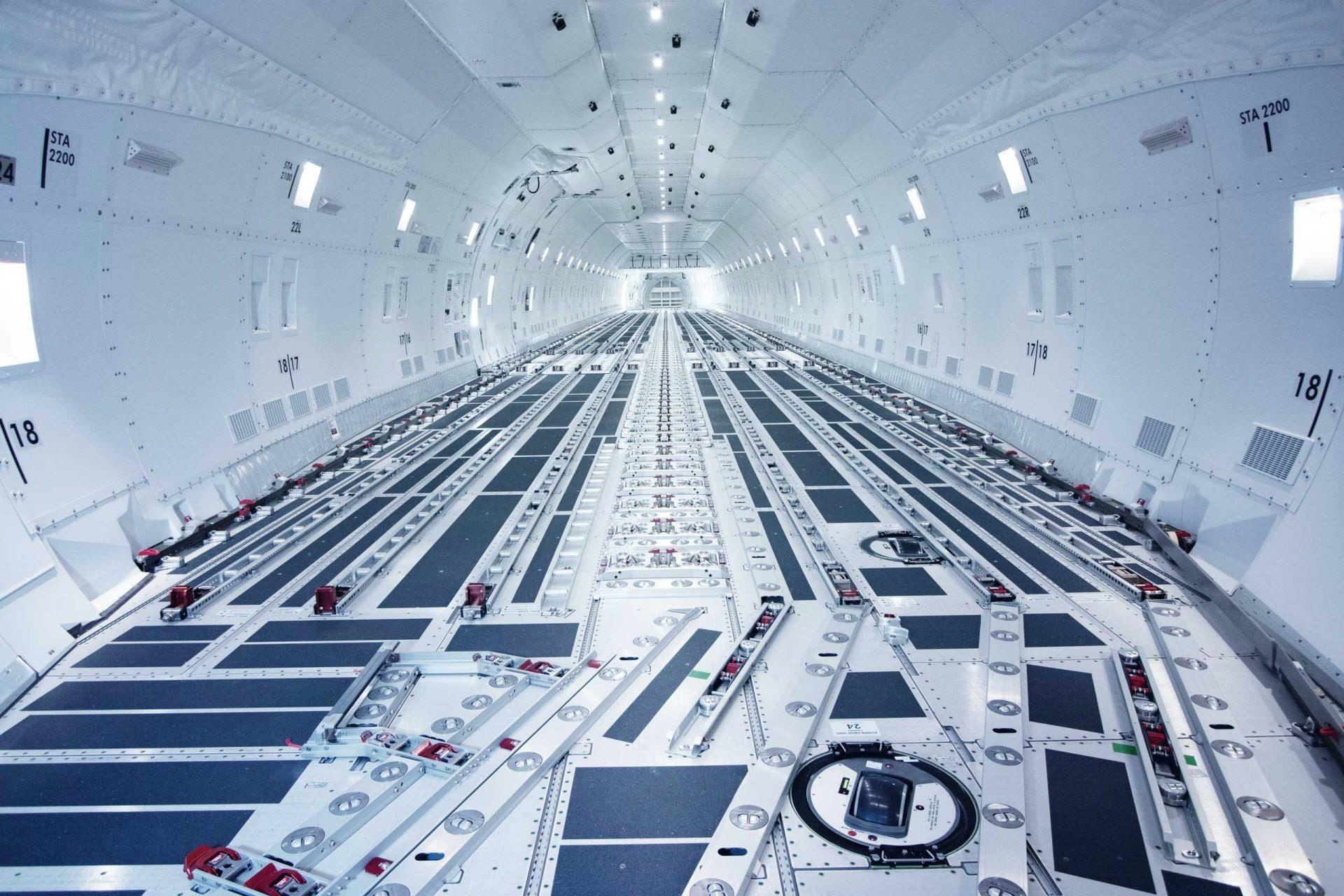
Finkenwerder Innovation Park: A Nexus of Aerospace Innovation
The Finkenwerder Innovation Park in Hamburg is rapidly establishing itself as a pivotal centre for the advancement of the aviation industry. This progress is largely propelled by the strategic collaboration between Airbus, one of the world’s foremost aerospace manufacturers, and the Hamburg University of Technology (TUHH). At the heart of the park’s operations lies the Center of Applied Aeronautical Research (ZAL TechCenter), which functions as both an incubator and a technology hub, fostering innovation throughout the entire aircraft value chain.
Collaborative Ecosystem and Infrastructure
The park unites key stakeholders including Airbus, the German Aerospace Center (DLR), and the ZAL TechCenter, creating a dynamic environment for research and development. This close proximity facilitates seamless networking and cooperation, supported by shared infrastructure that benefits both established corporations and emerging startups. The ZAL TechCenter alone encompasses over 26,000 square meters of halls, laboratories, offices, and research facilities, with plans underway to expand further in response to increasing demand.
Recent developments have seen the integration of two DLR institutes—one specialising in maintenance and modification, the other in aviation system architectures—alongside the Hamburg-Finkenwerder Technology Centre (THF), Airbus Technology Parks (ATP 1 and ATP 2), and the Airbus BizLab. These additions provide a comprehensive foundation for research, development, and business incubation. The park’s collaborative atmosphere has attracted a diverse range of tenants from both industry and academia, pushing occupancy levels close to full capacity.
Challenges and Market Dynamics
Despite its successes, the Finkenwerder Innovation Park faces several challenges. Navigating complex regulatory frameworks, particularly concerning advanced jet trainers, remains a significant obstacle. Additionally, aligning with Spain’s procurement processes is critical as Airbus expands its partnerships, notably with Turkish Aerospace Industries (TUSAŞ). These evolving dynamics are influencing market responses, with heightened competition expected within the aerospace sector. Rival companies are likely to bolster their own alliances and intensify efforts to capture greater market share in the advanced jet trainer segment.
Nonetheless, the Finkenwerder Innovation Park continues to solidify its role as a leading centre for aeronautical research and development. Its integrated approach and robust network of partners are poised to drive ongoing innovation, reinforcing Hamburg’s position as a key player in the global aerospace industry.
LEVEL Suspends San Francisco Flights Due to Engine Shortage
China Conducts First Flight Test of Megawatt Hydrogen Turboprop Engine

Oklahoma’s Aerospace Industry Expands and Its Impact on the State Economy

Archer Aviation Confronts Setbacks Amid Declining Air Taxi Interest

FAA and EASA Mandates to Influence Flight Line Testing Equipment Market Through 2035
Willis Lease Operates as a Leveraged Spread Business with Moderate Returns

Chinese Team Develops First Flight Control Software for Bamboo Drones
Government Moves Forward with Boeing Purchase, Considers Airbus Leasing
SkyHope Appoints Aviation Industry Leader to Board
The Challenges of Certifying Autonomous Aircraft
