
AeroGenie — Ваш интеллектуальный второй пилот.

В тренде
Categories
Autonomous Flying Taxis Prepare to Enter U.S. Airspace
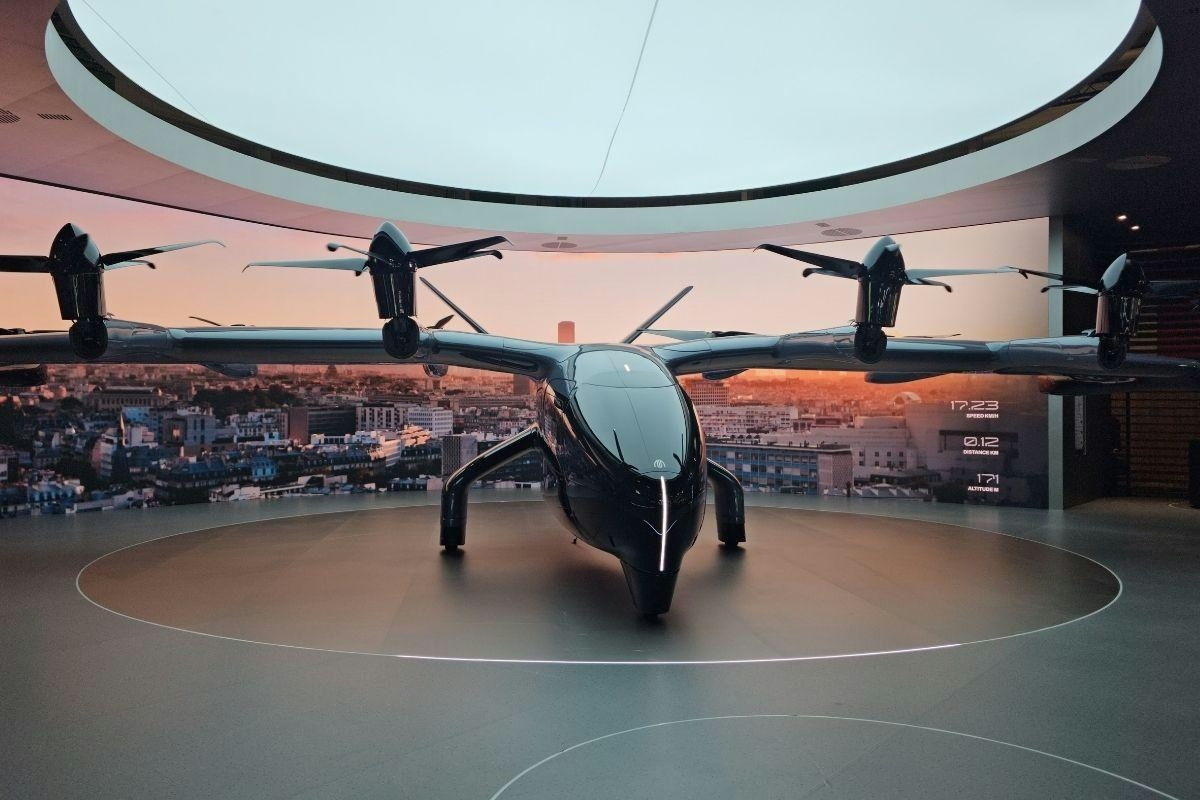
Autonomous Flying Taxis Set to Enter U.S. Airspace
Electric, autonomous flying taxis are on the verge of revolutionizing transportation across the United States. Industry leaders anticipate that these quiet, pilotless aircraft will soon ferry passengers and cargo through both urban centers and rural areas. Known as advanced air mobility (AAM) vehicles, these aircraft are capable of vertical takeoff and landing, and are rapidly transitioning from conceptual designs to operational models as companies and regulators work to integrate them into the national airspace system.
Industry Developments and Global Competition
Kyle Clark, CEO of Vermont-based Beta Technologies, emphasized the reality of this technological shift during a recent congressional hearing, stating, “Aviation is moving to all-electric, advanced air mobility.” Beta Technologies is among numerous U.S. firms, including Archer and Joby, competing to develop and deploy electric, self-flying vehicles. This domestic competition is further intensified by international players such as China’s EHang, highlighting a global race to dominate the emerging AAM market.
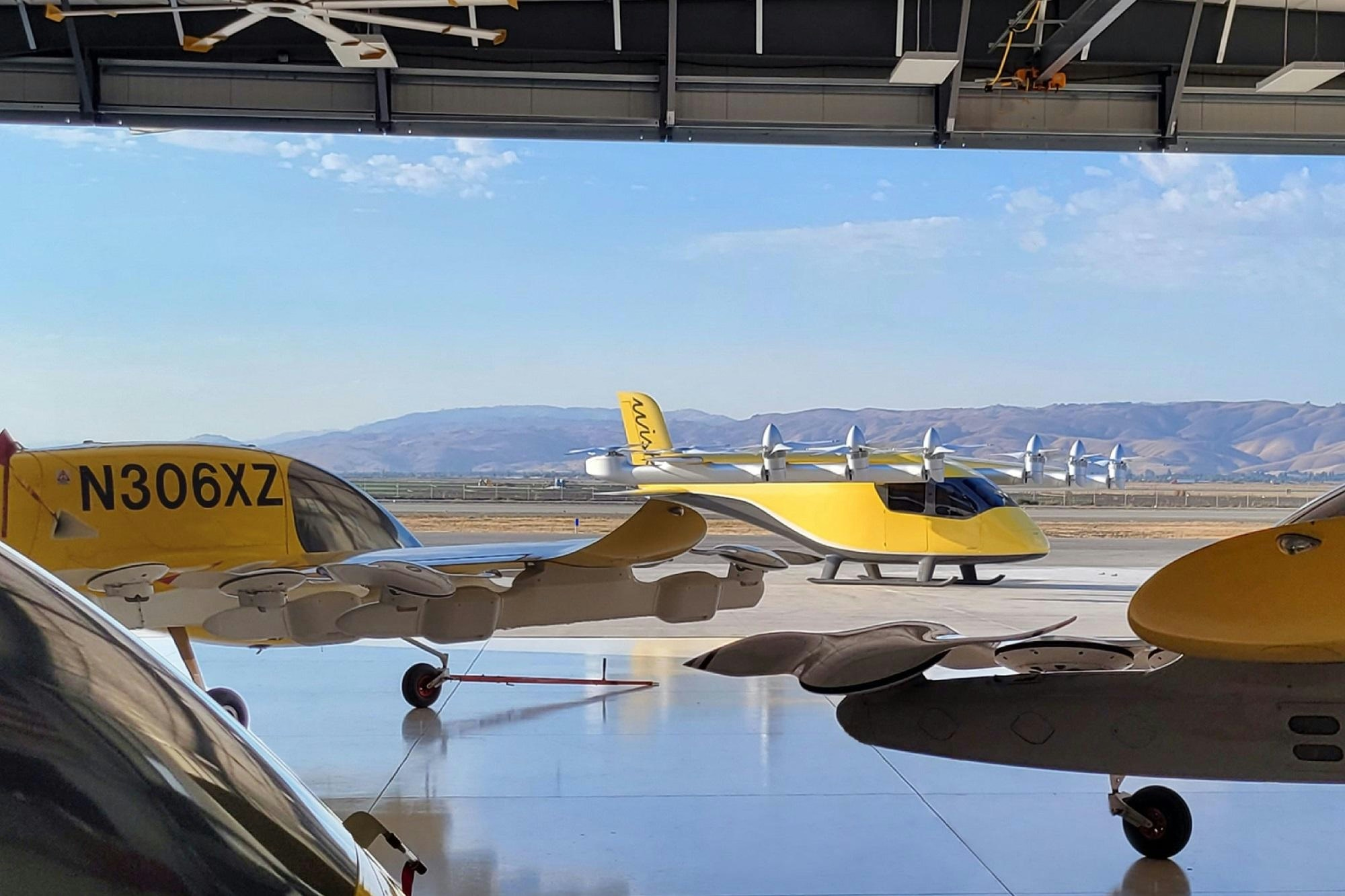
Wisk Aero, a Boeing subsidiary headquartered in California, is positioning itself to be the first company to design and manufacture FAA-certified, pilotless passenger air taxis. Tyler Painter, Wisk’s Chief Financial Officer, described autonomy not as a radical innovation but as a natural evolution of existing aviation technologies during the same congressional session.
Regulatory Support and Safety Innovations
The Federal Aviation Administration (FAA) and Congress have demonstrated strong support for the advancement of AAM technology. In September, the FAA initiated a pilot program aimed at integrating vertical takeoff and landing aircraft—including unmanned models—into the National Airspace System. This program will oversee the introduction of passenger air taxis, short-runway electric flights, and advanced aircraft designed for medical transport and cargo delivery. The FAA has characterized this initiative as ushering in a “new era of aviation,” introducing “powered lift” as the first new civil aircraft category in nearly five decades.
AAM vehicles are typically highly automated and electrically powered, designed specifically for vertical takeoff and landing. The FAA’s pilot program will also assess the enhanced safety features of these aircraft, which utilize advanced sensors, automation, and detect-and-avoid technologies to minimize human error and prevent collisions.
Industry experts contend that automation significantly improves safety compared to traditional crewed aircraft. Reliable Robotics, a California-based company, has developed flight control systems that fully automate taxiing, takeoff, flight, and landing procedures. CEO Robert W. Rose highlighted that these technologies aim to eliminate the most common causes of fatal aviation accidents and save lives, with plans to expand remotely piloted air cargo operations to small towns and rural communities.
Challenges and Market Outlook
Despite rapid advancements, several challenges remain before autonomous flying taxis can achieve widespread adoption. Regulatory complexities, safety concerns, and technological limitations must be addressed. The previous administration introduced a new regulatory framework designed to accelerate the integration of flying taxis, emphasizing the importance of maintaining competitiveness with China’s progress in this sector.
Market reactions to these developments are mixed. While some investors express optimism due to strong government support and high-profile industry partnerships, others remain cautious, pointing to the difficulties of certification processes and public acceptance. As competition intensifies, the effort to bring autonomous flying taxis into U.S. airspace is entering a pivotal stage that could fundamentally reshape the future of transportation.
Archer Aviation Confronts Setbacks Amid Declining Air Taxi Interest
Chinese Team Develops First Flight Control Software for Bamboo Drones
Government Moves Forward with Boeing Purchase, Considers Airbus Leasing
SkyHope Appoints Aviation Industry Leader to Board
The Challenges of Certifying Autonomous Aircraft
KLM to Receive First Airbus A350, Announces Initial Routes
Saxon Air Receives Clean and Green Energy Innovation Award
How BEB Tax Policies Impact Airlines’ International Leasing Contracts

Indonesia’s Danantara and Mandiri Partner with SMBC to Launch $800 Million Aviation Leasing Fund
South Korea’s SUM Air Places Order for New ATR Aircraft
