
AeroGenie — Seu Copiloto Inteligente.

Tendências
Categories
U.S. Airforwarders Association Opposes 10% Import Surcharge, Cites Supply Chain Risks
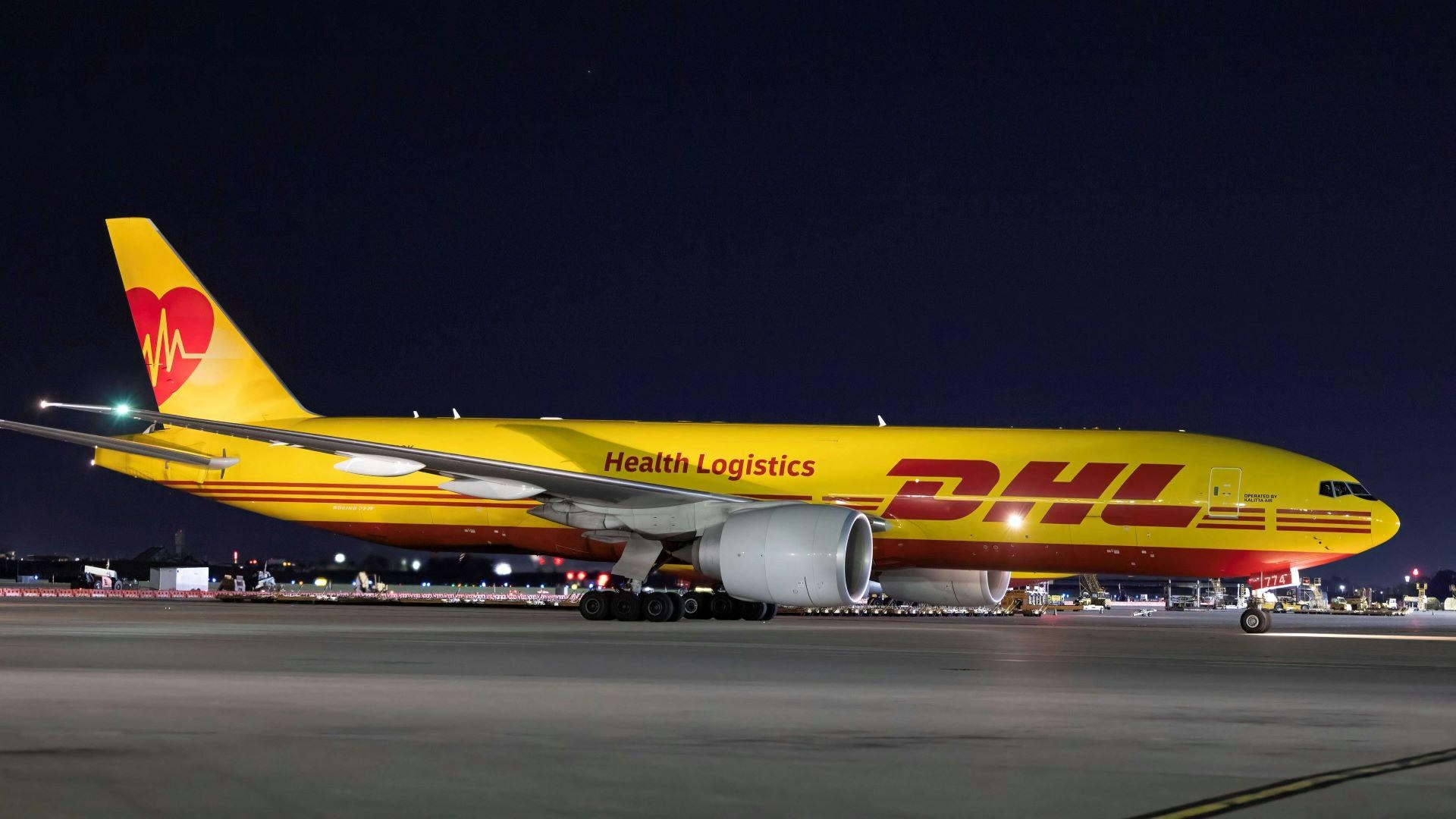
U.S. Airforwarders Association Opposes 10% Import Surcharge, Citing Supply Chain and Geopolitical Risks
Concerns Over Tariff Impact on Supply Chains
The Airforwarders Association has expressed strong opposition to the Administration’s recent decision to impose a temporary 10% surcharge on imports, announced shortly after the President’s State of the Union Address. In a statement issued on February 25, 2026, the Washington D.C.–based trade group cautioned that broad tariff measures risk increasing uncertainty for U.S. businesses, despite recent legal clarifications provided by the Supreme Court.
Representing companies involved in air cargo and logistics, the association highlighted that its members are already contending with volatile shipment volumes, pricing pressures, and complex compliance requirements. The introduction of sweeping tariffs without clear implementation guidelines threatens to further disrupt operations within supply chains that are already under significant strain. Air cargo providers, who typically plan capacity and pricing months in advance and operate on narrow margins, face heightened challenges in long-term planning, investment decisions, and demand forecasting as a result of sudden shifts in trade policy.
Broader Risks and Geopolitical Challenges
The association underscored that the risks facing supply chain and logistics managers extend beyond tariffs alone. Persistent issues such as trade uncertainty, labor shortages, rising material costs, and fluctuations in freight markets continue to exert pressure on the industry, with no immediate resolution in sight. The newly imposed surcharge adds an additional layer of complexity, particularly as businesses grapple with uncertainties surrounding tariff refunds following recent rulings.
Geopolitical instability further exacerbates these challenges. The association pointed to escalating cartel violence in Mexico and increasing tensions in the Middle East as factors that intersect with domestic policy uncertainty, creating a difficult operating environment for U.S. importers, exporters, and logistics providers. These overlapping pressures demand adaptive strategies across global trade and logistics operations.
In response to these concerns, the Airforwarders Association is calling on the Administration and Congress to establish consistent and transparent trade policies. The group argues that enhanced predictability and stability in trade frameworks are critical to bolstering U.S. economic competitiveness and supporting the long-term planning needs of businesses navigating an increasingly complex global trade environment.

Oklahoma’s Aerospace Industry Expands and Its Impact on the State Economy

Archer Aviation Confronts Setbacks Amid Declining Air Taxi Interest
FAA and EASA Mandates to Influence Flight Line Testing Equipment Market Through 2035
Willis Lease Operates as a Leveraged Spread Business with Moderate Returns

Chinese Team Develops First Flight Control Software for Bamboo Drones
Government Moves Forward with Boeing Purchase, Considers Airbus Leasing

SkyHope Appoints Aviation Industry Leader to Board
The Challenges of Certifying Autonomous Aircraft

KLM to Receive First Airbus A350, Announces Initial Routes

Saxon Air Receives Clean and Green Energy Innovation Award
