
AeroGenie — Seu Copiloto Inteligente.

Tendências
Categories
Russian Government Approves Rules for Foreign Wet-Leasing
Russian Government Approves Rules for Foreign Wet-Leasing
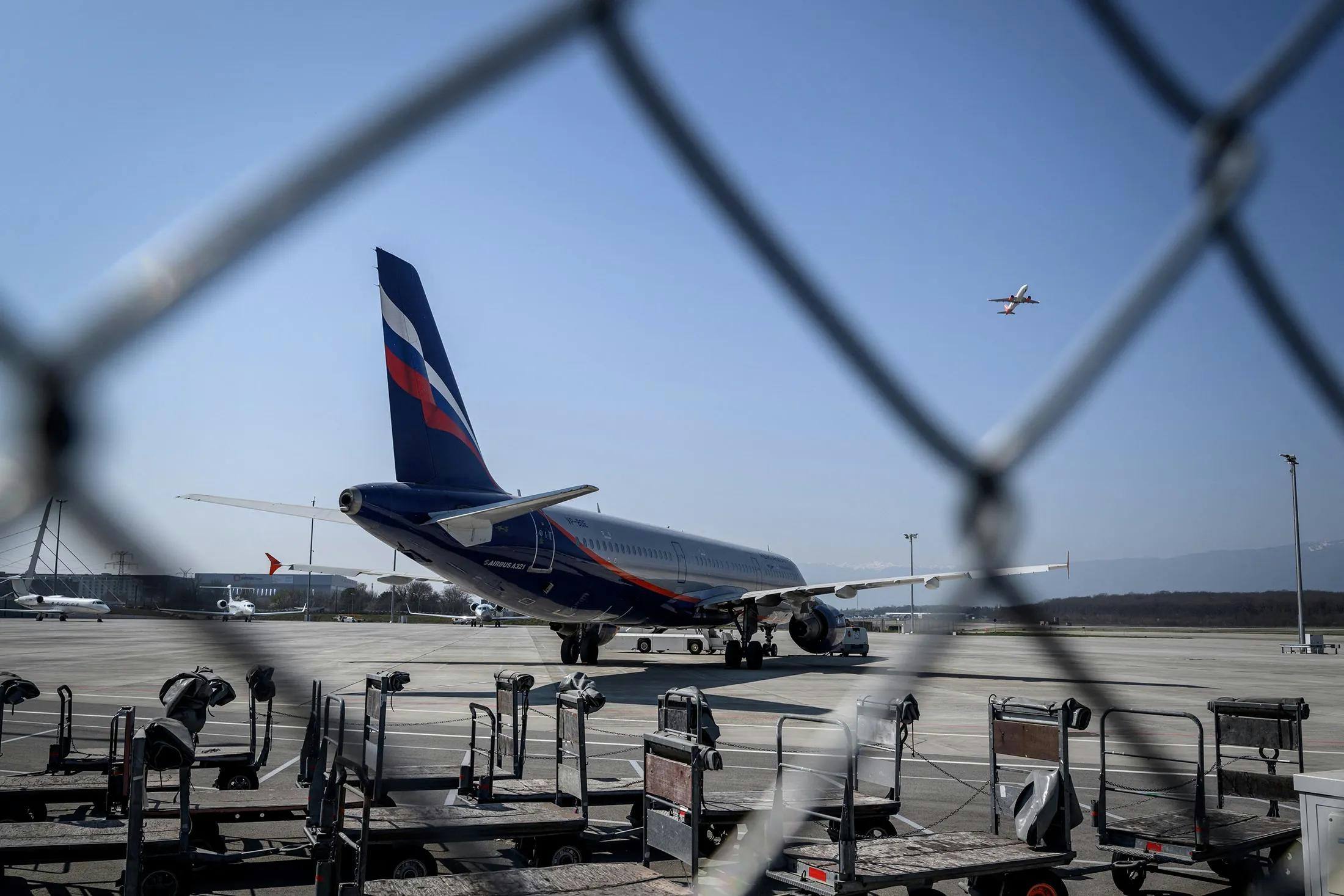
The Russian government has officially sanctioned new regulations permitting the wet-leasing of aircraft from foreign operators, marking a notable development in the country’s aviation policy. This decision builds upon legislative changes introduced last year that allowed domestic wet-leasing, reflecting Russia’s ongoing efforts to diversify its access to aircraft and crew amid evolving market conditions.
Regulatory Framework and Implementation
Prime Minister Mikhail Mishustin signed the approval on 19 September, with the new regulation scheduled to take effect on 1 March 2026 and remain in force until 1 March 2032. Under these rules, Russian airlines will be authorized to obtain operating permits from the Ministry of Transport to lease civil aircraft along with crew from “foreign aviation enterprises” for both passenger and cargo transportation.
The application process mandates that carriers submit comprehensive details regarding the proposed lease to the Ministry of Transport. The ministry will conduct a thorough review and verification of the submission. Should any concerns arise, the ministry holds the authority to deny the permit. If the application passes this initial scrutiny, it is then forwarded to the Federal Security Service and the federal aviation regulator, Rosaviatsia, for further clearance.
Market Implications and Industry Response
This regulatory shift is expected to reshape the Russian aviation landscape by introducing increased competition from international wet-lease operators. However, challenges remain, particularly concerning operational reliability. For instance, UK-based wet-lease operator Ascend Airways has encountered engine reliability issues with CFM International Leap engines on Boeing 737 Max 8 aircraft, especially under harsh operating conditions—factors that may be pertinent for foreign operators entering the Russian market.
Domestic carriers are already adapting strategically to these changes. Aeroflot, Russia’s flagship airline, has previously utilized the domestic wet-leasing provisions and expressed interest in sourcing aircraft from foreign markets. In a related development, Aeroflot recently committed $1.1 billion to acquire the last of its foreign-leased aircraft, indicating a dual strategy of strengthening its own fleet while remaining open to international leasing arrangements.
As Russia prepares to implement these new regulations, industry analysts anticipate a mix of opportunities and operational complexities. The introduction of foreign wet-leasing is poised to enhance flexibility for Russian airlines but will also require careful navigation of technical and regulatory challenges as the market evolves.

Chinese Team Develops First Flight Control Software for Bamboo Drones

SkyHope Appoints Aviation Industry Leader to Board
The Challenges of Certifying Autonomous Aircraft

KLM to Receive First Airbus A350, Announces Initial Routes

Saxon Air Receives Clean and Green Energy Innovation Award

How BEB Tax Policies Impact Airlines’ International Leasing Contracts
Indonesia’s Danantara and Mandiri Partner with SMBC to Launch $800 Million Aviation Leasing Fund
South Korea’s SUM Air Places Order for New ATR Aircraft
Benoît Rollier Named Vice President of KLM Engine Service

Azorra Expands Engine Portfolio Through Deal with DAE
