
AeroGenie — Seu Copiloto Inteligente.

Tendências
Categories
Rolls-Royce Develops Technology to Protect Jet Engines from Sand Damage
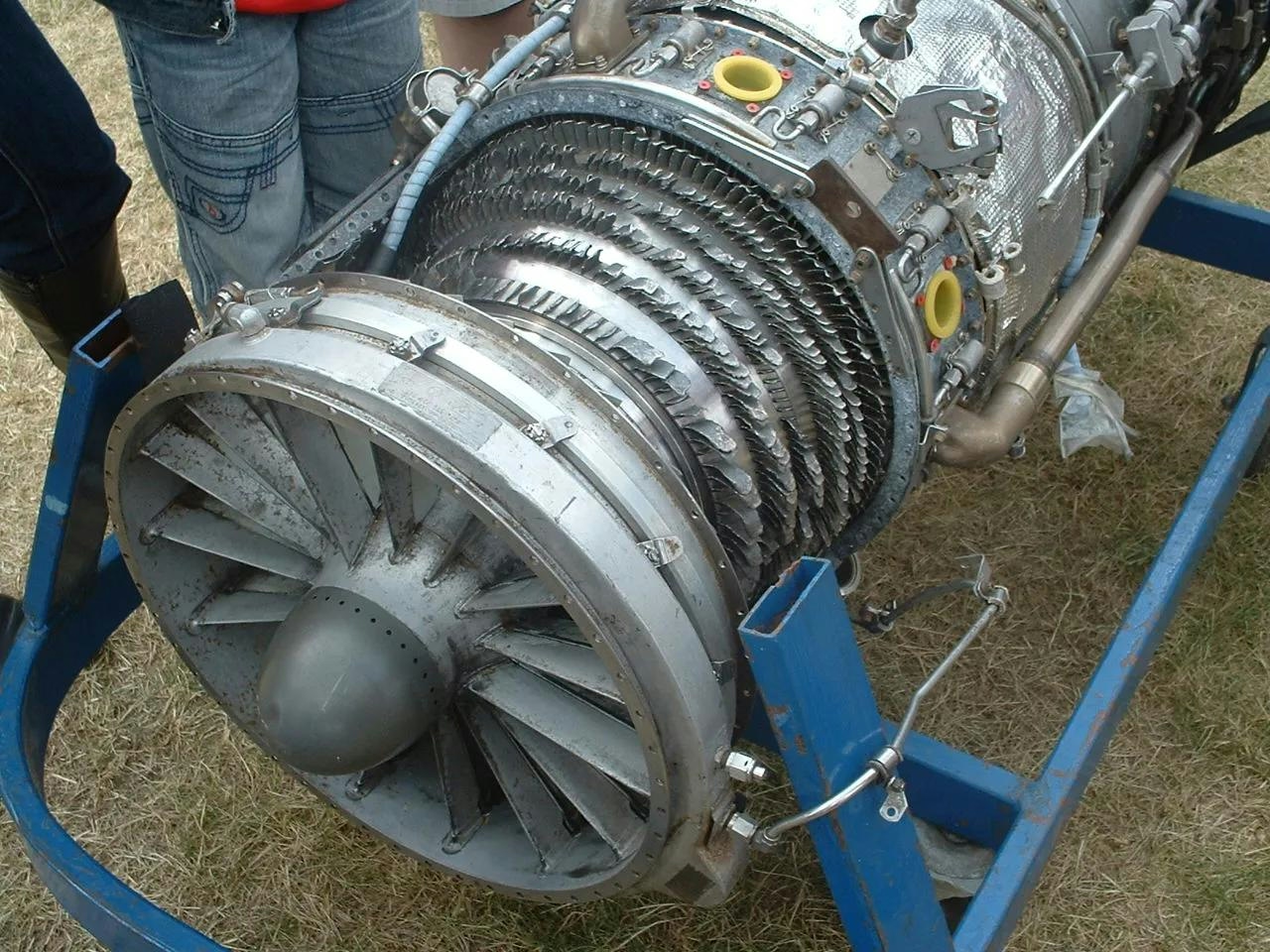
Rolls-Royce Develops Technology to Protect Jet Engines from Sand Damage
Addressing a Persistent Challenge in Desert Operations
Rolls-Royce is currently testing advanced technology at its Derby facility designed to protect jet engines from the detrimental effects of sand and dust. This issue is particularly acute for airlines operating in the Middle East, a critical market for the company. During take-off, fine sand and dust particles can enter the hottest sections of an engine, causing corrosion and blocking coolant holes. While these conditions do not pose a direct threat to flight safety, they significantly reduce engine efficiency and accelerate the degradation of protective coatings, leading to increased maintenance requirements.
Enhancing Durability and Reliability in Harsh Environments
The company’s latest initiatives aim to improve the resilience and reliability of engine components exposed to severe desert conditions. Initial dust-ingestion tests have surpassed expectations, yet ensuring that these protective measures maintain their effectiveness over extended periods remains a key challenge. Rolls-Royce engineers are rigorously evaluating whether the new technology can endure prolonged exposure to abrasive environments without compromising engine performance.
Market Implications and Industry Response
Industry analysts suggest that the successful implementation of this technology could strengthen confidence in Rolls-Royce’s engine durability, potentially enabling the company to reclaim market share from competitors. As airlines increasingly demand engines capable of withstanding dusty operating environments, Rolls-Royce’s advancements may establish a new benchmark for reliability. In response, rival manufacturers are anticipated to develop their own sand protection technologies or enhance existing engine designs to remain competitive. This ongoing innovation underscores the growing necessity of adapting aviation technology to meet the challenges posed by diverse and demanding operational conditions worldwide.
Archer Aviation Confronts Setbacks Amid Declining Air Taxi Interest
Chinese Team Develops First Flight Control Software for Bamboo Drones
Government Moves Forward with Boeing Purchase, Considers Airbus Leasing
SkyHope Appoints Aviation Industry Leader to Board
The Challenges of Certifying Autonomous Aircraft
KLM to Receive First Airbus A350, Announces Initial Routes
Saxon Air Receives Clean and Green Energy Innovation Award
How BEB Tax Policies Impact Airlines’ International Leasing Contracts

Indonesia’s Danantara and Mandiri Partner with SMBC to Launch $800 Million Aviation Leasing Fund
South Korea’s SUM Air Places Order for New ATR Aircraft
