
AeroGenie — Seu Copiloto Inteligente.

Tendências
Categories
Former AAIB Chief Says It’s Too Early to Assess Pilot’s Role in AI Plane Crash
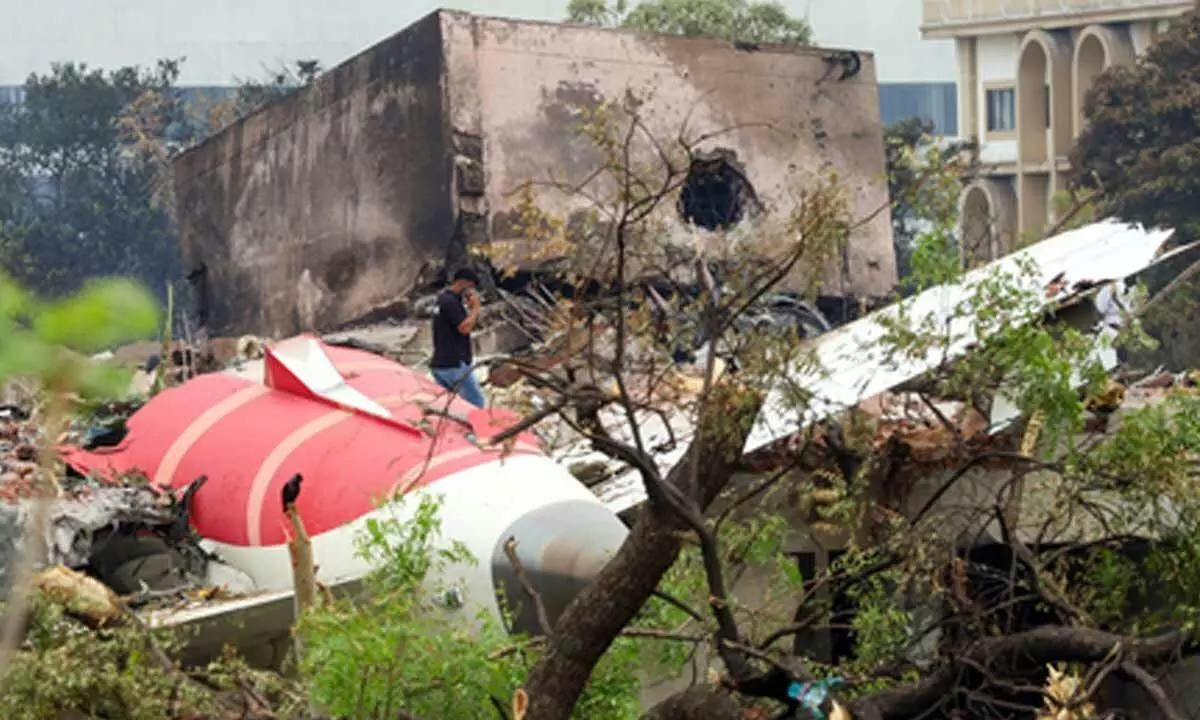
Former AAIB Chief Urges Caution in Assessing Pilot’s Role in Air India Crash
New Delhi, July 13 — It remains premature to draw definitive conclusions regarding the pilots’ involvement in last month’s tragic Air India flight 171 crash, according to Aurobindo Handa, former chief of the Aircraft Accident Investigation Bureau (AAIB). The fatal accident, which claimed 260 lives, is still under thorough investigation, and Handa stressed that only the final report will establish the most probable cause.
Having led investigations into over 100 aircraft accidents, including the 2020 Air India Express crash in Kozhikode, Handa called for patience and restraint following the release of the AAIB’s preliminary findings. Speaking a day after the bureau published its initial report, he urged that the investigation be allowed to proceed in a fair, unbiased, and transparent manner.
Preliminary Findings and Pilot Details
The preliminary report disclosed that the fuel switches on the Boeing 787-8 involved in the crash were turned off within a second of each other and subsequently reactivated. Cockpit voice recordings captured an exchange between the two pilots, with one questioning the other about the fuel switch being cut off, and the second denying responsibility. The report did not clarify which pilot made each statement.
On the ill-fated flight from Ahmedabad to London Gatwick, First Officer Clive Kundar, aged 32, was the Pilot Flying (PF), while Captain Sumeet Sabharwal, 56, served as Pilot In Command (PIC) and Pilot Monitoring (PM). Sabharwal had accumulated over 8,596 hours on the 787, including 8,260 hours as PIC, whereas Kundar had logged 1,128 hours on the aircraft. Both pilots reportedly had adequate rest prior to the flight.
Handa cautioned against speculation, particularly in some foreign media outlets that have suggested pilot error. He appealed to experienced aviators and commentators to refrain from conjecture until the investigation is complete.
Ongoing Investigation and Industry Implications
The crash occurred shortly after takeoff when the aircraft struck a building, resulting in only one survivor among 242 occupants. The investigation is now focused on understanding why the fuel switches were manipulated and whether mechanical or electrical failures played a role.
Handa emphasized that the forthcoming stages of the AAIB inquiry will be critical in elucidating these technical factors. The tragedy has intensified scrutiny of airline safety standards, especially amid recent incidents such as a technical malfunction on a Thai Lion Air flight, which have heightened concerns about operational reliability.
The aviation industry faces mounting pressure to reinforce safety protocols and maintain public confidence. Airlines are expected to enhance communication and transparency in response to such events. Market reactions have mirrored investor apprehensions regarding safety, while competitors may seek to highlight their own safety measures to reassure passengers.
As the investigation progresses, both industry stakeholders and the public await comprehensive findings to fully understand the causes behind the Air India crash.
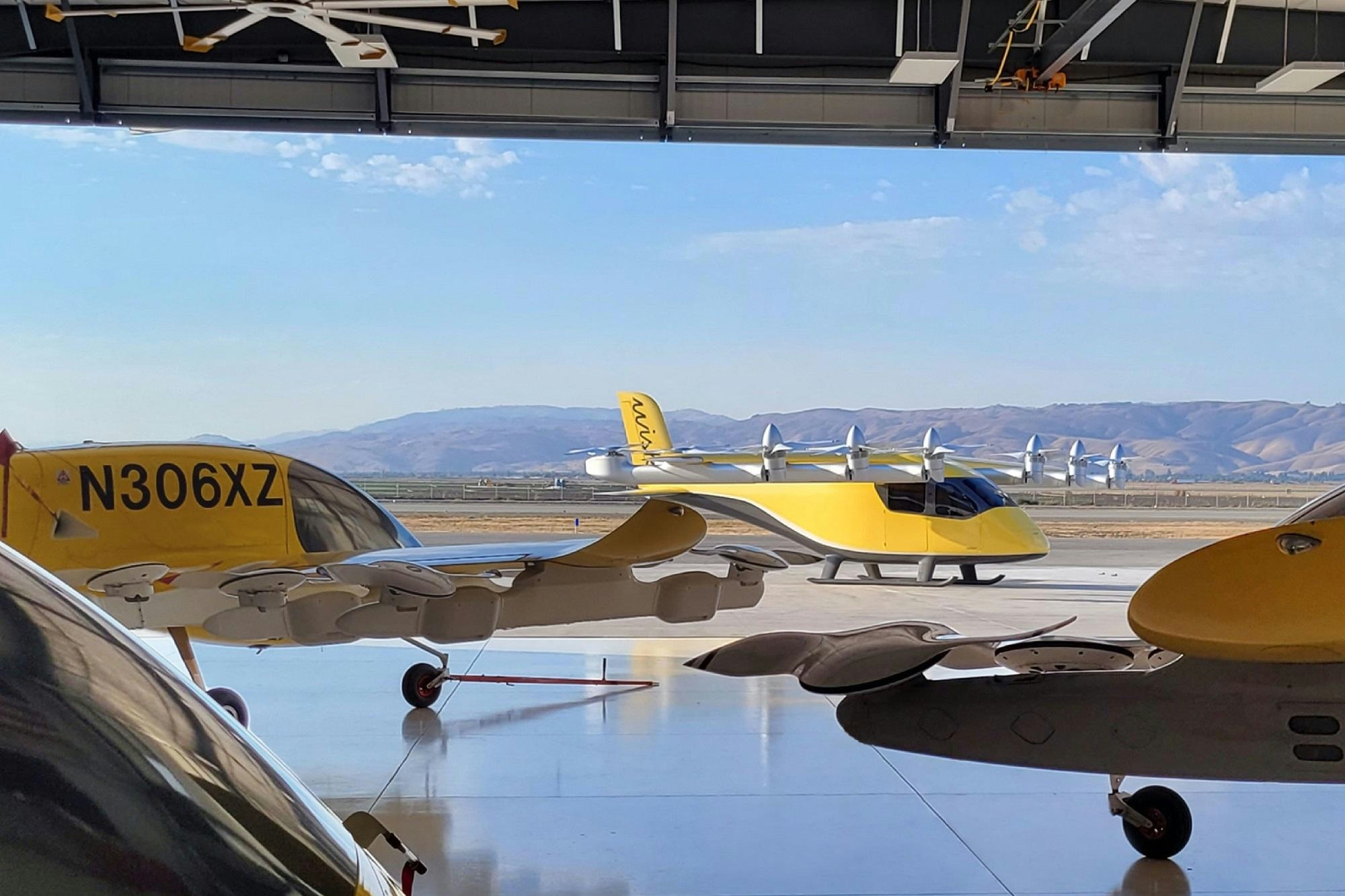
Archer Aviation Confronts Setbacks Amid Declining Air Taxi Interest

Chinese Team Develops First Flight Control Software for Bamboo Drones
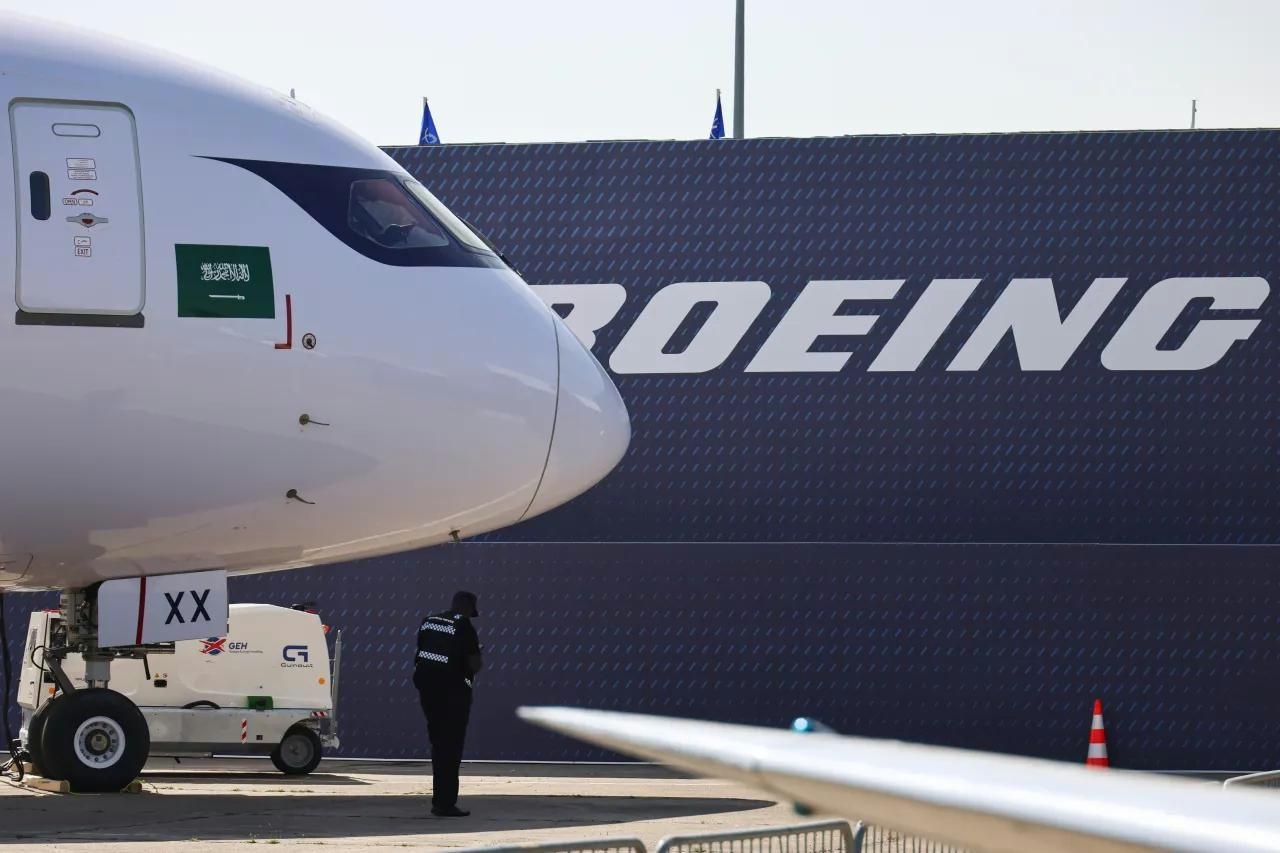
Government Moves Forward with Boeing Purchase, Considers Airbus Leasing

SkyHope Appoints Aviation Industry Leader to Board
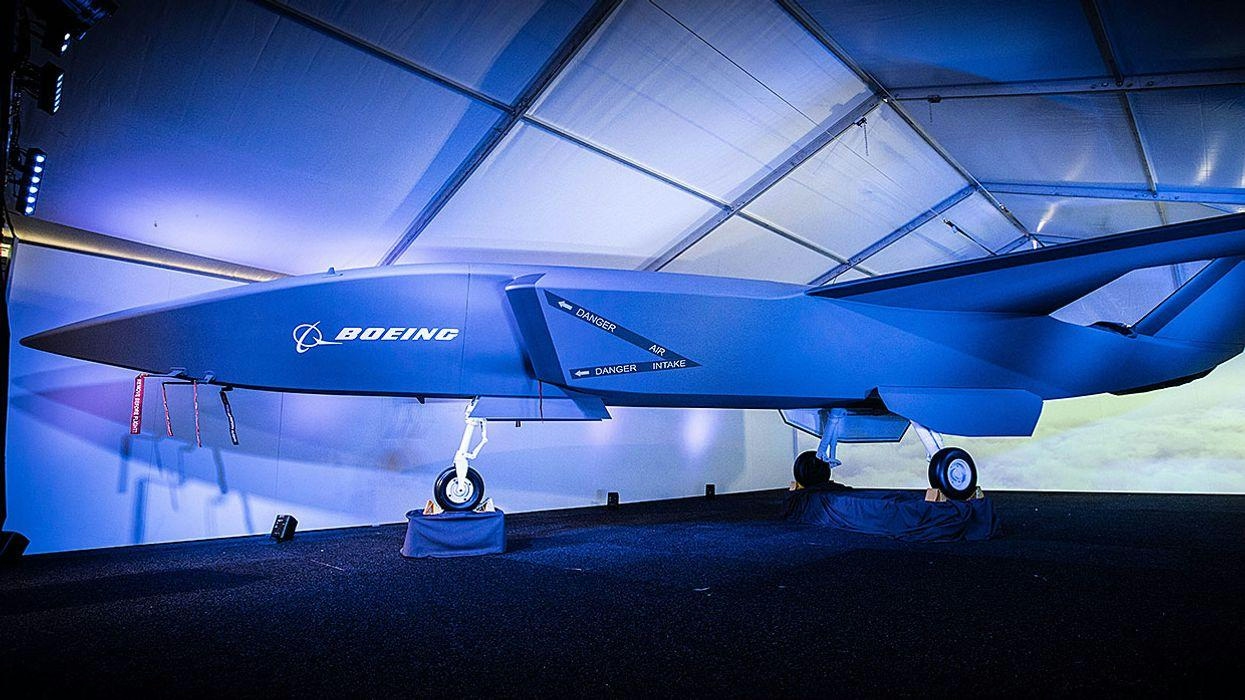
The Challenges of Certifying Autonomous Aircraft
KLM to Receive First Airbus A350, Announces Initial Routes

Saxon Air Receives Clean and Green Energy Innovation Award
How BEB Tax Policies Impact Airlines’ International Leasing Contracts

Indonesia’s Danantara and Mandiri Partner with SMBC to Launch $800 Million Aviation Leasing Fund

South Korea’s SUM Air Places Order for New ATR Aircraft
