
AeroGenie — Seu Copiloto Inteligente.

Tendências
Categories
EIB Advisory Supports VAERIDION’s Fully Electric Nine-Seater Regional Aircraft
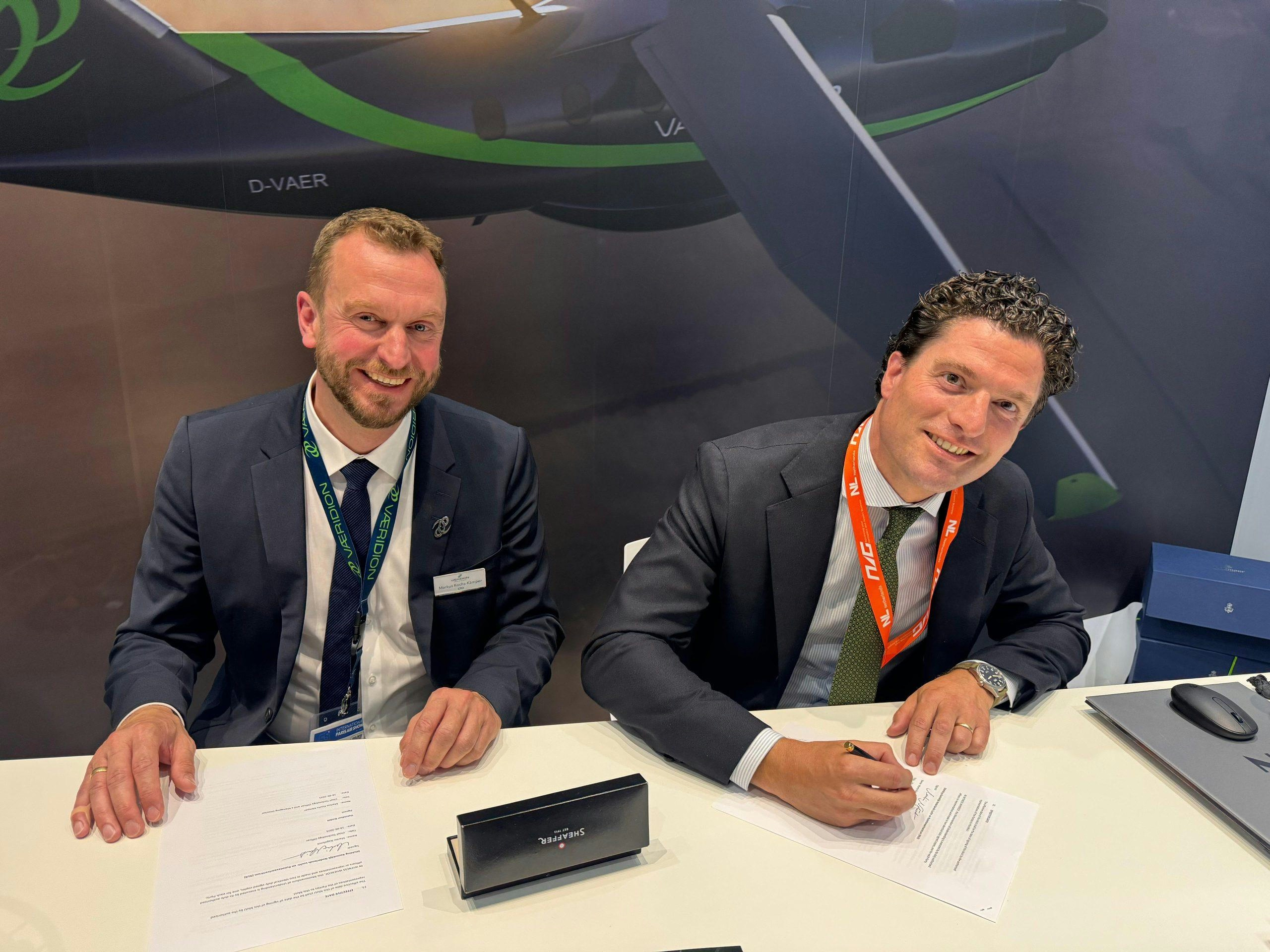
EIB Advisory Supports VAERIDION’s Fully Electric Nine-Seater Regional Aircraft
The European Investment Bank (EIB) is extending advisory support to German aviation startup VAERIDION as it advances the development of a fully electric nine-seater regional aircraft. This initiative aims to accelerate the decarbonization of short-haul air travel across Europe. The support is provided through the EU Innovation Fund Project Development Assistance (IFPDA) programme, which is intended to help VAERIDION transition its Microliner project from prototype stage to industrial-scale production, while also attracting future investment.
Advancing Sustainable Regional Aviation
EIB Vice President Ioannis Tsakiris emphasized the significance of this collaboration, stating, “Decarbonising aviation is one of Europe’s most complex climate challenges. Through our advisory services, we support innovative companies that can change how people travel.” He highlighted that VAERIDION’s Microliner project exemplifies how new electric aircraft can make regional flying cleaner and quieter, while preserving vital connections between communities throughout Europe.
Founded in 2021 and headquartered in Munich with a subsidiary in Delft, VAERIDION unites engineers from aerospace, high-tech, and automotive sectors. The Microliner is designed as a fully electric aircraft with nine seats, targeting short-haul routes of up to 400 kilometres. It promises zero in-flight emissions—eliminating CO₂, NOₓ, and contrails—alongside significantly reduced noise levels and improved energy efficiency compared to conventional aircraft. The design allows operation from both major hubs and thousands of existing small regional airfields across Europe and the United States, without the need for new runways or costly infrastructure upgrades.
VAERIDION’s CEO and Co-founder, Ivor van Dartel, explained the company’s vision: “With the Microliner, we aim to provide clean, affordable flights on routes that today are either unserved or reliant on fossil fuels, leveraging the 2,300 regional airports that already exist across Europe.” He noted that the EIB’s advisory support brings critical expertise in project structuring, risk management, and funding access, which will be instrumental in transforming the Microliner from a promising prototype into a viable industrial project.
Challenges and Market Outlook
VAERIDION has already secured an initial customer order and forged partnerships with key industry players. The Microliner is intended to enhance connectivity to remote regions underserved by highways and high-speed rail, offering quiet, electric flights from existing small airports. This approach aims to reconnect mid-sized cities, islands, and rural areas that have lost scheduled air services. The company plans to establish a dedicated manufacturing and assembly facility at Oberpfaffenhofen Airport in Germany, which will also serve as the central testing site for the aircraft’s maiden flight and subsequent serial production.
Despite its potential, VAERIDION faces considerable challenges. Regulatory approval for new electric aircraft remains a complex process, and the company will contend with established manufacturers such as Airbus and ATR, both of which are progressing their own electric and hybrid-electric aircraft programs. ATR, for instance, has committed to a decision on a hybrid regional airliner by 2029, while other competitors are advancing eVTOL prototypes. Furthermore, the widespread adoption of electric regional aviation will require substantial infrastructure development for battery charging and maintenance.
Market reactions to VAERIDION’s project are expected to be mixed. While some investors are optimistic about the environmental benefits and the prospect of enhanced regional connectivity, others remain cautious regarding the technology’s maturity and the economic viability of the aircraft. The coming years will be critical as VAERIDION seeks to demonstrate the feasibility and scalability of the Microliner within a rapidly evolving aviation sector.

Plane lands on Pennsylvania highway due to ‘engine issues,’ FAA says
LEVEL Suspends San Francisco Flights Due to Engine Shortage
China Conducts First Flight Test of Megawatt Hydrogen Turboprop Engine
Oklahoma’s Aerospace Industry Expands and Its Impact on the State Economy
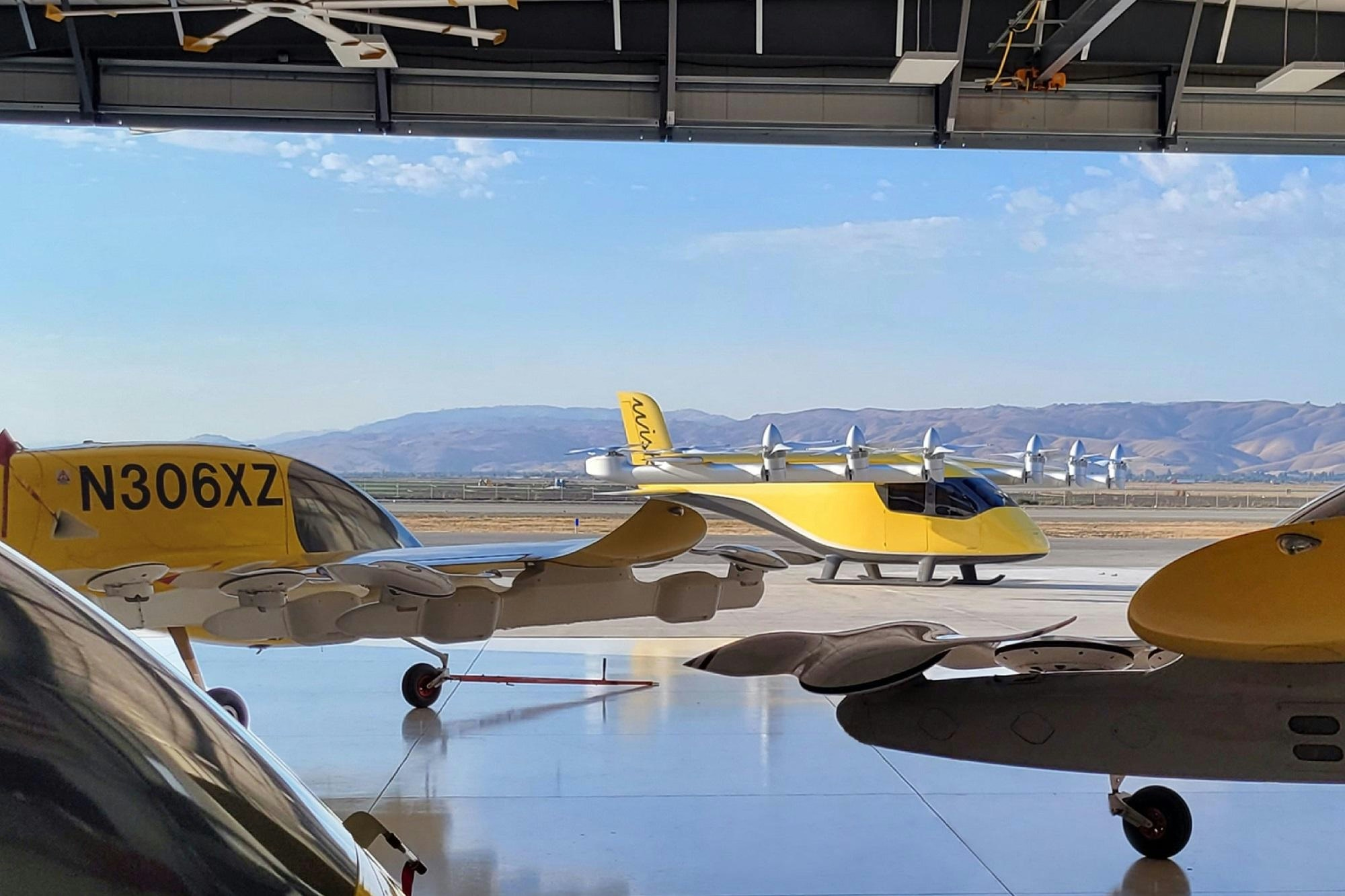
Archer Aviation Confronts Setbacks Amid Declining Air Taxi Interest

FAA and EASA Mandates to Influence Flight Line Testing Equipment Market Through 2035
Willis Lease Operates as a Leveraged Spread Business with Moderate Returns

Chinese Team Develops First Flight Control Software for Bamboo Drones
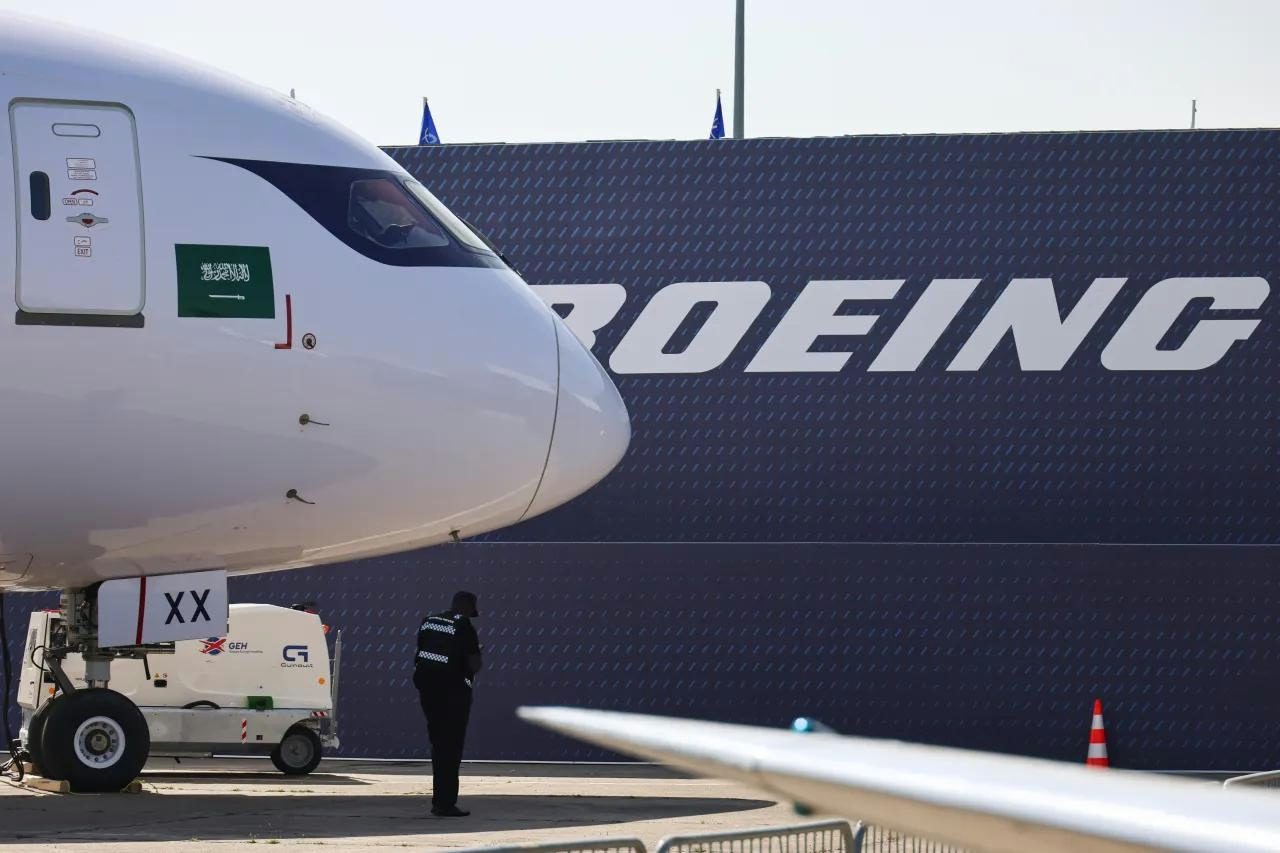
Government Moves Forward with Boeing Purchase, Considers Airbus Leasing
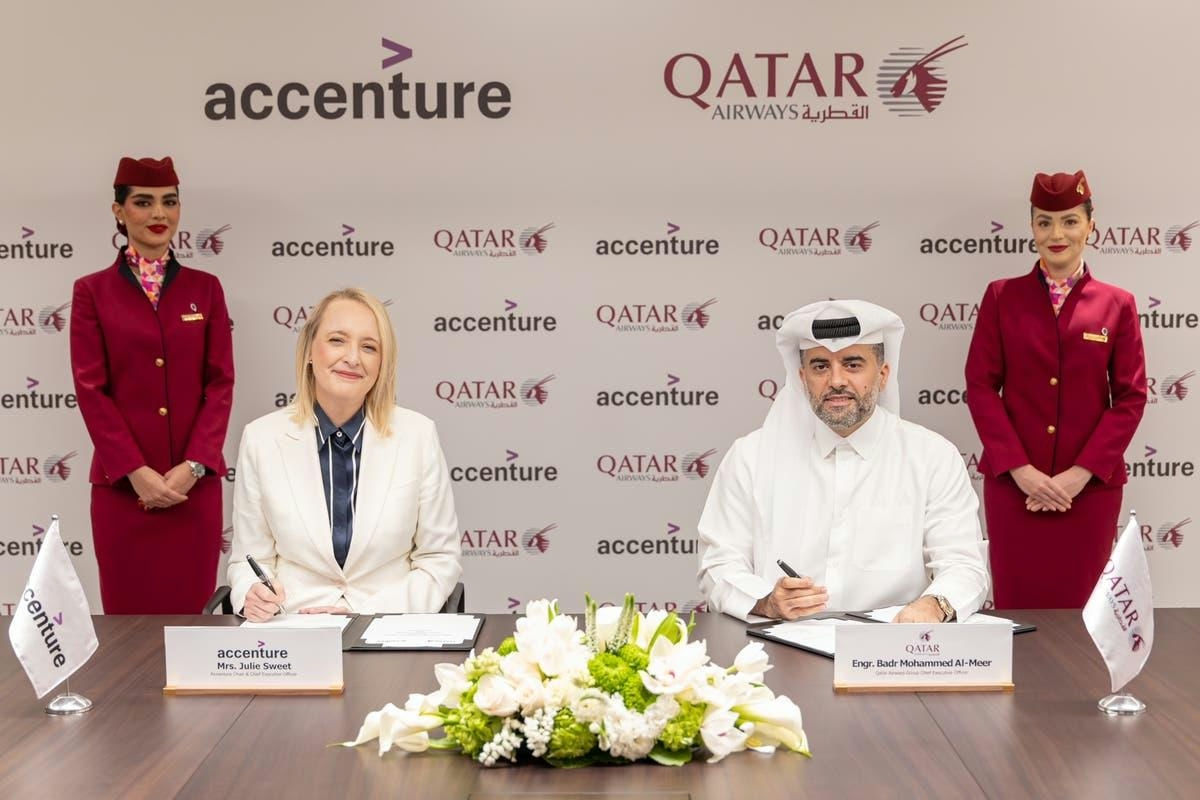
Changes in Airline Industry Leadership, Alliances, and AI
