
AeroGenie — Seu Copiloto Inteligente.

Tendências
Categories
Dubai Introduces AI-Powered Scanners Allowing Liquids and Laptops in Hand Luggage
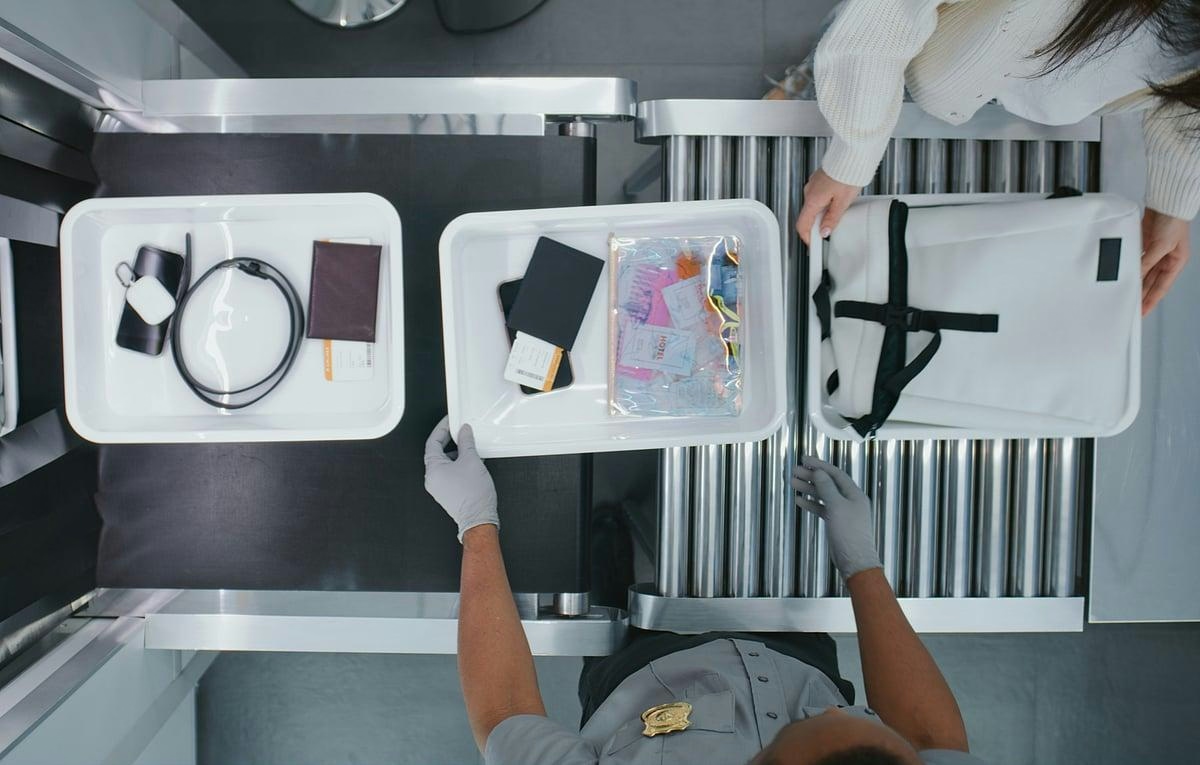
Dubai Introduces AI-Powered Scanners Allowing Liquids and Laptops in Hand Luggage
Dubai International Airport (DXB) is set to revolutionize the passenger security experience with the introduction of advanced AI-powered scanners that permit travelers to keep liquids and laptops inside their hand luggage during screening. This development, announced by Paul Griffiths, chief executive of Dubai Airports, represents a significant departure from the longstanding restrictions requiring liquids to be limited to 100ml and electronics to be removed at security checkpoints.
Enhancing Passenger Convenience and Security
Griffiths emphasized the scale of the investment, noting that over 100 hand-luggage screening machines will be upgraded with the latest technology. The new system allows passengers to place their bags on the tray and proceed through security without the need to remove shoes, liquids, or laptops. “That’s going to be a huge improvement in passenger convenience,” Griffiths stated, highlighting the streamlined process.
Currently, five or six of these AI-driven scanners are operational, with full deployment anticipated by the end of the year. The technology not only expedites the screening process but also improves security by automatically analyzing the contents of bags and flagging only those requiring further inspection. This method promises a more intensive yet non-intrusive approach, reducing manual checks and minimizing delays.
A Broader Vision for Barrier-Free Travel
This initiative forms part of Dubai Airports’ wider strategy to create a barrier-free travel environment. Other innovations include passport-less immigration and facial recognition-based check-in systems, all designed to facilitate seamless passenger flow. Griffiths referred to this vision as the “no red lights” initiative, underscoring the airport’s commitment to pioneering smooth and efficient travel experiences.
Since 2007, UAE airports have enforced strict regulations on liquids, aerosols, and gels in cabin luggage, in line with international aviation security standards. The new AI scanners will eliminate the need for travelers to discard common items such as deodorants and creams, lifting what Griffiths described as “a burden that’s been in place for far too long.”
Challenges and Global Implications
Despite the promising benefits, the introduction of AI-powered scanners presents challenges, including passenger acceptance, regulatory compliance, and integration with existing security protocols. The move also occurs amid intensifying global competition over AI governance and benefits, as highlighted in recent discussions at the World Economic Forum in Davos. Dubai’s leadership in adopting this technology may prompt other major airports to accelerate similar upgrades to maintain security standards and enhance passenger satisfaction.
Market analysts anticipate a positive response, with increased convenience and efficiency expected to strengthen Dubai’s position in the competitive global aviation sector. The broader implications suggest a future where trust-driven AI applications become central to airport operations, fundamentally reshaping the travel experience worldwide.
Dubai as a Hub for Technological Innovation
Dubai’s ongoing technology trials, including real-time passenger tracking from curb to gate and personalized travel reminders, position the airport as a testing ground for innovations that could be extended to the new Al Maktoum International Airport (DWC) and beyond. Griffiths concluded, “We’ll be able to freely travel with all the things we need, which is going to be a huge lift of a burden that’s been in place for far too long,” signaling a new era in airport security and passenger convenience.

Plane lands on Pennsylvania highway due to ‘engine issues,’ FAA says
LEVEL Suspends San Francisco Flights Due to Engine Shortage
China Conducts First Flight Test of Megawatt Hydrogen Turboprop Engine
Oklahoma’s Aerospace Industry Expands and Its Impact on the State Economy
Archer Aviation Confronts Setbacks Amid Declining Air Taxi Interest

FAA and EASA Mandates to Influence Flight Line Testing Equipment Market Through 2035
Willis Lease Operates as a Leveraged Spread Business with Moderate Returns
Chinese Team Develops First Flight Control Software for Bamboo Drones
Government Moves Forward with Boeing Purchase, Considers Airbus Leasing
Changes in Airline Industry Leadership, Alliances, and AI
