
AeroGenie — Seu Copiloto Inteligente.

Tendências
Categories
Collins advances hybrid-electric aviation with HECATE milestone
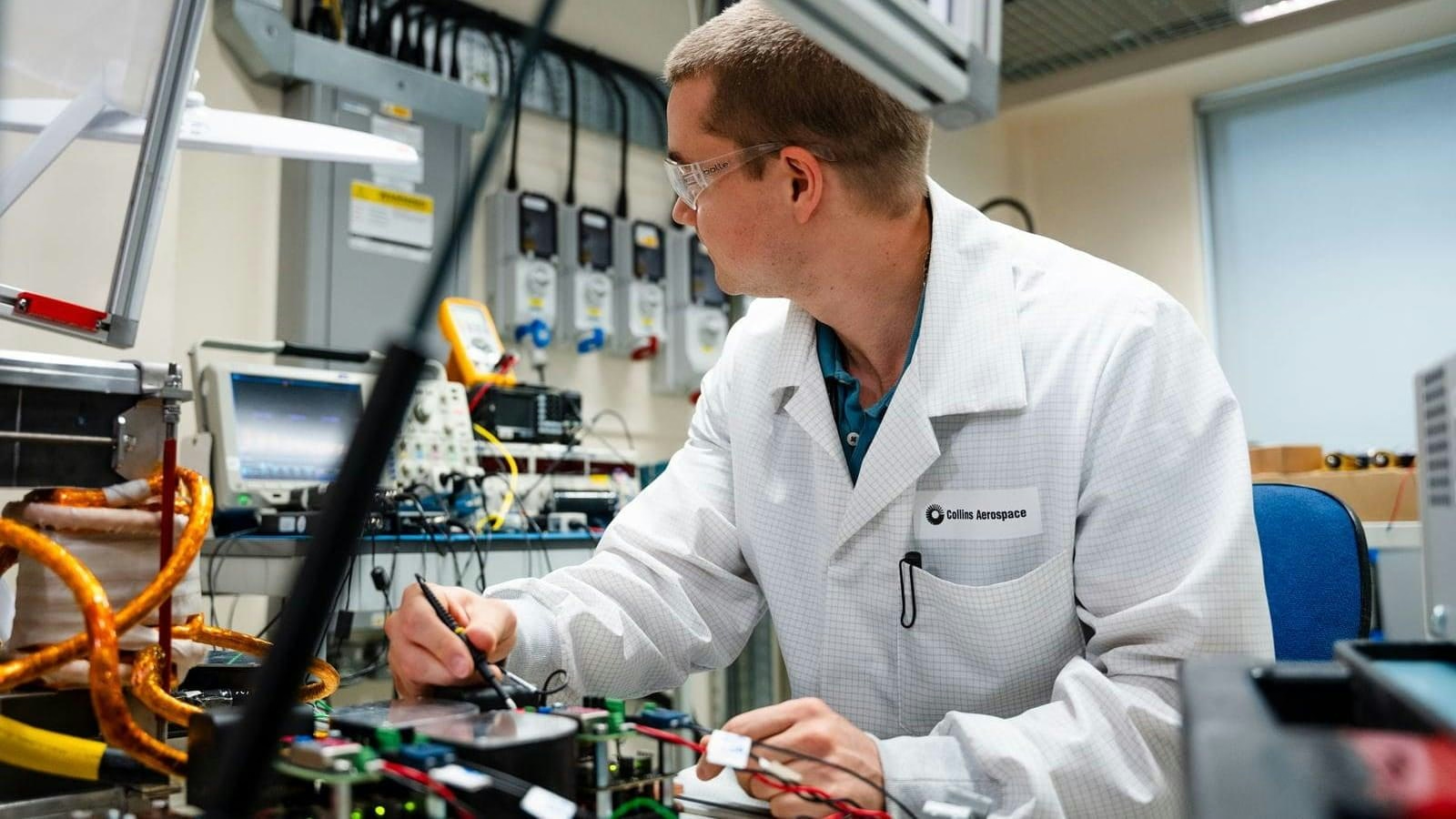
Collins Advances Hybrid-Electric Aviation with HECATE Milestone
Collins Aerospace has achieved a significant breakthrough in hybrid-electric aviation by successfully completing the HECATE project, a pivotal initiative under the European Union’s Clean Aviation Joint Undertaking, supported by UK Research and Innovation. The project has attained Technology Readiness Level 5 (TRL5), confirming the viability of its electrical architecture for future hybrid-electric aircraft under real-world operating conditions.
HECATE Project and Consortium Collaboration
The Hybrid-ElectriC regional Aircraft distribution TEchnologies (HECATE) project reached this milestone in late 2025 following extensive testing, verification, and validation of its Electrical Power Generation and Distribution System. The hybrid-electric system, capable of generating over 500 kilowatts, was tested on Safran Electrical & Power’s Copper Bird platform in Niort, France. This platform simulates and validates advanced electrical systems within a controlled environment, providing critical data to support the system’s readiness.
The HECATE consortium comprises leading European aerospace entities, including Collins Aerospace, Safran, Airbus Defence and Space, Leonardo, and several academic institutions. Collins Aerospace, through its Applied Research & Technology organization and Power & Controls business, led the project’s steering committee, while Safran Electrical & Power acted as the technical coordinator. This collaboration underscores the collective effort to advance hybrid-electric propulsion technologies across Europe.
Technological Innovations and Future Challenges
Phase 1 of the Clean Aviation Joint Undertaking incorporated digital twin technology to simulate real-world operations, significantly reducing testing time and ensuring compliance with stringent electromagnetic compatibility standards. This approach allowed the system to operate safely without interference, even in challenging electromagnetic environments, marking a critical step toward practical deployment.
Despite this technical success, Collins and its partners face several challenges moving forward. Regulatory approval processes, market acceptance, and intensifying competition from other hybrid-electric and hydrogen-powered aircraft initiatives may influence the pace and trajectory of future developments. Industry observers have responded with cautious optimism, closely monitoring progress as competitors such as Airbus and Electra.aero are expected to accelerate their own hybrid-electric and advanced air mobility projects.
Collins is also advancing efforts to hybridize the Pratt & Whitney PW1100G engine, supported by EU Clean Aviation funding. Progress in this area could establish a benchmark for hybrid-electric propulsion systems and significantly impact the broader adoption of sustainable aviation technologies.
Pathway to Future Clean Aviation Projects
The HECATE milestone sets the stage for subsequent Clean Aviation projects, including OSYRYS and LEIA. OSYRYS, led by Safran Electrical & Power, focuses on developing and testing electrical systems for hybrid-electric regional aircraft. Meanwhile, LEIA, led by Airbus, aims to integrate and validate hybrid-electric architectures in laboratory settings, preparing for the entry into service of new short- to medium-range aircraft by 2035. These initiatives highlight the ongoing collaboration among Airbus, Safran, and Collins to accelerate the development and adoption of hybrid-electric aviation technologies throughout Europe.
Oklahoma’s Aerospace Industry Expands and Its Impact on the State Economy
Archer Aviation Confronts Setbacks Amid Declining Air Taxi Interest

FAA and EASA Mandates to Influence Flight Line Testing Equipment Market Through 2035
Willis Lease Operates as a Leveraged Spread Business with Moderate Returns
Chinese Team Develops First Flight Control Software for Bamboo Drones
Government Moves Forward with Boeing Purchase, Considers Airbus Leasing
SkyHope Appoints Aviation Industry Leader to Board
The Challenges of Certifying Autonomous Aircraft
KLM to Receive First Airbus A350, Announces Initial Routes
Saxon Air Receives Clean and Green Energy Innovation Award
