
AeroGenie — Seu Copiloto Inteligente.

Tendências
Categories
Budget 2026 Supports Duty-Free Manufacturing in Aviation Sector
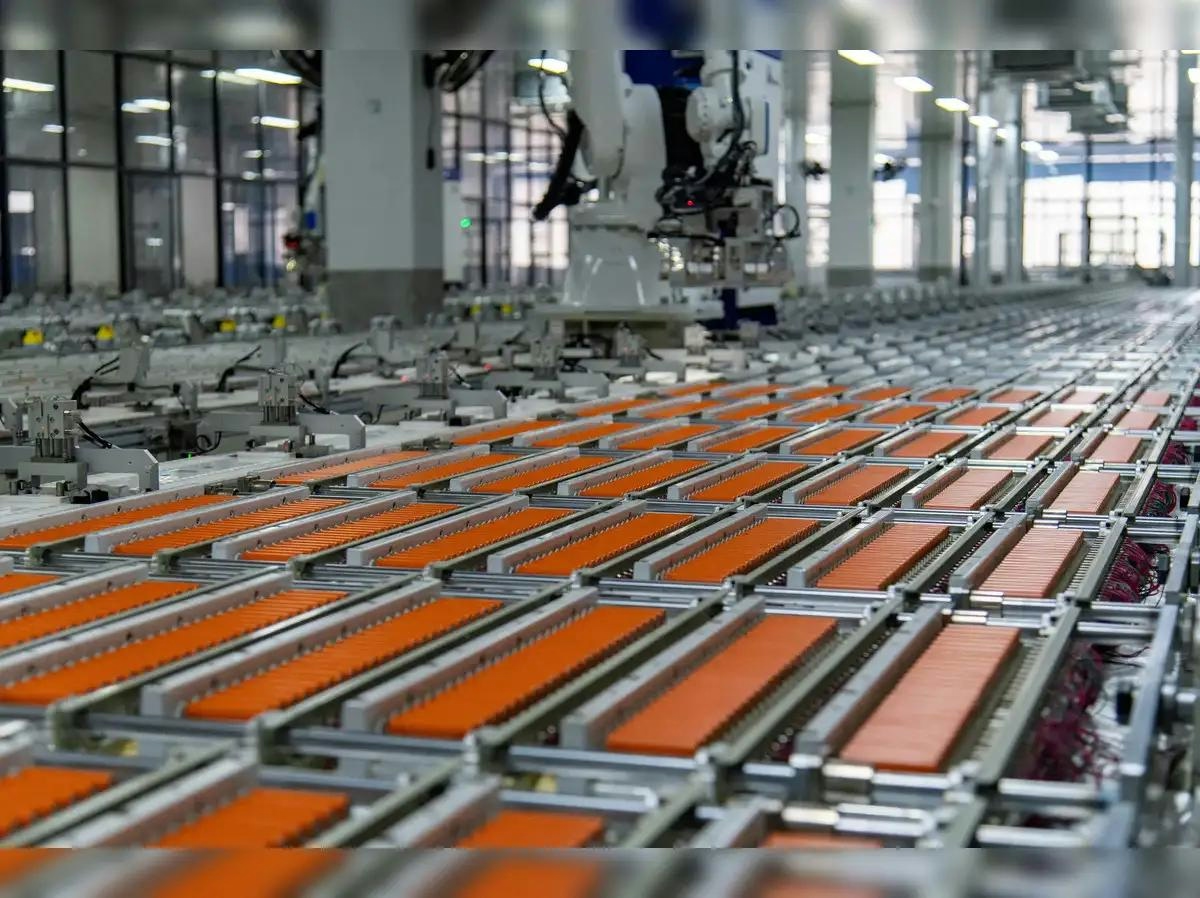
Budget 2026 Supports Duty-Free Manufacturing in Aviation Sector
Customs Duty Exemptions to Boost Domestic Aviation Manufacturing
In the Union Budget 2026, Finance Minister Nirmala Sitharaman announced a series of customs duty exemptions aimed at strengthening India’s civil and defence aviation manufacturing capabilities. The proposals include the removal of basic customs duty on components and parts used in the production of civilian training aircraft and other civilian aircraft. This measure is intended to enhance the domestic aviation manufacturing ecosystem, reduce dependency on imports, and position India as a global hub for aircraft production and maintenance.
For the defence sector, the Budget proposes exempting basic customs duty on raw materials imported for manufacturing aircraft parts used in maintenance, repair, and overhaul (MRO), as well as other operational needs of defence units. These exemptions are designed to encourage domestic production, improve cost competitiveness, and support the expansion of India’s aerospace and defence manufacturing base.
Strategic Implications and Industry Response
The government’s duty exemption measures form part of a broader strategy to scale up manufacturing in strategic sectors, deepen localisation, and attract investment. Vinay Dube, Founder and CEO of Akasa Air, highlighted the Budget’s forward-looking approach, noting its potential to accelerate tourism and mobility across India, particularly by improving last-mile connectivity and infrastructure in Tier 2 and Tier 3 cities alongside metropolitan areas.
Market reactions to the Budget announcements have been largely positive, with expectations that these measures will boost investor confidence and localisation efforts within the aviation industry. However, the ultimate success of these initiatives will depend on the government’s ability to maintain fiscal discipline and provide consistent policy support.
Despite the optimism, challenges remain. Policy uncertainty and the need for disciplined execution could hinder India’s transition to a manufacturing-led economy. Additionally, international competitors may respond by enhancing their own manufacturing capabilities or employing tariffs and trade policies to protect their market positions.
The Budget 2026 proposals represent a significant step towards establishing India as a competitive player in the global aviation manufacturing and MRO sectors. They also underscore the critical importance of stable policy frameworks and effective implementation to realise these ambitions.

Chinese Team Develops First Flight Control Software for Bamboo Drones
SkyHope Appoints Aviation Industry Leader to Board
The Challenges of Certifying Autonomous Aircraft
KLM to Receive First Airbus A350, Announces Initial Routes

Saxon Air Receives Clean and Green Energy Innovation Award
How BEB Tax Policies Impact Airlines’ International Leasing Contracts
Indonesia’s Danantara and Mandiri Partner with SMBC to Launch $800 Million Aviation Leasing Fund

South Korea’s SUM Air Places Order for New ATR Aircraft
Benoît Rollier Named Vice President of KLM Engine Service
Azorra Expands Engine Portfolio Through Deal with DAE
