
AeroGenie — Seu Copiloto Inteligente.

Tendências
Categories
Bombardier Opens Innovation and Design Centre for Business Aircraft
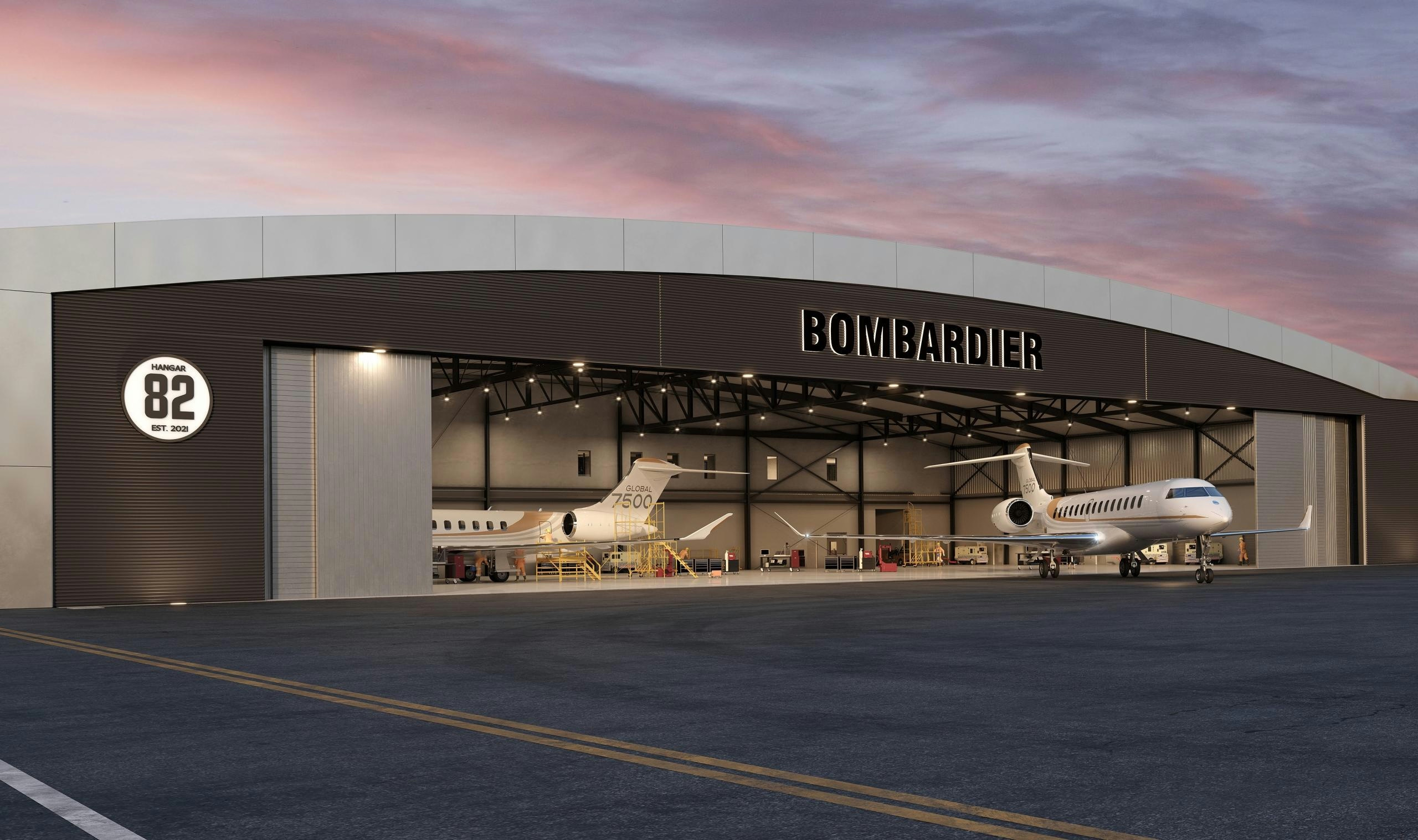
Bombardier Opens Innovation and Design Centre for Business Aircraft
Bombardier has inaugurated a new Innovation and Design Centre in Montreal, dedicated to advancing the cabin experience for business aviation customers. This facility represents a strategic effort to accelerate innovation in aircraft interiors, emphasizing customer-centric enhancements that aim to redefine luxury and efficiency in the skies. Industry experts have welcomed the development, noting the company’s commitment to rapidly evolving client expectations and maintaining a competitive edge in a dynamic market.
Advancing Cabin Innovation Amid Market Challenges
The new centre underscores Bombardier’s ambition to lead in business aircraft design, focusing on integrating cutting-edge technology and refined aesthetics to elevate the passenger experience. However, the company faces ongoing challenges, including the impact of Canada’s luxury tax, which may dampen domestic demand. Despite these obstacles, Bombardier’s investment in innovation is viewed as a calculated move to stay ahead of competitors, who are also expected to intensify their efforts in design and technology enhancements.
Broader Context: A Surge in AI-Driven Innovation
Bombardier’s announcement coincides with a broader wave of technological advancements driven by artificial intelligence across multiple industries. In the technology sector, Microsoft has unveiled a revamped Bing search engine powered by ChatGPT, the AI tool developed by OpenAI. This new iteration of Bing offers conversational responses, content generation, and interactive chat features, with plans to integrate similar AI capabilities into Microsoft Office applications such as Word, PowerPoint, and Outlook.
Google has also outlined its intention to incorporate advanced AI into its search engine to provide more nuanced and conversational interactions. Meanwhile, Chinese technology giants Alibaba and Baidu have introduced their own ChatGPT-style services, highlighting a global race to harness AI’s transformative potential. After years marked by incremental technological improvements and unfulfilled promises—ranging from self-driving cars to widespread 5G adoption—this surge in AI innovation signals a significant leap forward.
Opportunities and Concerns in the AI Era
While the rapid integration of AI technologies offers clear practical benefits, such as accelerating document drafting and content creation, it also raises important concerns. Issues related to algorithmic bias and the dissemination of inaccurate information have already emerged, exemplified by recent challenges in Google’s AI demonstrations. There is also apprehension about the proliferation of AI chatbots in contexts where their utility may be limited.
As Bombardier and leading technology companies continue to push the boundaries of innovation, the focus is increasingly on delivering tangible improvements that enhance user experience across various domains—from aviation cabins to digital workplaces. This evolving landscape suggests that the long-anticipated transformative changes in business and technology may finally be within reach.
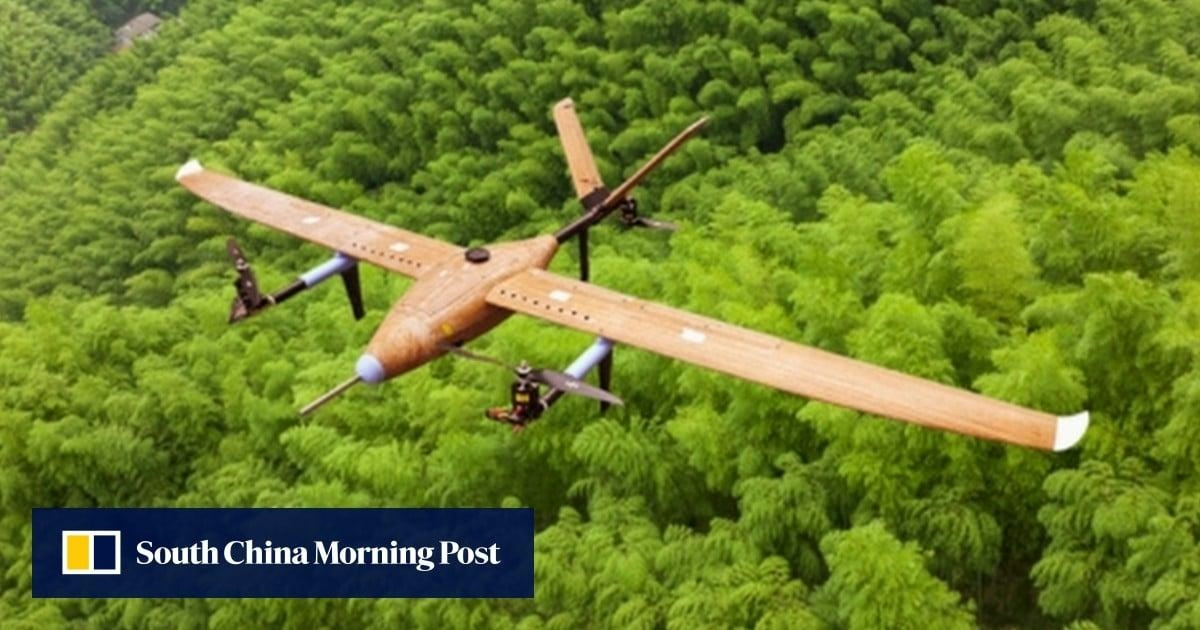
Chinese Team Develops First Flight Control Software for Bamboo Drones
SkyHope Appoints Aviation Industry Leader to Board
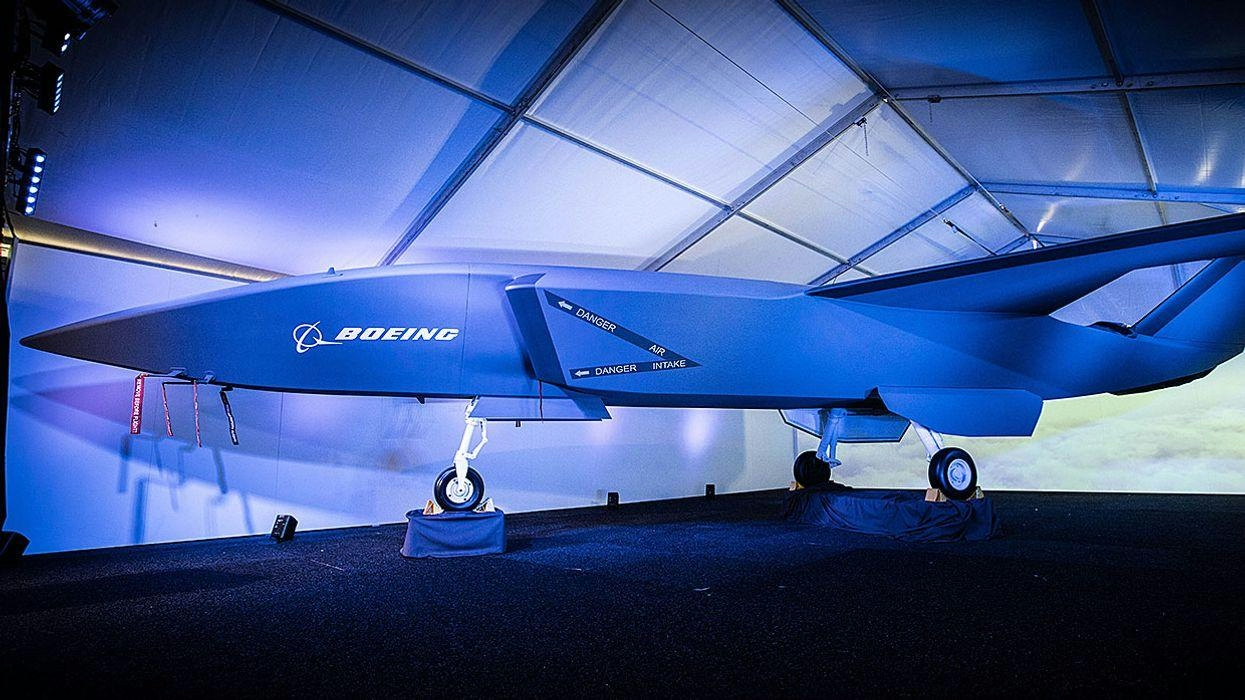
The Challenges of Certifying Autonomous Aircraft
KLM to Receive First Airbus A350, Announces Initial Routes
Saxon Air Receives Clean and Green Energy Innovation Award
How BEB Tax Policies Impact Airlines’ International Leasing Contracts

Indonesia’s Danantara and Mandiri Partner with SMBC to Launch $800 Million Aviation Leasing Fund
South Korea’s SUM Air Places Order for New ATR Aircraft
Benoît Rollier Named Vice President of KLM Engine Service
Azorra Expands Engine Portfolio Through Deal with DAE
