
AeroGenie — Seu Copiloto Inteligente.

Tendências
Categories
Air Taxis to Support Transportation at LA28 Olympics
Air Taxis to Support Transportation at LA28 Olympics
As Los Angeles prepares to host the 2028 Olympic Games, transportation remains a critical focus for both organizers and residents. At USC’s The Games Week, a panel discussion led by co-chairs Alexander Bartolomei and Mitchell Kirby explored the future of transit in the city, addressing the pressing question: “What will transportation look like in 2028?” Kirby, a senior studying environmental and mechanical engineering, captured a common concern among Angelenos, stating, “It’s bad now, what’s going to happen then?”
Transforming Transit Infrastructure for the Games
The panel featured five experts who outlined sweeping changes planned for Los Angeles’s transit infrastructure in anticipation of the Games. Among the most significant initiatives is the introduction of electric air taxis alongside a substantial expansion of the city’s bus fleet. Sam Morrissey, vice president of transportation for LA28, explained that existing carpool and toll lanes will be reserved exclusively for LA28-authorized vehicles during the Olympics. While acknowledging that this will create capacity challenges by reducing lanes available to the general public, Morrissey emphasized the opportunity to demonstrate the efficiency of public transit. “We will create these capacity challenges by taking those lanes away, but we will also show people that, ‘Wow, that’s a great way to get around, on a bus,’” he said.
Meghna Khanna, deputy executive officer of mobility corridors at L.A. Metro, detailed plans to open dedicated freeway lanes for Olympic personnel and implement transit signal priority systems to reduce bus delays. The city intends to add approximately 2,000 buses—more than doubling Metro’s current fleet—to accommodate the expected surge in demand from visitors and athletes.
The Promise and Challenges of Electric Air Taxis
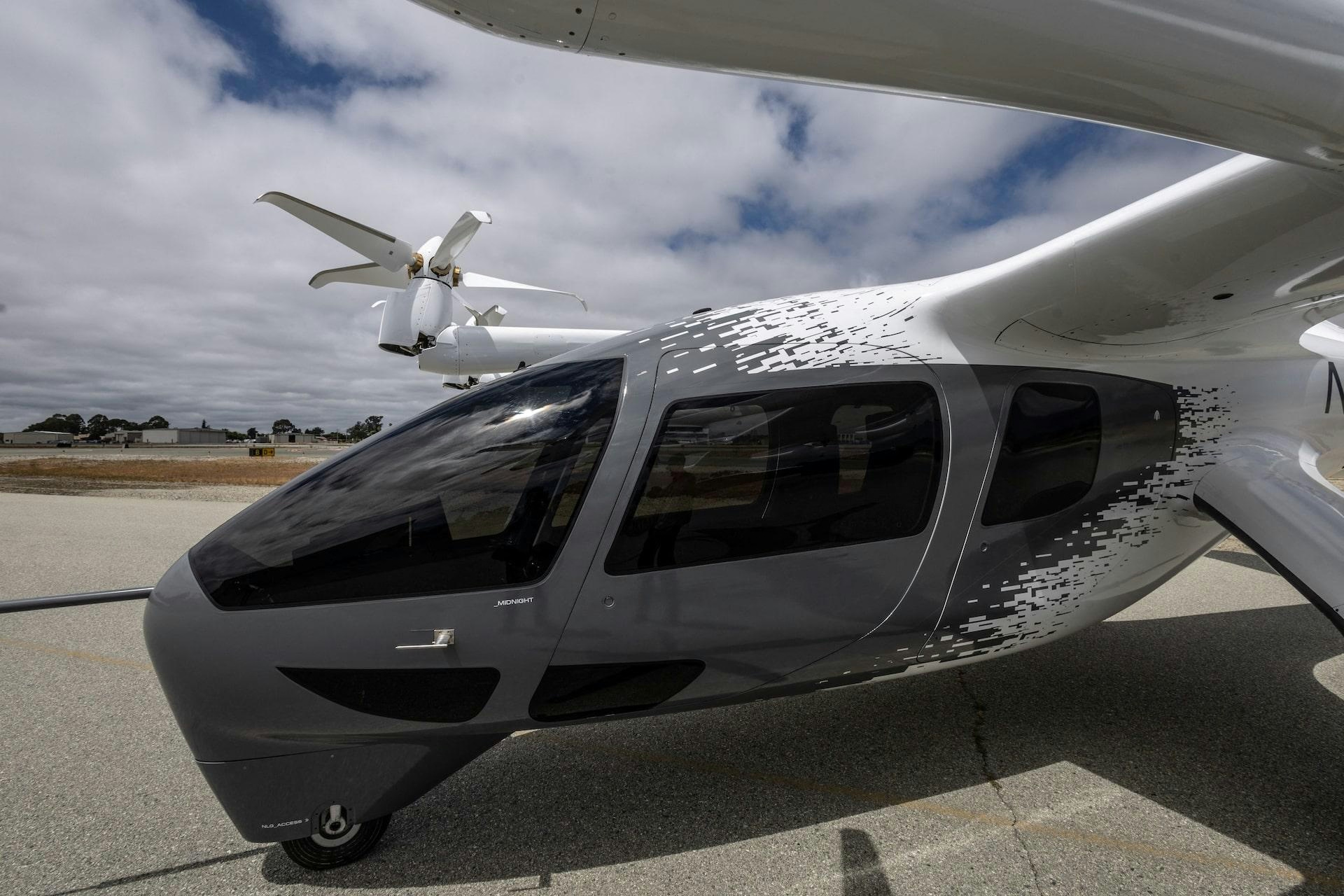
A notable innovation for LA28 is the planned deployment of electric air taxis. Tosha Perkins, chief administrative officer at Archer Aviation, announced that the company will provide aerial ride-share services using its “Midnight” electric air taxi, which can carry up to four passengers. Perkins acknowledged that fares during the Olympics are likely to be high, comparable to an Uber Black ride, but expressed confidence that prices will decrease as production scales. “We wanted to be able to provide something that was cost effective for everyone to be able to use,” she said.
Despite the promise of this new mode of transport, the rollout of air taxis faces significant challenges. Industry competitors such as Supernal have recently laid off nearly 300 employees amid difficulties in proving their technology, underscoring the hurdles in bringing air taxis to market. Archer Aviation itself has encountered skepticism regarding its readiness and has faced legal issues, including a lawsuit alleging gender discrimination. Market reactions remain mixed, with some questioning whether these companies can deliver on their ambitious promises in time for the Olympics. Nevertheless, Archer is pressing forward, expanding its fleet and participating in initiatives like the White House-backed eVTOL Integration Pilot Program.
Khanna expressed optimism about leveraging the Olympics as a catalyst for innovation and regulatory progress. “There are lots of collaborative ways that we are trying to get around some of those standard protocols by using the Games as the method,” she said.
As the LA28 Games approach, the city’s ambitious transportation plans—combining traditional transit expansions with emerging technologies—will be closely observed as a potential model for the future of urban mobility.

Plane lands on Pennsylvania highway due to ‘engine issues,’ FAA says
LEVEL Suspends San Francisco Flights Due to Engine Shortage

China Conducts First Flight Test of Megawatt Hydrogen Turboprop Engine
Oklahoma’s Aerospace Industry Expands and Its Impact on the State Economy
Archer Aviation Confronts Setbacks Amid Declining Air Taxi Interest

FAA and EASA Mandates to Influence Flight Line Testing Equipment Market Through 2035
Willis Lease Operates as a Leveraged Spread Business with Moderate Returns

Chinese Team Develops First Flight Control Software for Bamboo Drones
Government Moves Forward with Boeing Purchase, Considers Airbus Leasing

Changes in Airline Industry Leadership, Alliances, and AI
