
AeroGenie — Uw intelligente copiloot.

Trending
Categories
Illinois Lab Converts Food Waste into Jet Fuel in Aviation Advance

Illinois Lab Converts Food Waste into Jet Fuel in Aviation Advance
Transforming Food Waste into Sustainable Aviation Fuel
The environmental footprint of air travel continues to be a significant global concern, with jet fuel consumption accounting for a substantial share of greenhouse gas emissions. In a notable scientific advancement, researchers at the University of Illinois have developed a process that converts food waste into sustainable aviation fuel (SAF). This innovation could play a vital role in the aviation industry’s ambitious target of achieving net-zero carbon emissions by 2050.
Yuanhui Zhang, the study’s corresponding author, emphasized the importance of diverse renewable sources in decarbonizing jet fuel, highlighting agriculture’s critical role in supplying feedstocks. The research team’s approach involves a two-step method to transform discarded food into usable jet fuel. Initially, hydrothermal liquefaction (HTL) is employed to convert food waste directly into biocrude oil. This intermediate product then undergoes a refining process, beginning with the removal of simple impurities such as moisture, ash, and salt. Subsequently, catalytic hydrotreating is applied to eliminate nitrogen, oxygen, and sulfur, resulting in a purified hydrocarbon suitable for use as jet fuel.
Challenges and Industry Implications
Despite the promising laboratory results, transitioning this technology to commercial-scale production presents several challenges. The complex composition of HTL-derived biocrude necessitates advanced hydrotreating techniques to meet the stringent “drop-in” fuel standards required for compatibility with existing Jet-A engines. This technical complexity, coupled with the novelty of the process, may lead to initial skepticism within the market.
Industry experts acknowledge that while the aviation sector’s pivot toward SAF is likely to stimulate demand for such innovations, the scalability and cost-effectiveness of production remain critical determinants of success. The capacity to manufacture large volumes of fuel at competitive prices will ultimately influence the technology’s practical impact.
The competitive landscape for alternative aviation fuels is also intensifying. Established entities like Africa’s Dangote Group face emerging competition as countries such as Tanzania invest heavily in synthetic fuel initiatives, exemplified by Tanzania’s recent announcement of a $420 million project in this domain. These developments reflect a growing global interest in alternative aviation fuels and the potential for new players to disrupt traditional markets.
As the aviation industry strives to reconcile environmental responsibility with operational requirements, advances like the University of Illinois team’s food waste-to-jet fuel process underscore both the promise and complexity inherent in the transition to sustainable flight. The coming years will be pivotal in determining whether such innovations can be scaled effectively and withstand the scrutiny of a competitive market.

Plane lands on Pennsylvania highway due to ‘engine issues,’ FAA says
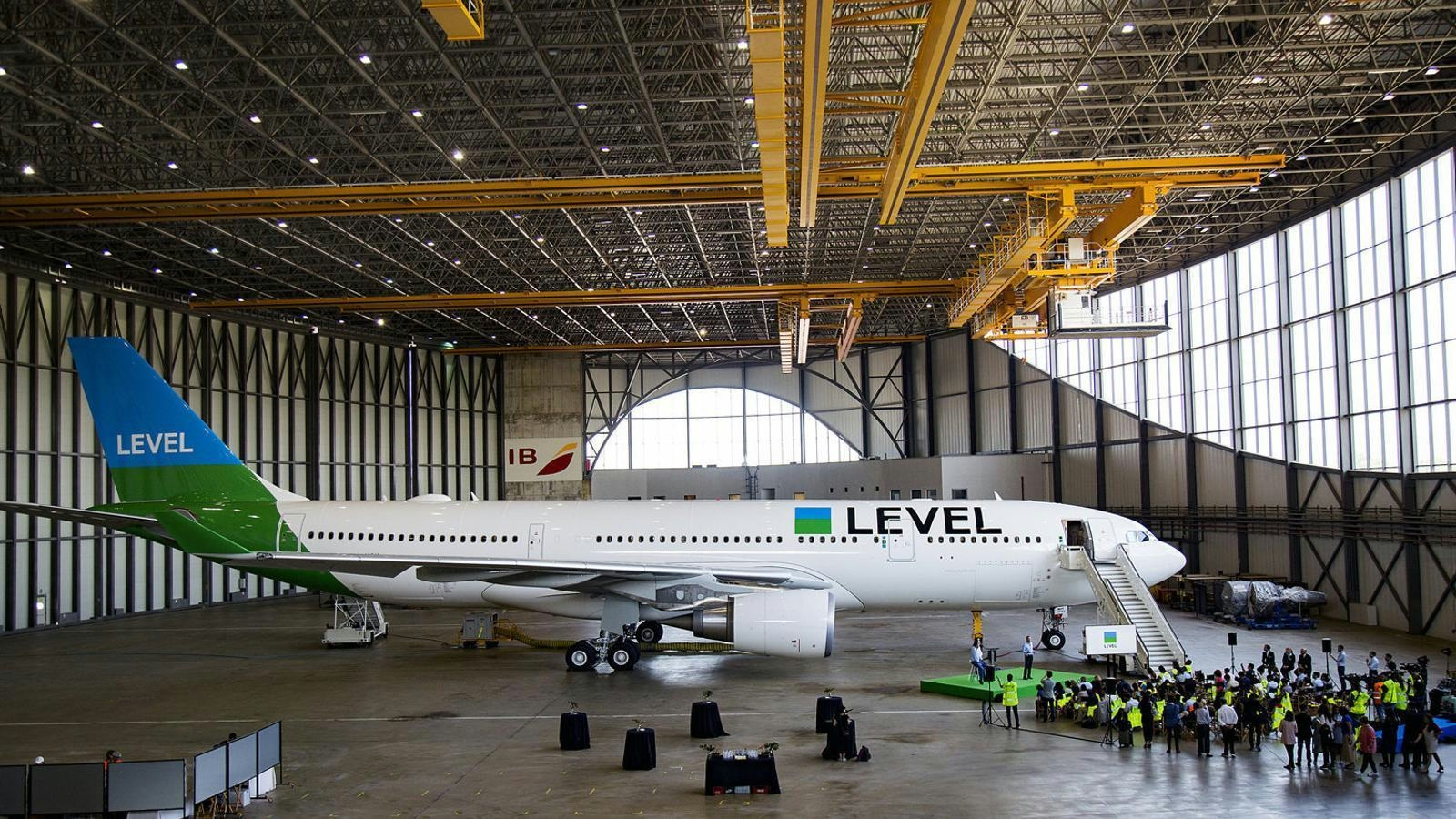
LEVEL Suspends San Francisco Flights Due to Engine Shortage
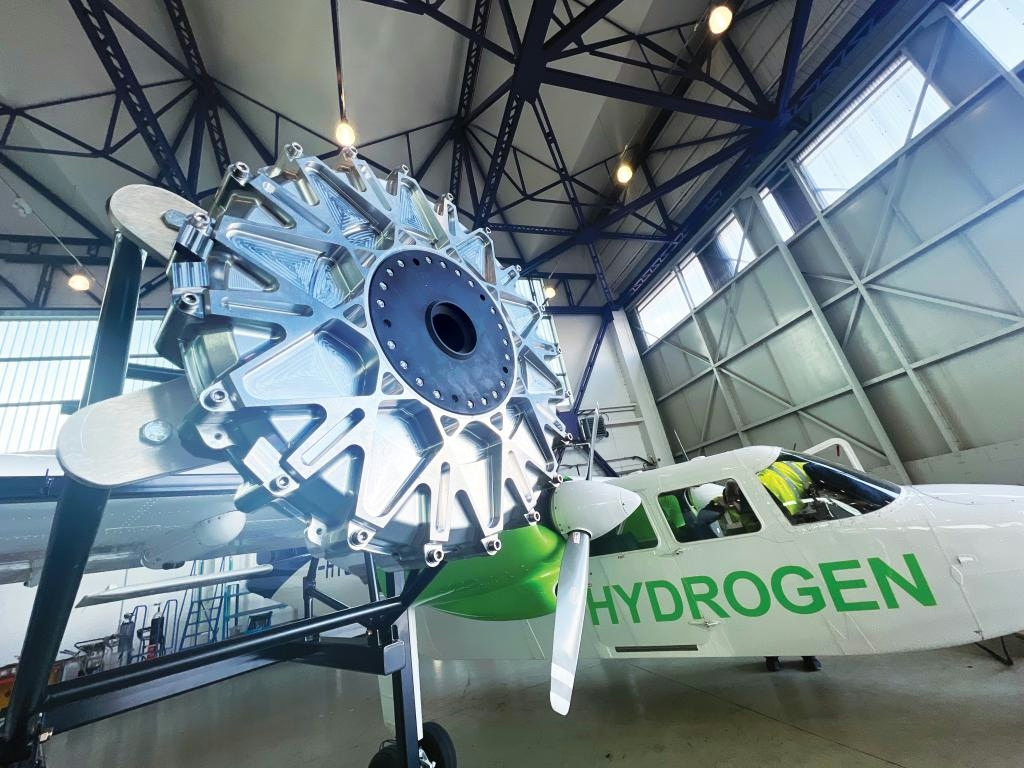
China Conducts First Flight Test of Megawatt Hydrogen Turboprop Engine

Oklahoma’s Aerospace Industry Expands and Its Impact on the State Economy
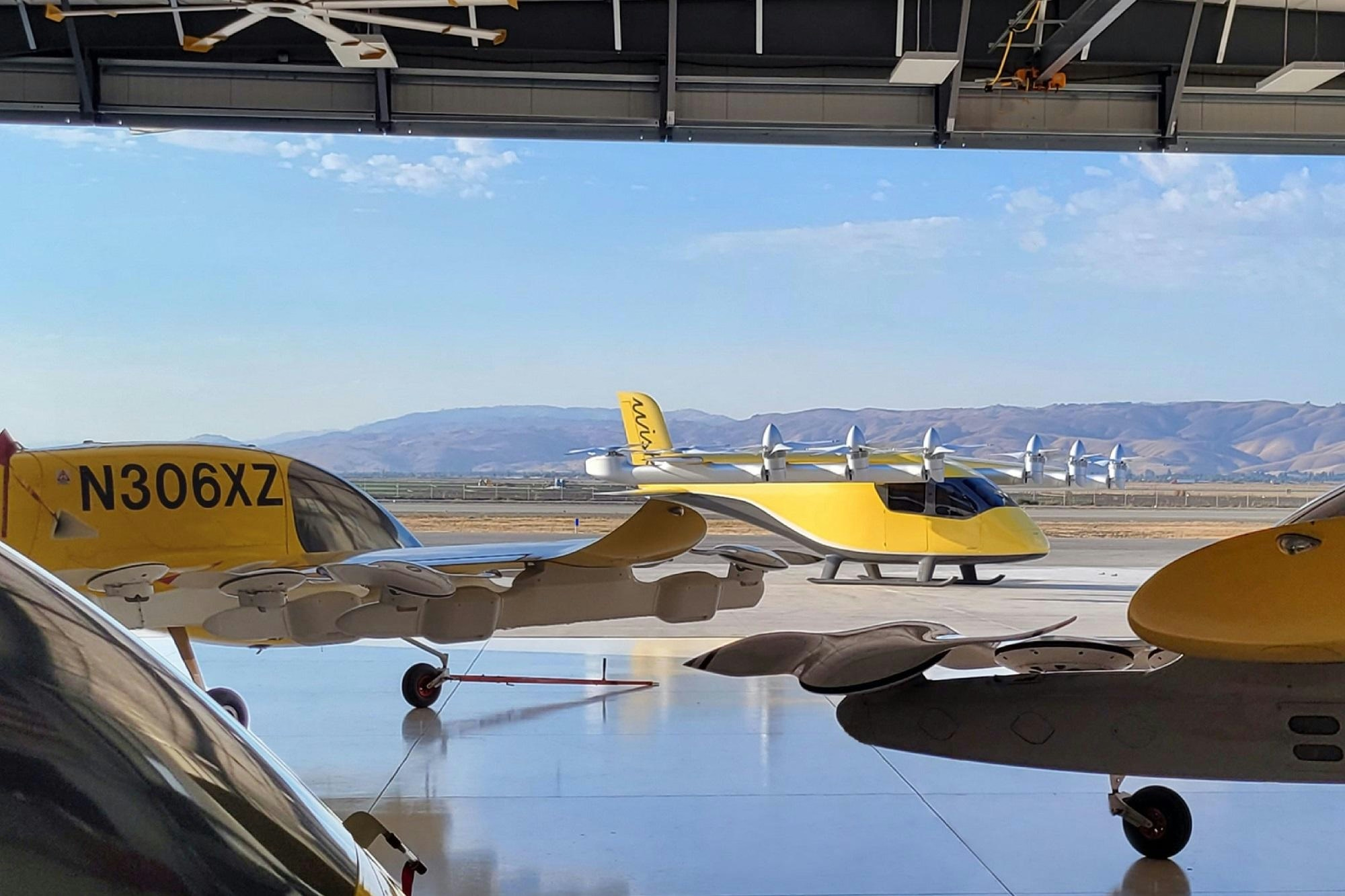
Archer Aviation Confronts Setbacks Amid Declining Air Taxi Interest

FAA and EASA Mandates to Influence Flight Line Testing Equipment Market Through 2035
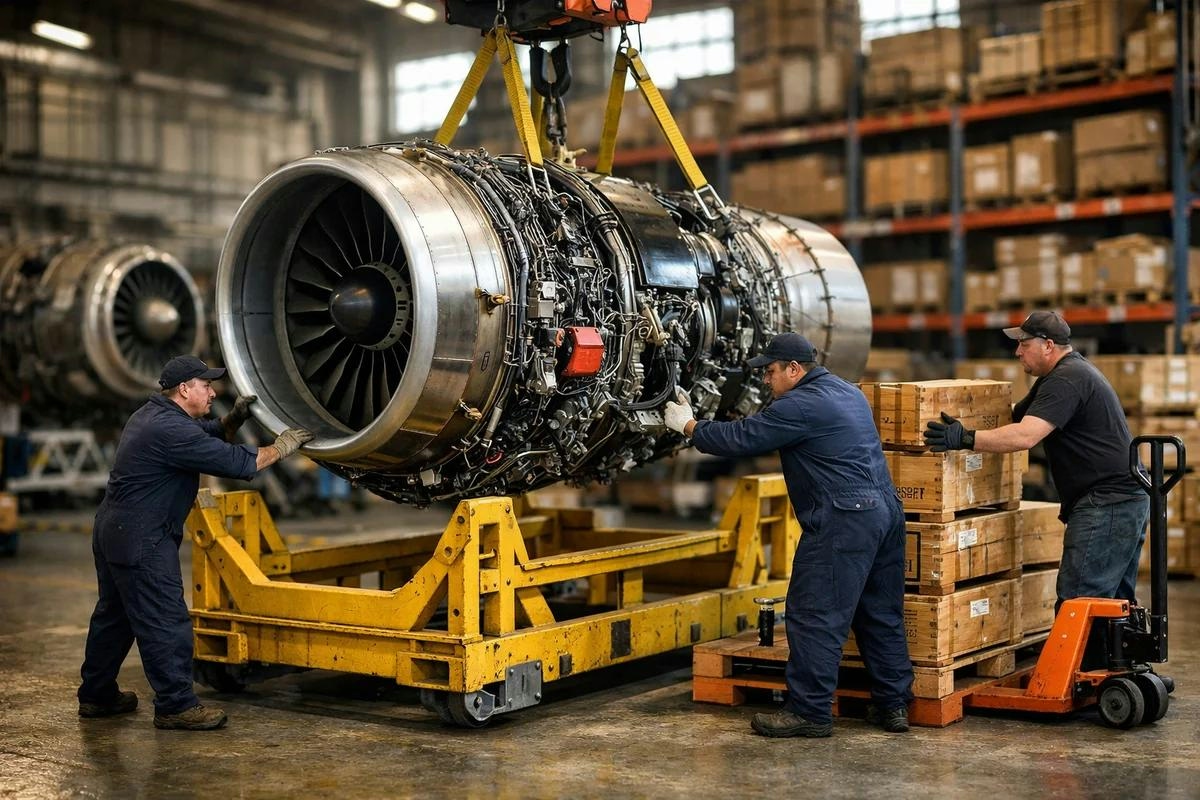
Willis Lease Operates as a Leveraged Spread Business with Moderate Returns

Chinese Team Develops First Flight Control Software for Bamboo Drones
Government Moves Forward with Boeing Purchase, Considers Airbus Leasing

Changes in Airline Industry Leadership, Alliances, and AI
