
AeroGenie — Your Intelligent Copilot.

Trending
Categories
Singapore Begins Air Taxi Trial for Medical Emergencies
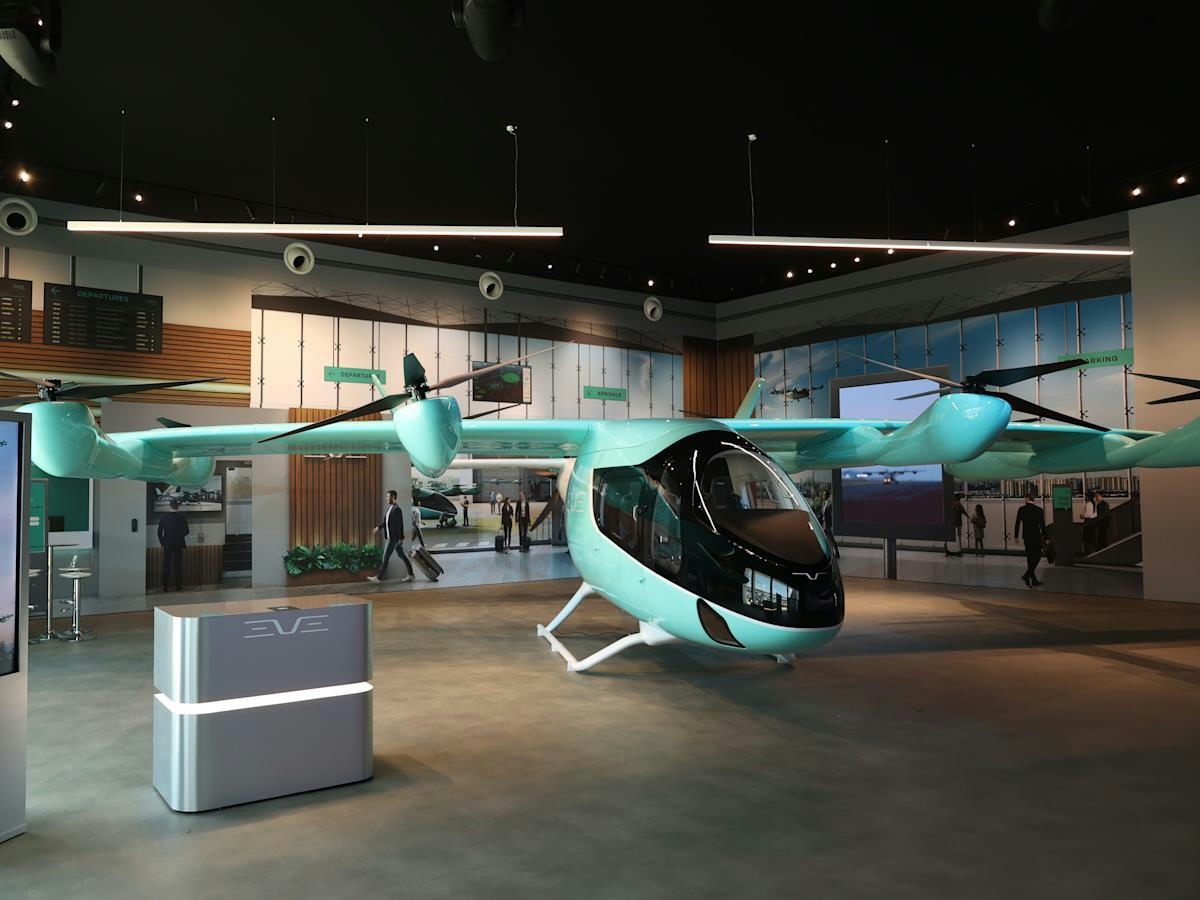
Singapore Launches Air Taxi Trial for Emergency Medical Services
Singapore has embarked on a pioneering trial of air taxis designed specifically for emergency medical services, marking a notable advancement in the city-state’s commitment to urban air mobility. The initiative, announced in conjunction with the upcoming Singapore Airshow 2026, represents a collaboration between the UK-based aerospace manufacturer Vertical Aerospace and Singapore’s Agency for Science, Technology and Research (A*STAR).
Partnership and Technological Development
Under this partnership, Vertical Aerospace and ASTAR will jointly explore the deployment of electric and hybrid-electric aircraft to enhance rapid medical response capabilities, particularly in Singapore’s more remote areas. The project is supported by funding from ASTAR and its innovation arm, Hatch, which will facilitate the development, testing, and validation of Vertical Aerospace’s Valo aircraft platform. This electric vertical take-off and landing (eVTOL) vehicle is being adapted specifically for emergency medical scenarios, aiming to provide swift and efficient patient transport.
The collaboration seeks to establish a comprehensive operational framework for integrating eVTOL aircraft into Singapore’s existing emergency response infrastructure. This includes ensuring adherence to regulatory and operational standards, with planned flight demonstrations designed to assess the feasibility, safety, and response times of air taxis in critical medical situations. Vertical Aerospace will also coordinate closely with the Singapore Home Team to evaluate how these aircraft might complement current emergency services and potentially improve patient outcomes.
Challenges and Regional Context
Despite the promise of this initiative, several challenges remain. Regulatory approval poses a significant hurdle, as the integration of new aviation technologies into Singapore’s tightly regulated airspace demands meticulous coordination with authorities. Furthermore, technological integration with existing emergency services requires seamless communication and operational compatibility, which will be critical to the success of the trial.
Singapore’s entry into the eVTOL market occurs amid increasing competition in the Asia-Pacific region, with countries such as Japan and South Korea rapidly advancing their own urban air mobility networks. This competitive landscape may complicate market entry as technological innovation accelerates and customer adoption grows.
Implications for the Urban Air Mobility Sector
The trial, scheduled to run until April, is expected to yield valuable insights into the practical deployment of air taxis for emergency medical use. Industry observers anticipate that the initiative will attract heightened investor interest in urban air mobility, potentially prompting competitors to expedite their own eVTOL development and customer acquisition efforts. The results of this trial could not only influence the future of emergency medical services in Singapore but also shape broader adoption of air taxi technologies across the region.

Archer Aviation Confronts Setbacks Amid Declining Air Taxi Interest

Chinese Team Develops First Flight Control Software for Bamboo Drones
Government Moves Forward with Boeing Purchase, Considers Airbus Leasing

SkyHope Appoints Aviation Industry Leader to Board
The Challenges of Certifying Autonomous Aircraft
KLM to Receive First Airbus A350, Announces Initial Routes
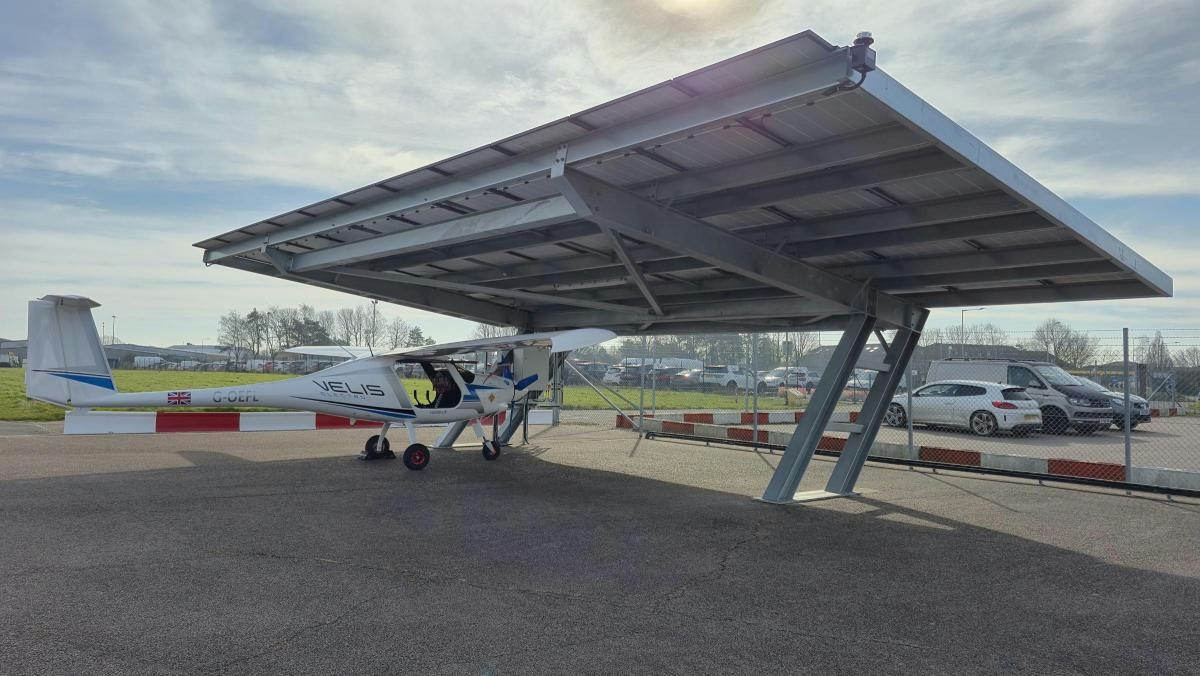
Saxon Air Receives Clean and Green Energy Innovation Award
How BEB Tax Policies Impact Airlines’ International Leasing Contracts

Indonesia’s Danantara and Mandiri Partner with SMBC to Launch $800 Million Aviation Leasing Fund
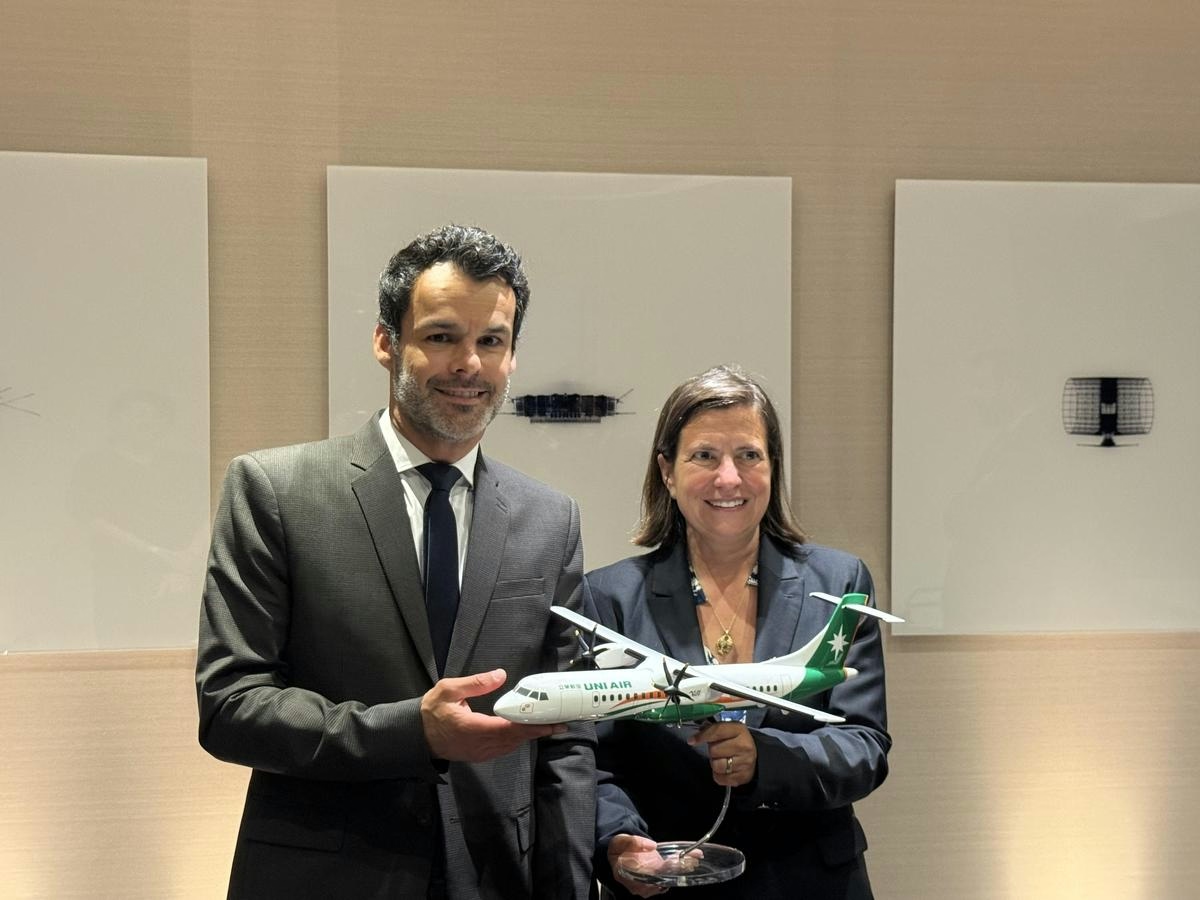
South Korea’s SUM Air Places Order for New ATR Aircraft
