
AeroGenie — Your Intelligent Copilot.

Trending
Categories
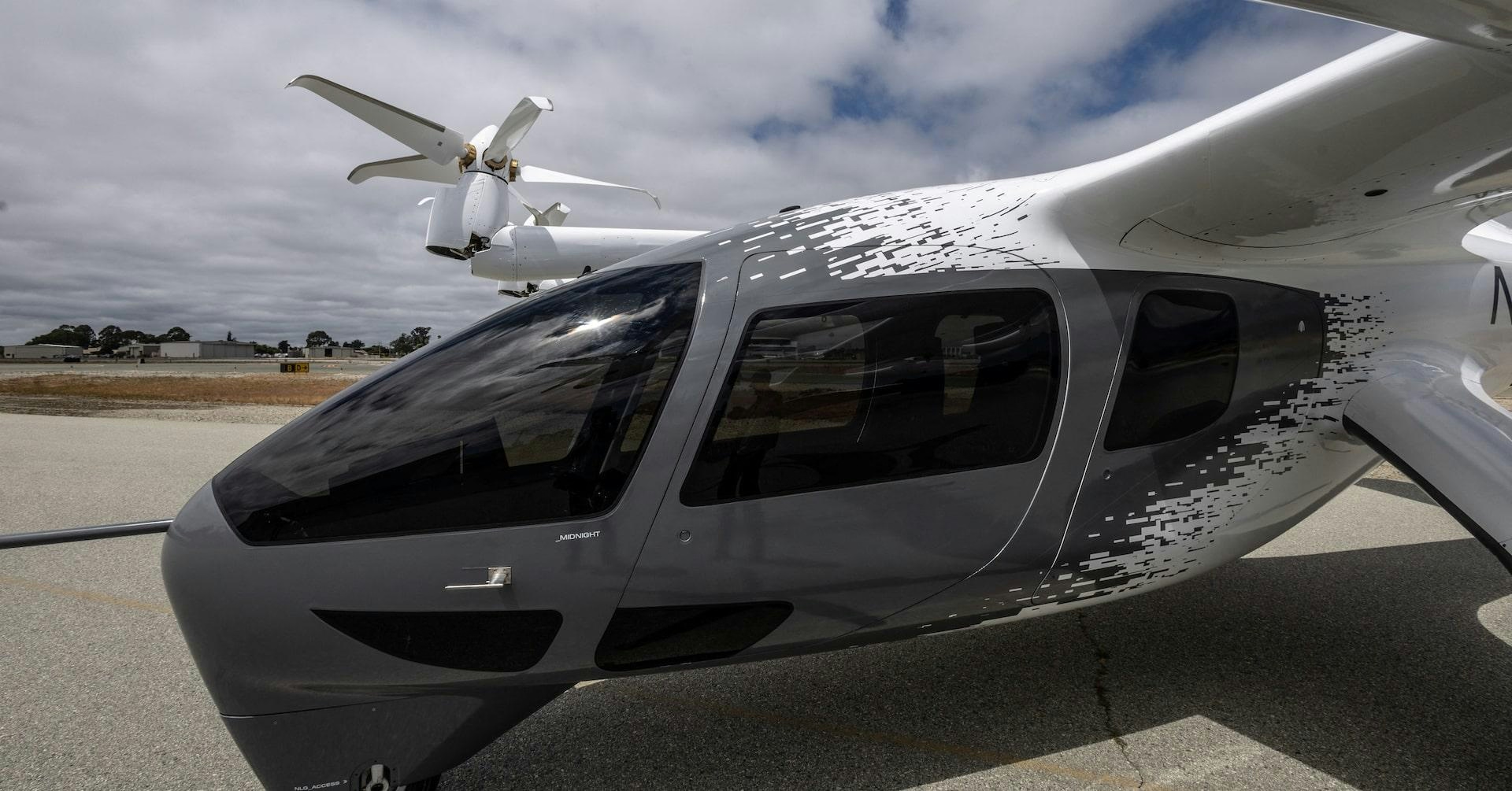
Rolls-Royce Stock Pressured by Aerospace Challenges Amid eVTOL Investments
Rolls-Royce Stock Pressured by Aerospace Challenges Amid eVTOL Investments
Rolls-Royce Holdings plc (ISIN: GB00B63H8491) is currently navigating a complex landscape marked by ongoing supply chain disruptions and strategic investments in emerging aviation technologies. Listed on the London Stock Exchange, the company faces significant challenges within its traditional civil aerospace operations while simultaneously expanding its footprint in the electric vertical take-off and landing (eVTOL) sector through ventures such as Vertical Aerospace.
Supply Chain Disruptions and Labor Challenges
A substantial portion of Rolls-Royce’s revenue derives from its civil aerospace division, which supplies Trent engines for widebody aircraft. However, recent nationwide strikes by aviation workers amid critical contract negotiations have disrupted the supply chain, affecting key turbine suppliers linked to Rolls-Royce Power Systems, GE Vernova, and Mitsubishi Power. Although these labor actions have not directly halted Rolls-Royce’s operations, they highlight vulnerabilities within the global aerospace manufacturing network and raise concerns about potential delays in engine deliveries to airline customers.
Despite these pressures, Rolls-Royce’s aftermarket services continue to perform strongly, contributing to profitability even as production faces execution risks. The company remains at the forefront of developing sustainable aviation fuels and hybrid propulsion systems, supported by a recovering long-haul travel market and a robust order backlog. Nonetheless, persistent supply constraints are dampening short-term momentum, a factor reflected in the volatility of the company’s stock performance.
Strategic Investment in eVTOL and Hybrid-Electric Propulsion
In response to these challenges, Rolls-Royce is pursuing a strategic shift by investing in the burgeoning eVTOL market. The company has taken a position as a private investment in public equity (PIPE) investor in Vertical Aerospace’s business combination, backing the VX4 eVTOL aircraft, now rebranded as Valo. This investment positions Rolls-Royce within the rapidly evolving urban air mobility sector, with Vertical Aerospace targeting certification for its hybrid-electric aircraft by 2028.
Recent regulatory filings from Vertical Aerospace identify Rolls-Royce as a key investor alongside American Airlines, Avolon, and Honeywell, and disclose non-binding pre-orders for 1,500 aircraft. For Rolls-Royce, this represents a diversification beyond its traditional jet engine business into electric propulsion technologies. However, the eVTOL sector faces significant challenges, including market skepticism, regulatory complexities, and increasing competition.
Financial Performance and Investor Outlook
Despite operational headwinds, Rolls-Royce continues to deliver strong financial results. The company projects underlying operating profits between £4 billion and £4.2 billion by 2026, exceeding analyst expectations. Reflecting confidence in its financial position and growth prospects, Rolls-Royce has announced plans to return up to £1.5 billion to shareholders through a share buyback program.
Investors, particularly in the United States where Rolls-Royce shares are accessible via over-the-counter markets and American Depositary Receipts (ADRs), are closely watching the company’s dual exposure. Rolls-Royce maintains a dominant role in civil aerospace, supplying engines to major US carriers such as Delta Air Lines, while also holding an early stake in the emerging eVTOL market. The company’s future success will depend on its ability to resolve supply chain challenges, achieve certification milestones, and scale new propulsion technologies.
As the aerospace industry continues to experience volatility, Rolls-Royce embodies the tension between sustaining legacy strengths and embracing disruptive innovation, positioning itself as a pivotal player in the evolving global aviation landscape.
Chinese Team Develops First Flight Control Software for Bamboo Drones
SkyHope Appoints Aviation Industry Leader to Board
The Challenges of Certifying Autonomous Aircraft
KLM to Receive First Airbus A350, Announces Initial Routes
Saxon Air Receives Clean and Green Energy Innovation Award
How BEB Tax Policies Impact Airlines’ International Leasing Contracts

Indonesia’s Danantara and Mandiri Partner with SMBC to Launch $800 Million Aviation Leasing Fund
South Korea’s SUM Air Places Order for New ATR Aircraft
Benoît Rollier Named Vice President of KLM Engine Service
Azorra Expands Engine Portfolio Through Deal with DAE
