
AeroGenie — Your Intelligent Copilot.

Trending
Categories
NBAA Highlights Business Aviation’s Role in Sustainability at Capitol Hill Fly-In
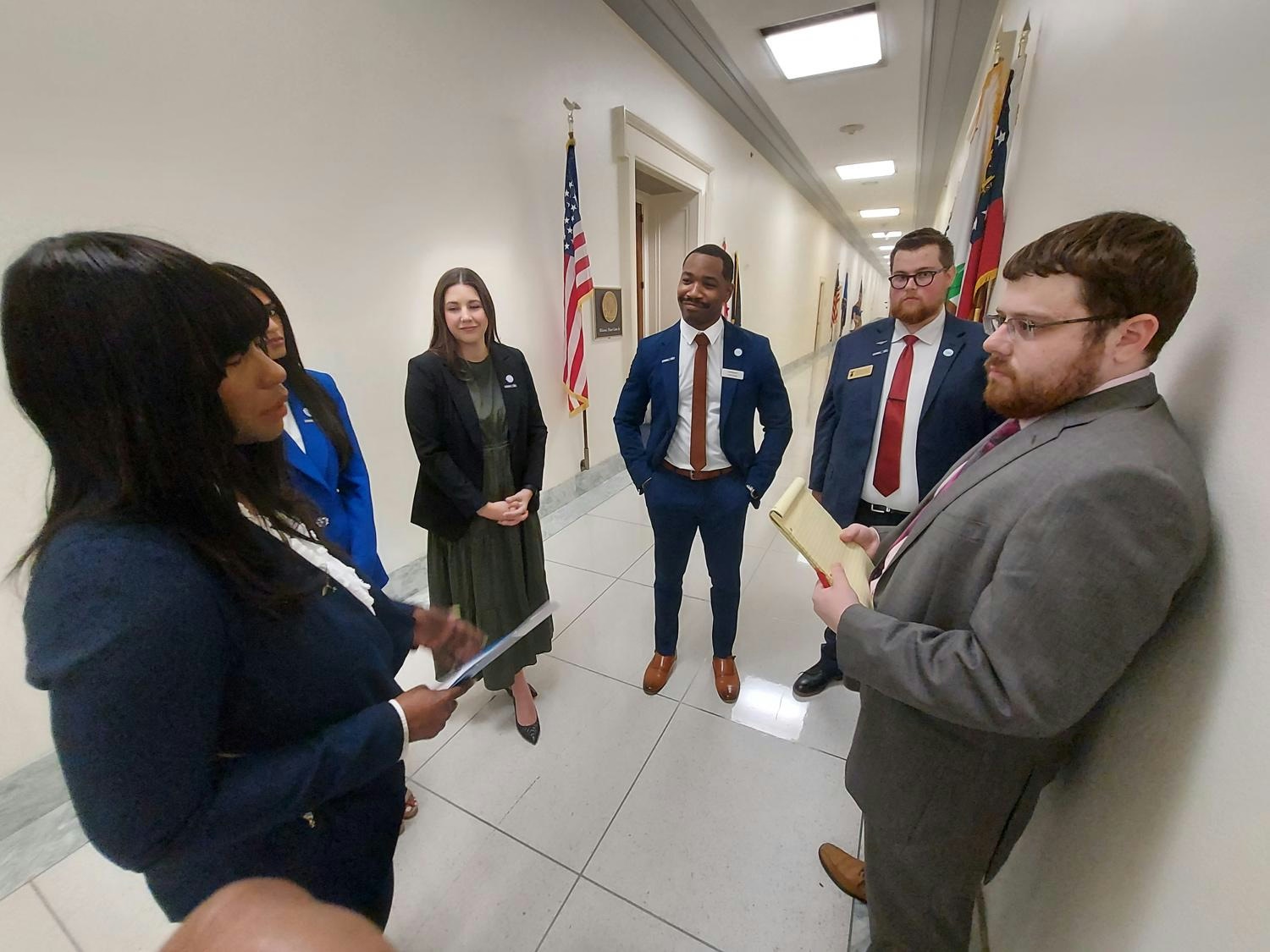
NBAA Highlights Business Aviation’s Role in Sustainability at Capitol Hill Fly-In
Industry Leaders Advocate for Sustainable Aviation Policies
On March 18, business aviation leaders from across the United States gathered on Capitol Hill for the National Business Aviation Association’s (NBAA) CLIMBING. FAST. Capitol Hill Fly-In. The event underscored the industry’s dedication to achieving net-zero carbon emissions by 2050, bringing together professionals, lawmakers, and congressional staff to discuss policies that promote sustainable aviation, enhance U.S. energy independence, and support rural economies.
The CLIMBING. FAST. initiative serves as a comprehensive advocacy campaign emphasizing business aviation’s significant economic impact, supporting 1.3 million jobs and generating nearly $340 billion in economic output. It also highlights the sector’s role in driving innovation in sustainable technologies and clean fuels. During the fly-in, NBAA’s Environmental Committee urged Congress to back bipartisan legislation aimed at expanding sustainable aviation fuel (SAF) production, a critical element in reducing the aviation industry’s carbon footprint.
Legislative Priorities and Industry Perspectives
Central to the discussions were key legislative proposals such as the Securing America’s Fuels Act (H.R. 6518/S. 3759), which seeks to restore the Section 45Z Clean Fuel Production Credit for SAF to $1.75 per gallon and extend it through 2033. Another priority was the Farm to Fly Act (H.R. 1719, S. 114), which would classify SAF as an advanced biofuel eligible for support from the U.S. Department of Agriculture.
Scott Cutshall, president of real estate and sustainability at Clay Lacy Aviation and co-chair of the NBAA Environmental Committee, emphasized the importance of restoring the tax credit. He explained that the current reduced credit incentivizes producers to manufacture renewable diesel rather than SAF, and that reinstating the credit to $1.75 is essential to encourage continued investment in SAF production capacity. Clay Lacy Aviation, a pioneer in offering SAF at U.S. airports, has been at the forefront of sustainable aviation practices since 2021.
Despite these advancements, the industry confronts challenges including regulatory obstacles and skepticism about the environmental benefits of business aviation. Heightened scrutiny over emissions and operational efficiency is driving companies to accelerate innovation. Competitors such as Gulfstream and Embraer are advancing sustainable technology certifications and demonstrating robust financial performance, intensifying competition in the pursuit of leadership in green aviation.
Progress and Economic Impact of Sustainable Aviation Fuel
Business aviation has achieved a 40% reduction in its carbon footprint over the past four decades, with modern aircraft now approximately 35% more fuel-efficient than earlier models. Sustainable aviation fuel, derived from renewable feedstocks, can reduce lifecycle greenhouse gas emissions by up to 80% compared to conventional jet fuel. Corey Hanlon, manager of communications and government relations at Morristown Airport (MMU), highlighted the collaborative nature of the industry’s sustainability efforts, noting that strengthening the 45Z credit will be instrumental in expanding SAF production capacity nationwide and increasing its availability.
The Americans for Clean Aviation Fuels Coalition projects that expanding domestic SAF production could contribute over $78 billion to the U.S. GDP by 2035 and support more than 400,000 jobs at peak production, creating new economic opportunities for farmers and rural communities.
Kristie Greco Johnson, NBAA senior vice president of government affairs, stressed the importance of direct engagement between members of Congress and their constituents. She remarked that the fly-in demonstrated a unified commitment among business aviation leaders—from airports to manufacturers to operators—to policies that accelerate progress toward net-zero emissions while bolstering American energy independence and rural economic development.
Archer Aviation Confronts Setbacks Amid Declining Air Taxi Interest

Chinese Team Develops First Flight Control Software for Bamboo Drones
Government Moves Forward with Boeing Purchase, Considers Airbus Leasing
SkyHope Appoints Aviation Industry Leader to Board
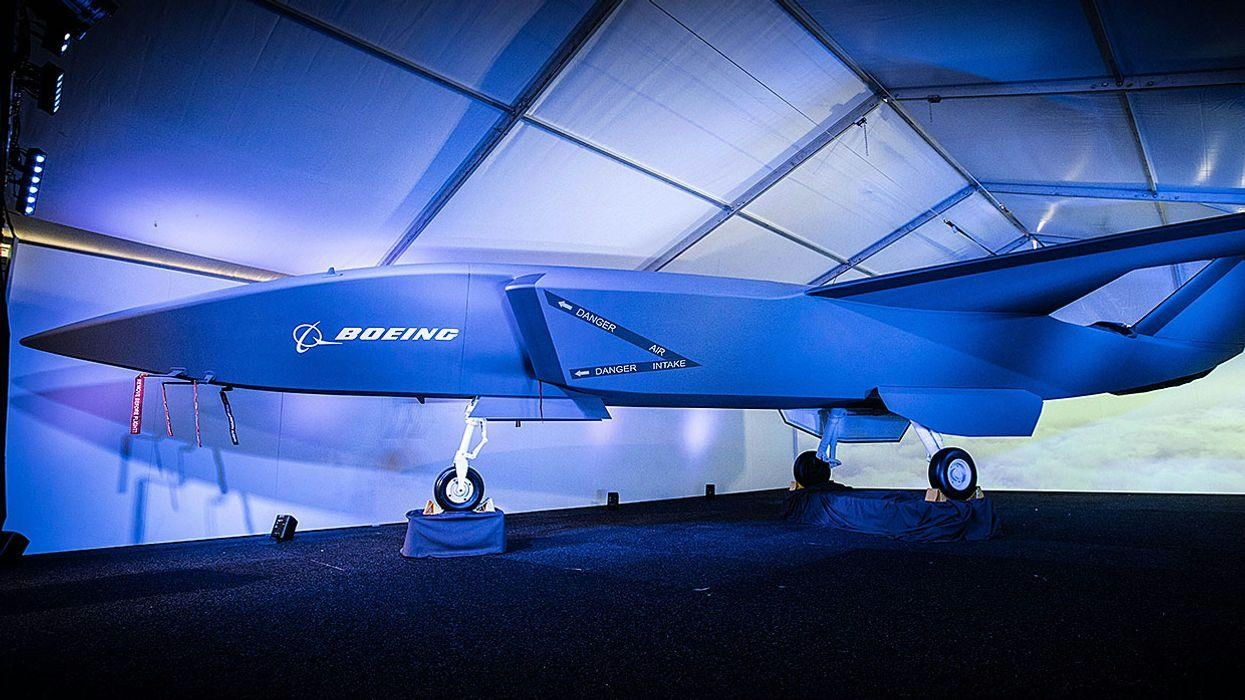
The Challenges of Certifying Autonomous Aircraft
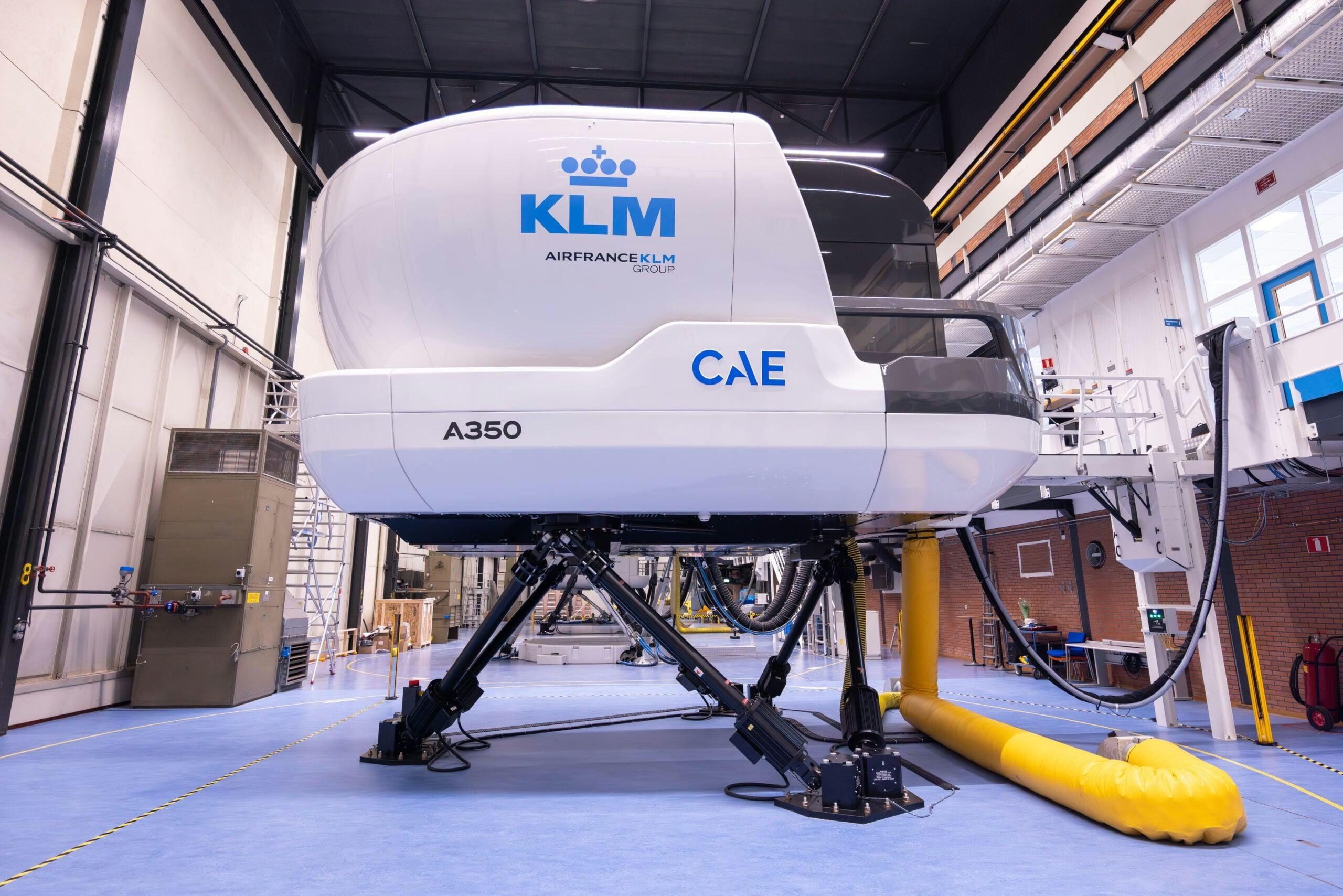
KLM to Receive First Airbus A350, Announces Initial Routes
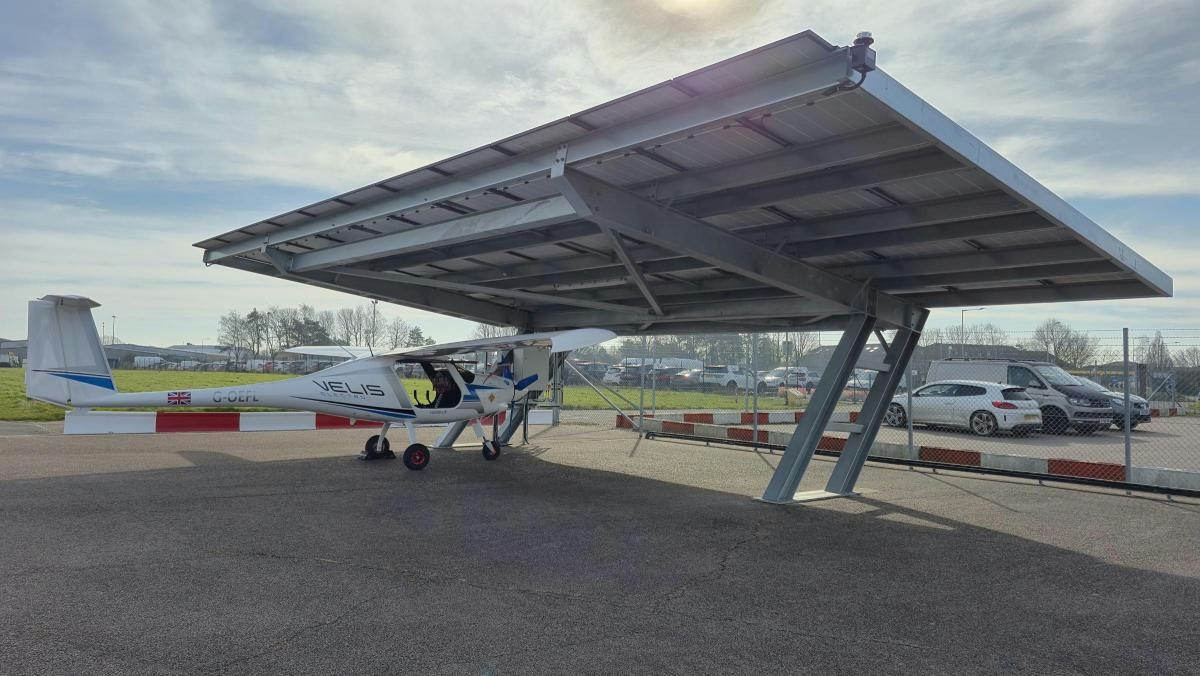
Saxon Air Receives Clean and Green Energy Innovation Award
How BEB Tax Policies Impact Airlines’ International Leasing Contracts
Indonesia’s Danantara and Mandiri Partner with SMBC to Launch $800 Million Aviation Leasing Fund
South Korea’s SUM Air Places Order for New ATR Aircraft
