
AeroGenie — Your Intelligent Copilot.

Trending
Categories
LaGuardia Crash Highlights Potential Role of AI in Air Traffic Control
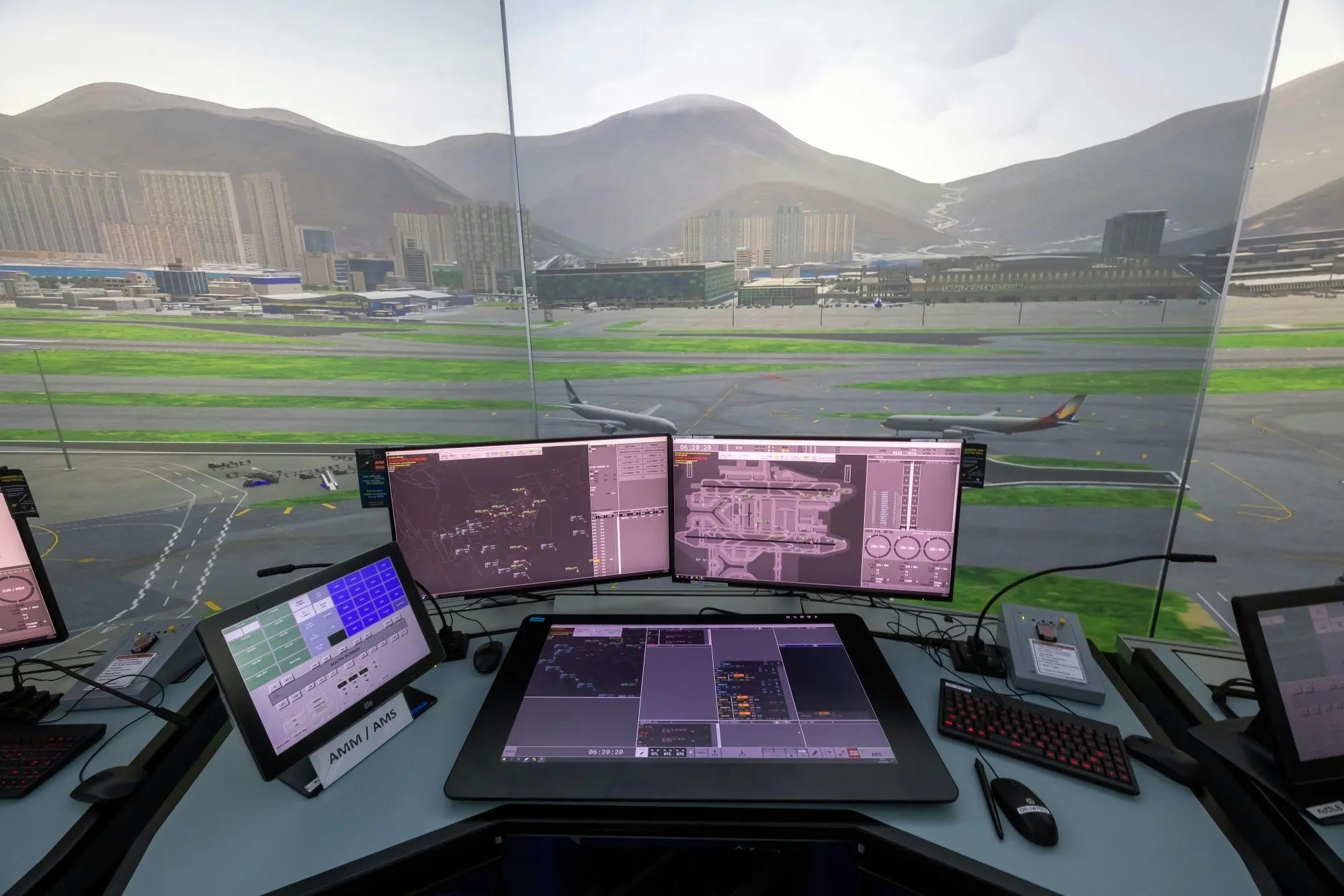
LaGuardia Crash Highlights Potential Role of AI in Air Traffic Control
A Tragic Incident and a Technological Contrast
On March 22, a devastating collision occurred at New York City’s LaGuardia Airport when an Air Canada Express jet carrying 76 passengers struck a fire truck shortly after landing. The impact destroyed the aircraft’s cockpit, resulted in the deaths of both pilots, and obliterated the emergency vehicle, which was attempting to cross the runway. This tragic event has drawn attention to the immense challenges faced by air traffic controllers and the potential for artificial intelligence (AI) to enhance safety in such high-stakes environments.
In a striking parallel, a simulation conducted inside a mock control tower near Hong Kong International Airport demonstrates how AI can intervene to prevent similar disasters. The virtual scenario depicts a passenger jet approaching a runway just as an unexpected vehicle moves onto it. Unlike the LaGuardia incident, the AI system instantly identifies both the aircraft and the intruding vehicle, issuing a warning to the human controller and thereby averting a collision. This AI-powered technology, already operational at Hong Kong’s airport, integrates advanced software with data from high-resolution cameras to monitor runway activity in real time.
The Strain on Air Traffic Control and the Promise of AI
Wesley Yung, chief air traffic control officer at Hong Kong’s Civil Aviation Department, underscores the difficulty of spotting vehicles on runways under challenging conditions. He notes that while human controllers may miss such hazards, AI systems can provide critical alerts, enhancing situational awareness and safety. The LaGuardia crash has exposed the intense pressures on air traffic controllers, particularly during overnight shifts when staffing levels are low. Controllers must manage multiple aircraft and service vehicles simultaneously, often under stressful conditions and while responding to emergencies.
The aviation sector is currently navigating a complex landscape marked by pandemic-related disruptions, supply chain challenges, and geopolitical tensions that have unsettled global air travel. Aircraft manufacturers face difficulties in replacing aging fleets, and shortages of experienced air traffic controllers and airport personnel further strain the system. At the same time, global passenger demand is expected to more than double by 2050, intensifying the operational challenges.
AI Integration: Opportunities and Limitations
The deployment of AI to assist in air traffic management is increasingly viewed as essential to addressing these challenges. While the neural network technology used in Hong Kong cannot eliminate all risks—given the potential for software errors, hardware failures, and the necessity of human oversight—it offers significant advantages. The system can process vast amounts of data, tracking multiple flights and moving vehicles simultaneously, a task that can overwhelm human controllers, especially during periods of fatigue or adverse weather.
The LaGuardia tragedy has also influenced market dynamics, prompting increased investment in AI technologies for air traffic control. Industry players are accelerating efforts to develop and enhance AI capabilities to maintain competitive advantages. As the aviation sector confronts rising demand and growing operational complexity, the integration of AI is poised to become a critical component in improving safety and efficiency in the skies.

Plane lands on Pennsylvania highway due to ‘engine issues,’ FAA says
LEVEL Suspends San Francisco Flights Due to Engine Shortage
China Conducts First Flight Test of Megawatt Hydrogen Turboprop Engine

Oklahoma’s Aerospace Industry Expands and Its Impact on the State Economy
Archer Aviation Confronts Setbacks Amid Declining Air Taxi Interest

FAA and EASA Mandates to Influence Flight Line Testing Equipment Market Through 2035
Willis Lease Operates as a Leveraged Spread Business with Moderate Returns
Chinese Team Develops First Flight Control Software for Bamboo Drones
Government Moves Forward with Boeing Purchase, Considers Airbus Leasing

Changes in Airline Industry Leadership, Alliances, and AI
