
AeroGenie — Your Intelligent Copilot.

Trending
Categories
GE Aerospace Invests $42 Million in Rutland Aircraft Engine Facility
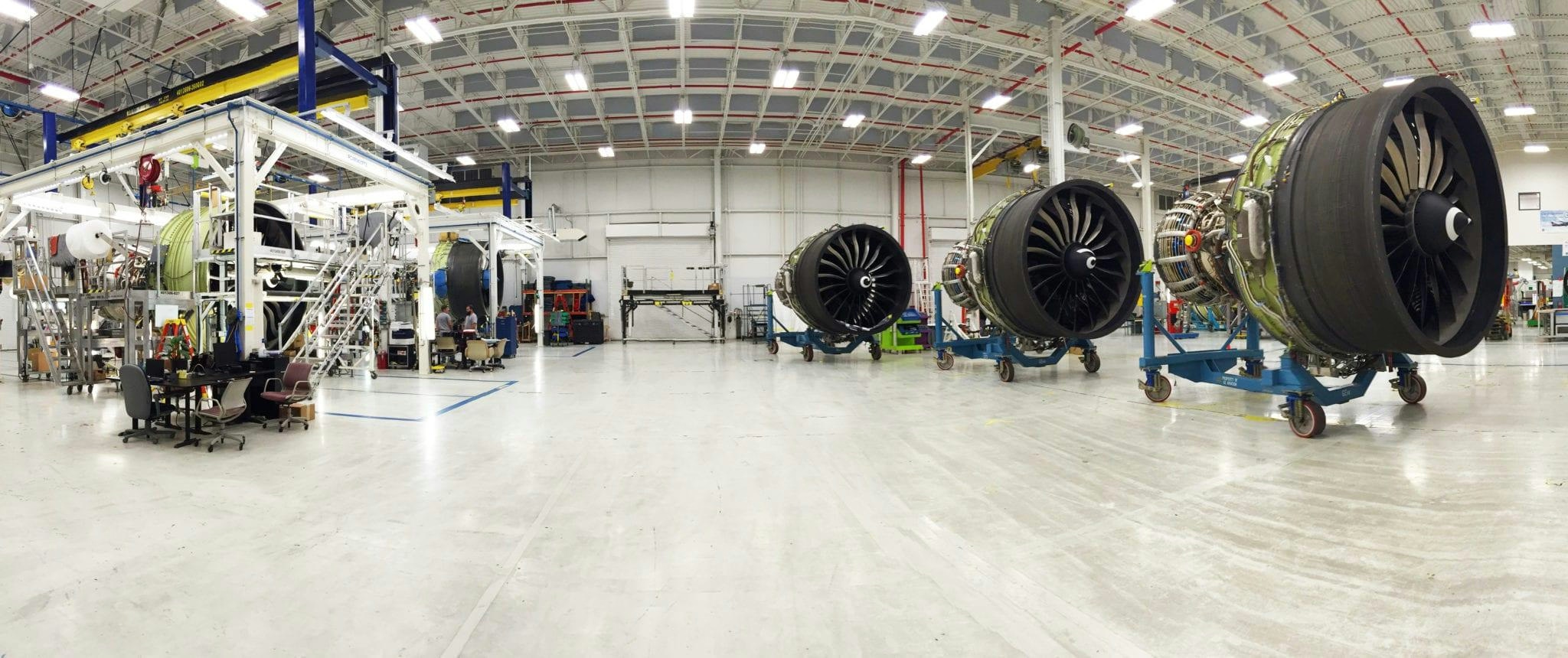
GE Aerospace Commits $42 Million to Rutland Engine Manufacturing Facility
GE Aerospace has announced a $42 million investment in its Rutland, Vermont, facility, a key site for aircraft engine production employing over 1,000 workers. This investment forms part of a larger $1 billion initiative launched in 2026 to bolster U.S. manufacturing capabilities. The broader strategy aims to accelerate engine deliveries, expand the production of advanced components, and enhance defense manufacturing capacity in response to increasing military demand.
Enhancing Local Manufacturing and Economic Impact
The allocated funds will be directed towards acquiring new machinery, upgrading existing equipment, and integrating advanced precision manufacturing tools. These enhancements will enable the Rutland plant to produce components for both narrow-body and wide-body commercial aircraft, as well as engines for military helicopters and fighter jets. The investment also includes expanding advanced 3D metal printing capabilities and modernizing infrastructure to maintain the facility’s position at the forefront of aerospace manufacturing technology.
Lyle Jepson, Executive Director of the Chamber and Economic Development of the Rutland Region (CEDRR), highlighted the significance of the investment for the local economy. He remarked, “They are looking at the future. And it looks like the future is Rutland. GE Aerospace creates an opportunity to have a career and be right here in Rutland. When we hear about investment, it tells us there is demand, and that the company believes the supply can be met right here. They’re investing in our community, and they don’t intend to go anywhere.”
Broader Workforce and Community Engagement
Nationally, GE Aerospace’s $1 billion commitment includes plans to hire 5,000 workers across manufacturing and engineering roles. The Rutland facility currently has 20 open positions, with expectations for further job growth as production scales up. The company’s presence has a ripple effect on the local economy, benefiting small businesses such as Hand Carved by Ernie, a downtown Rutland sandwich shop. Owner Jennifer Walker noted the steady patronage from GE employees, underscoring the company’s role in supporting the community.
Beyond economic contributions, GE Aerospace has invested in local education initiatives. Last year, the company donated equipment to Stafford Technical Center to enhance STEM education, aiming to cultivate a skilled workforce pipeline for the future.
Industry Response and Strategic Positioning
Market reactions to GE Aerospace’s investment have been largely positive, reflecting confidence in the company’s capacity to meet ambitious production targets and sustain its leadership in the aerospace sector. Industry analysts suggest that competitors may respond with increased investments in their own manufacturing capabilities to remain competitive.
Through this substantial investment, GE Aerospace reaffirms its commitment to the Rutland facility and the broader U.S. manufacturing landscape, positioning itself to address both commercial and defense aviation demands in the coming years.

Chinese Team Develops First Flight Control Software for Bamboo Drones

SkyHope Appoints Aviation Industry Leader to Board
The Challenges of Certifying Autonomous Aircraft
KLM to Receive First Airbus A350, Announces Initial Routes
Saxon Air Receives Clean and Green Energy Innovation Award
How BEB Tax Policies Impact Airlines’ International Leasing Contracts

Indonesia’s Danantara and Mandiri Partner with SMBC to Launch $800 Million Aviation Leasing Fund
South Korea’s SUM Air Places Order for New ATR Aircraft
Benoît Rollier Named Vice President of KLM Engine Service
Azorra Expands Engine Portfolio Through Deal with DAE
