
AeroGenie — Your Intelligent Copilot.

Trending
Categories
GE Aerospace and Palantir Extend Partnership to Enhance Military Aircraft Readiness Using AI
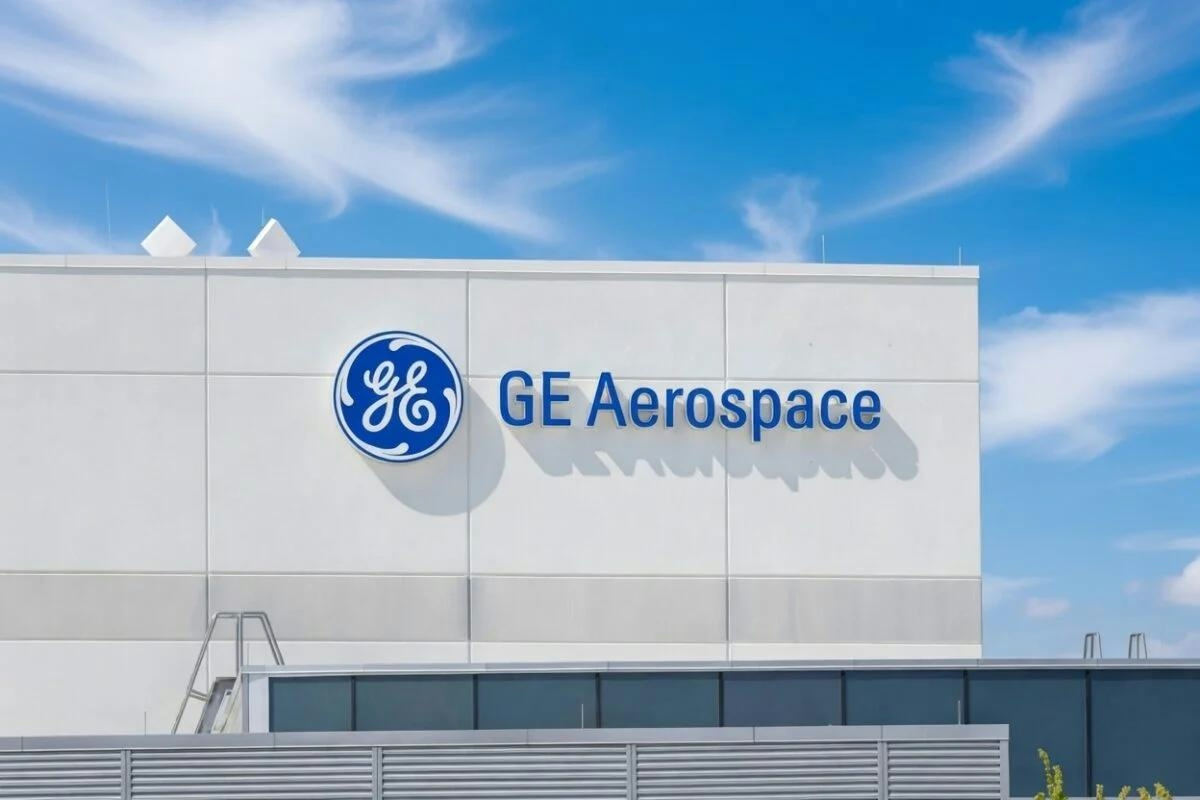
GE Aerospace and Palantir Extend Partnership to Enhance Military Aircraft Readiness Using AI
Expanding Collaboration to Transform Military Aviation
GE Aerospace and Palantir Technologies have announced an expanded multi-year partnership aimed at accelerating the transformation of military aviation readiness for the U.S. Air Force while enhancing operations across GE Aerospace’s production system. This collaboration harnesses advanced artificial intelligence solutions to maximize aircraft availability and streamline production processes amid increasing global demands on military aviation and supply chains.
GE Aerospace’s engines power an aircraft takeoff somewhere in the world every two seconds, highlighting the scale and critical importance of its operations. As military requirements evolve, innovation must extend beyond hardware to the digital systems that support supply chain efficiency and fleet readiness. Together, GE Aerospace and Palantir are deploying AI tools designed to predict and prevent potential failures, alleviate supply chain bottlenecks, and establish a closed feedback loop connecting field operations with suppliers across all fleets.
Initial Success and Broader Application
The partnership initially focused on improving the readiness of the U.S. Air Force’s T-38 trainer jets by enhancing sustainment of the complex J85 engine, a critical component for pilot training. In early 2024, the companies piloted a workflow that provided real-time visibility into parts demand and shortages, yielding measurable improvements in readiness and operational efficiency. Building on this success, the collaboration has rapidly expanded to support GE Aerospace’s wider production system, encompassing sustainment, maintenance, repair, overhaul (MRO), and new engine production.
Challenges and Market Impact
Despite the promising outlook, the partnership faces significant challenges. Integrating sophisticated AI systems with existing aerospace infrastructure demands meticulous coordination, while compliance with stringent defense regulations remains a critical concern. Furthermore, the high expectations for enhanced military readiness place considerable pressure on both companies to deliver concrete results.
The announcement has been met with a positive market response, with Palantir’s stock rising as investors express confidence in the partnership’s potential to drive innovation and operational improvements. The development has also attracted attention from competitors, prompting other defense technology firms to accelerate their own AI initiatives to maintain a competitive edge. This competitive dynamic is particularly evident in Europe, where defense technology companies are benefiting from increased venture capital and government support, intensifying the race for technological leadership in the sector.
As GE Aerospace and Palantir deepen their collaboration, their focus remains on delivering advanced digital solutions that enhance military readiness and establish new benchmarks for AI integration in defense aviation.
Archer Aviation Confronts Setbacks Amid Declining Air Taxi Interest
Chinese Team Develops First Flight Control Software for Bamboo Drones
Government Moves Forward with Boeing Purchase, Considers Airbus Leasing
SkyHope Appoints Aviation Industry Leader to Board
The Challenges of Certifying Autonomous Aircraft
KLM to Receive First Airbus A350, Announces Initial Routes
Saxon Air Receives Clean and Green Energy Innovation Award
How BEB Tax Policies Impact Airlines’ International Leasing Contracts
Indonesia’s Danantara and Mandiri Partner with SMBC to Launch $800 Million Aviation Leasing Fund
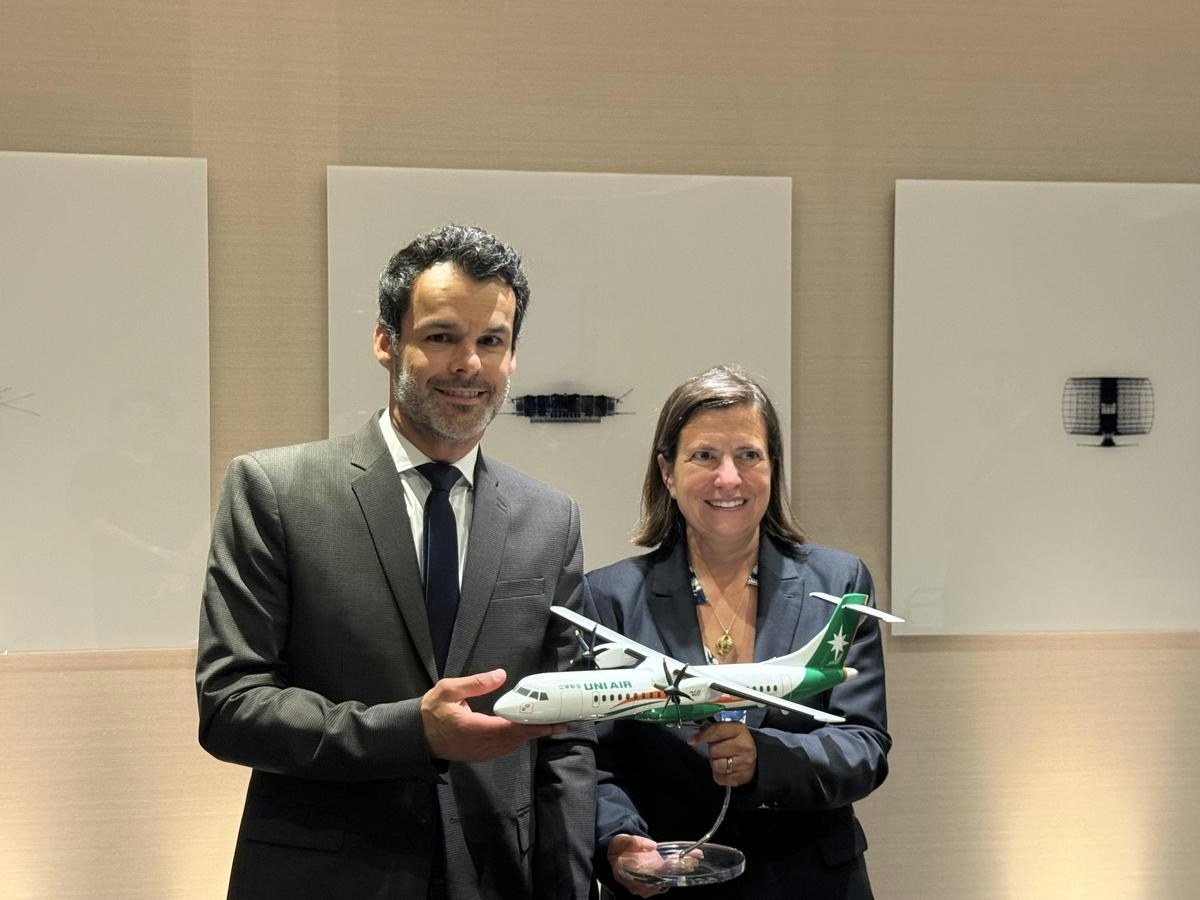
South Korea’s SUM Air Places Order for New ATR Aircraft
