
AeroGenie — Your Intelligent Copilot.

Trending
Categories
eVTOL Aircraft Market Projected to Reach $8 Trillion by 2033 Amid Urban Air Mobility Growth

eVTOL Aircraft Market Projected to Reach $8 Trillion by 2033 Amid Urban Air Mobility Growth
LONDON, Feb. 18, 2026 — The global electric vertical take-off and landing (eVTOL) aircraft market is on track for significant expansion, with its value expected to increase from approximately $1.4 billion in 2026 to $8.1 billion by 2033. This growth, reflecting a compound annual growth rate (CAGR) of 28.5%, is driven by escalating investments in urban air mobility infrastructure, technological innovations, and a growing demand for sustainable aviation solutions.
eVTOL aircraft are transforming urban transportation by providing energy-efficient, low-emission platforms suitable for air taxi services, emergency response, cargo delivery, and regional travel. Their potential to ease urban congestion and facilitate rapid, point-to-point travel has attracted substantial global interest and investment.
Urbanization and Infrastructure as Catalysts for Growth
The rapid pace of urbanization and the urgent need to alleviate traffic congestion in major metropolitan areas are key factors accelerating the adoption of eVTOL technology. Both governments and private sector entities are committing billions of dollars to develop vertiport infrastructure, advanced air traffic management systems, and regulatory frameworks that support next-generation air mobility. Pilot programs across the United States, Europe, and Asia are actively testing eVTOL routes connecting airports to city centers, demonstrating both market demand and operational viability.
Significant milestones include successful demonstration flights by leading manufacturers and the initiation of urban air taxi services in California. Strategic partnerships aimed at advancing air mobility infrastructure further highlight the sector’s increasing maturity and readiness for commercial deployment.
Regional Dynamics and Competitive Landscape
North America currently leads the eVTOL market, benefiting from progressive regulatory environments, a strong aerospace research and development ecosystem, and early urban air mobility trials. Meanwhile, the Asia Pacific region is emerging as the fastest-growing market, supported by substantial investments in smart city projects, manufacturing capabilities, and government-backed low-altitude aviation initiatives. China and Japan are at the forefront of this growth, leveraging regulatory support and manufacturing advancements, while Singapore has introduced its domestic eVTOL prototype, underscoring its strategic role in the sector.
Competition is intensifying in the region, with Japan and South Korea striving to establish comprehensive eVTOL networks. A notable recent development includes Eve Air Mobility securing an order for 50 eVTOL aircraft from AirX in Japan, signaling strong regional commitment to commercial operations.
Technological Progress and Market Challenges
Technological advancements in electric propulsion, autonomous flight systems, and energy storage are central to the market’s expansion. Battery-electric eVTOLs currently dominate revenue share due to their superior energy efficiency and low noise emissions, while hybrid-electric models provide additional operational versatility.
Despite the optimistic outlook, the industry faces challenges including regulatory complexities, the pace of technological innovation, and competition from established aerospace manufacturers. The development of critical infrastructure, particularly vertiports and sophisticated air traffic management systems, remains essential to scaling commercial eVTOL operations on a global scale.
As urban air mobility continues to evolve, the eVTOL aircraft market is poised to play a pivotal role in shaping the future of sustainable and efficient urban transportation worldwide.

Archer Aviation Confronts Setbacks Amid Declining Air Taxi Interest

Chinese Team Develops First Flight Control Software for Bamboo Drones
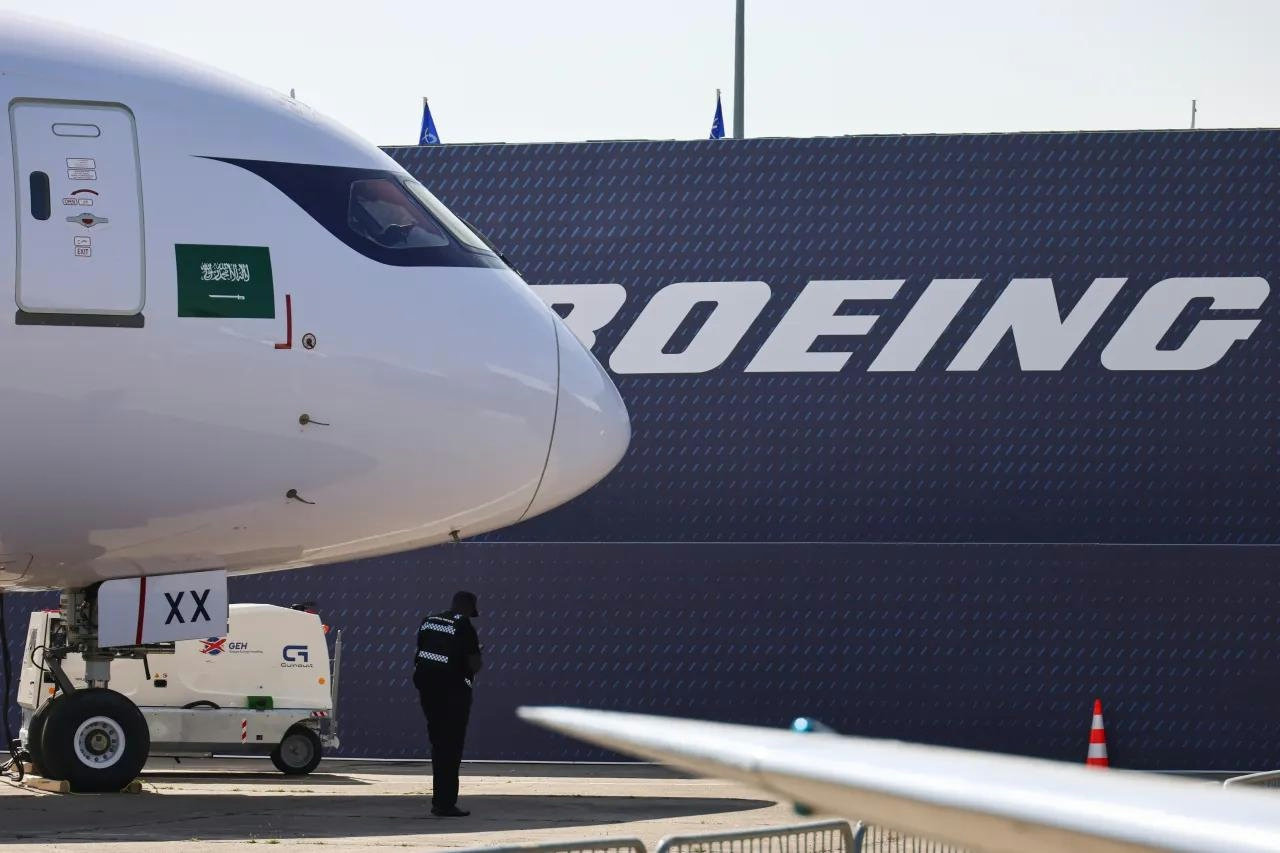
Government Moves Forward with Boeing Purchase, Considers Airbus Leasing
SkyHope Appoints Aviation Industry Leader to Board
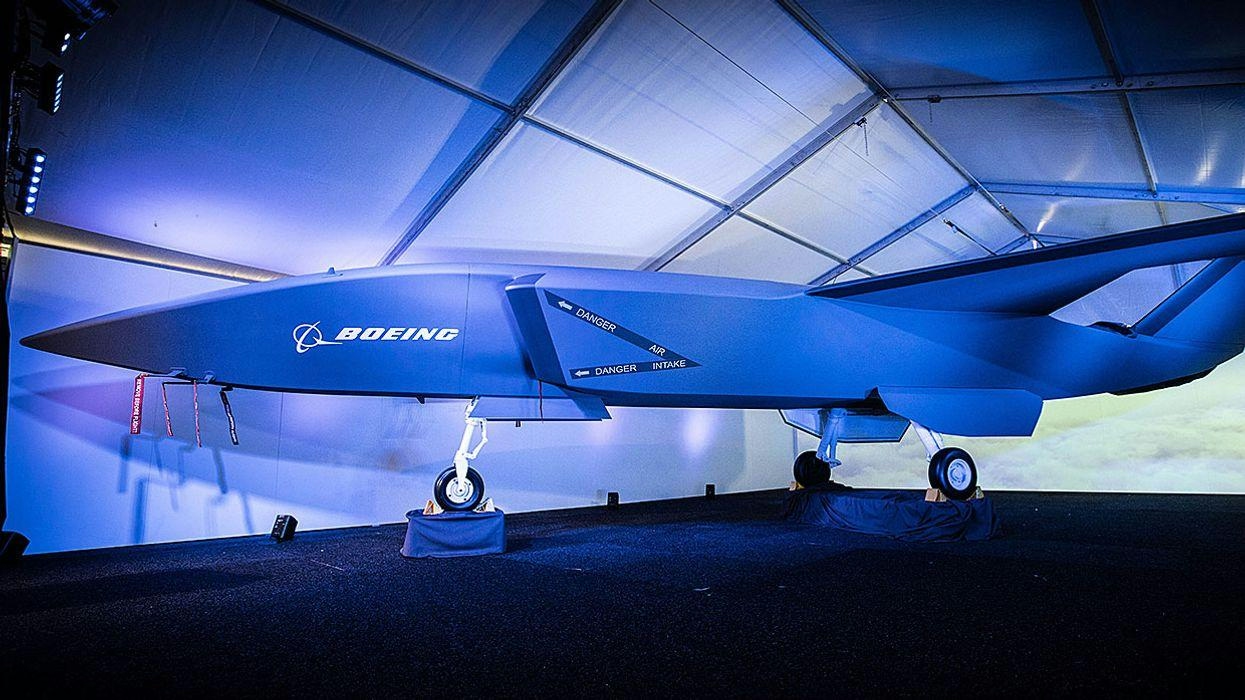
The Challenges of Certifying Autonomous Aircraft
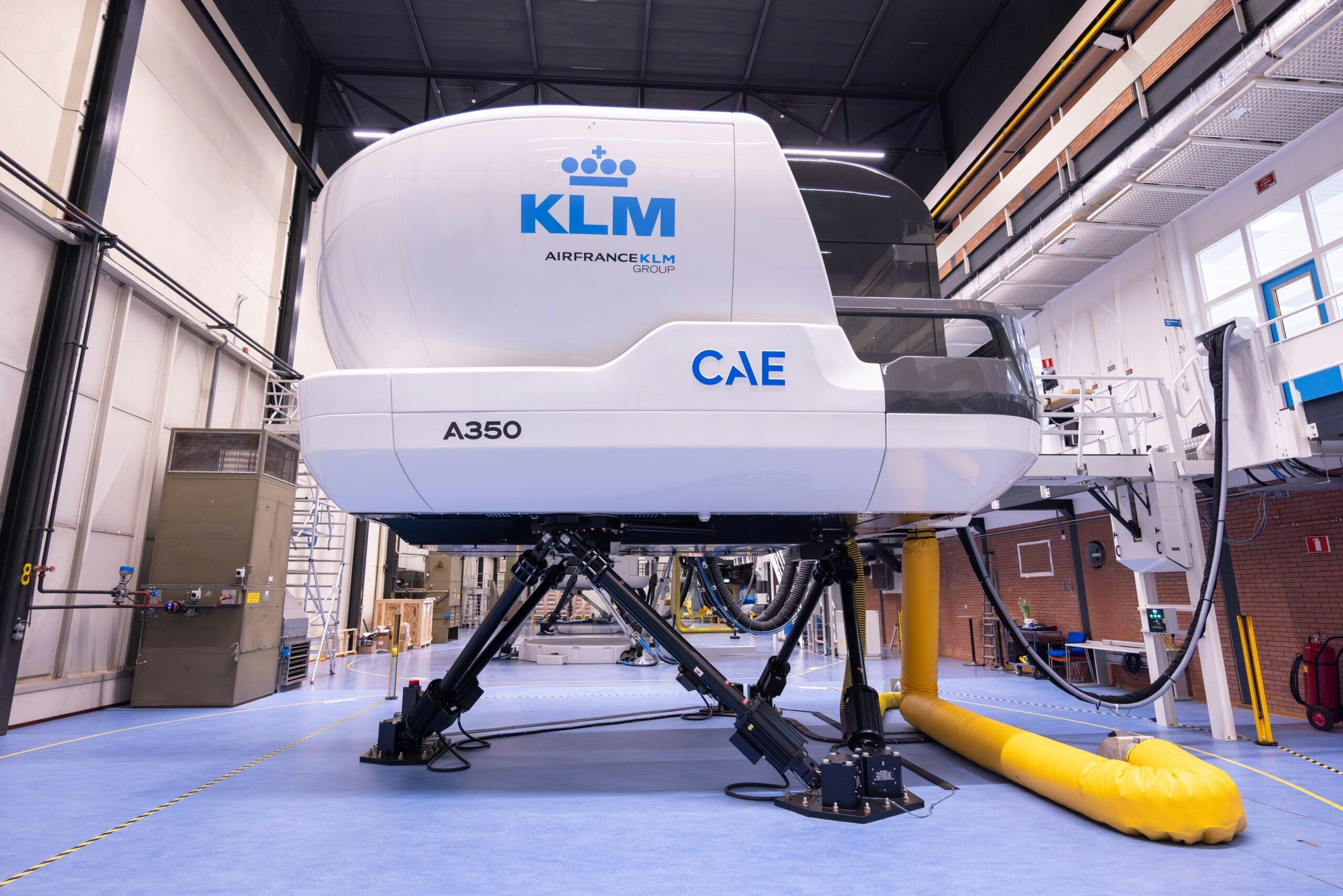
KLM to Receive First Airbus A350, Announces Initial Routes
Saxon Air Receives Clean and Green Energy Innovation Award
How BEB Tax Policies Impact Airlines’ International Leasing Contracts

Indonesia’s Danantara and Mandiri Partner with SMBC to Launch $800 Million Aviation Leasing Fund
South Korea’s SUM Air Places Order for New ATR Aircraft
