
AeroGenie — Your Intelligent Copilot.

Trending
Categories
Delta to Replace APUs on Airbus Jets Following Toxic Fume Concerns
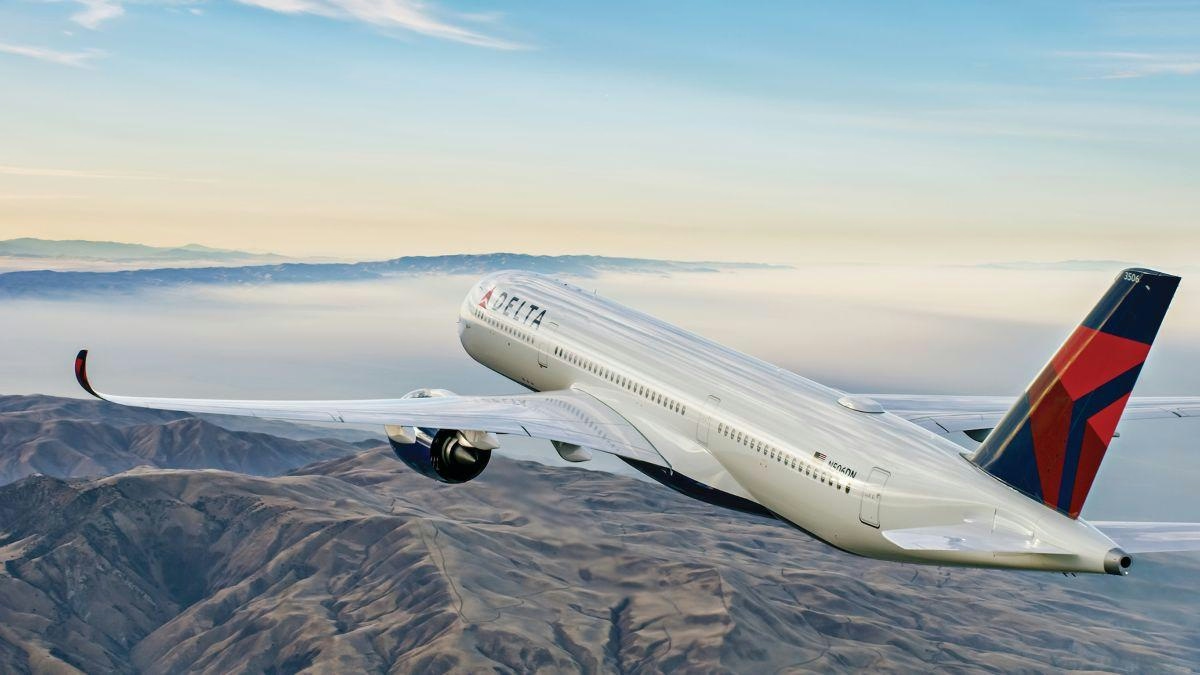
Delta to Replace APUs on Airbus Jets Following Toxic Fume Concerns
Delta Air Lines has initiated a comprehensive replacement of auxiliary power units (APUs) on more than 300 Airbus A320 family aircraft amid growing concerns over toxic fume incidents affecting cabin air quality. This decision follows persistent requests from flight attendants and increasing scrutiny over the potential health risks posed by exposure to contaminated air during flights.
Background and Scope of Replacement
The Atlanta-based carrier began the APU replacement program in 2022, although the total financial outlay remains undisclosed. Delta operates 321 Airbus A320 family jets—including A319s, A320s, and A321s—within its broader fleet of 518 Airbus aircraft. To date, the airline has completed replacements on approximately 90% of its A320 family fleet. APUs, which are small jet engines located in the tailcone, supply electrical and pneumatic power when the main engines are inactive. However, these units have been implicated in occasional leaks of oil fumes into the cabin through the aircraft’s bleed air system, which channels air to passengers and crew. This system is standard across nearly all modern commercial jets except the Boeing 787.
Health Implications and Industry Response
Toxic fume events have been predominantly associated with the Airbus A320 family, with reports indicating an increase in such incidents in recent years. Medical experts have raised alarms about the serious health consequences of exposure to these fumes, which can include brain injury and permanent damage to the peripheral nervous system. Dr. Robert Kaniecki, a neurologist who has treated numerous airline crew members, revealed to the Wall Street Journal that he has diagnosed over 100 flight attendants and a dozen pilots with brain injuries linked to fume exposure. Among his patients is a frequent Delta flyer who sustained such an injury in 2023.
Market reactions to Delta’s initiative have been varied. Some analysts express concern over the operational challenges posed by the large-scale replacements, while others underscore the critical importance of safeguarding passenger and crew health. Although Delta has not confirmed whether its forthcoming order of 72 Airbus A321neos will incorporate the updated APUs, the airline’s proactive stance may influence industry standards moving forward.
Regulatory and Industry Implications
Delta’s decision is likely to intensify scrutiny of cabin air quality across the aviation sector. The Federal Aviation Administration (FAA) maintains stringent standards for cabin air, and existing studies generally affirm that onboard air quality is satisfactory. Nevertheless, the recent focus on fume events has prompted questions regarding the sufficiency of current safety measures. Other major carriers, including United Airlines, have yet to publicly disclose their strategies in response to similar concerns. As Delta advances its APU replacement program, the broader industry may face increased pressure to enhance operational protocols and regulatory oversight to ensure cabin air safety.
Chinese Team Develops First Flight Control Software for Bamboo Drones
SkyHope Appoints Aviation Industry Leader to Board
The Challenges of Certifying Autonomous Aircraft
KLM to Receive First Airbus A350, Announces Initial Routes
Saxon Air Receives Clean and Green Energy Innovation Award
How BEB Tax Policies Impact Airlines’ International Leasing Contracts
Indonesia’s Danantara and Mandiri Partner with SMBC to Launch $800 Million Aviation Leasing Fund
South Korea’s SUM Air Places Order for New ATR Aircraft
Benoît Rollier Named Vice President of KLM Engine Service
Azorra Expands Engine Portfolio Through Deal with DAE
