
AeroGenie — Your Intelligent Copilot.

Trending
Categories
Boeing Leads Airbus in Orders and Deliveries at Start of 2026
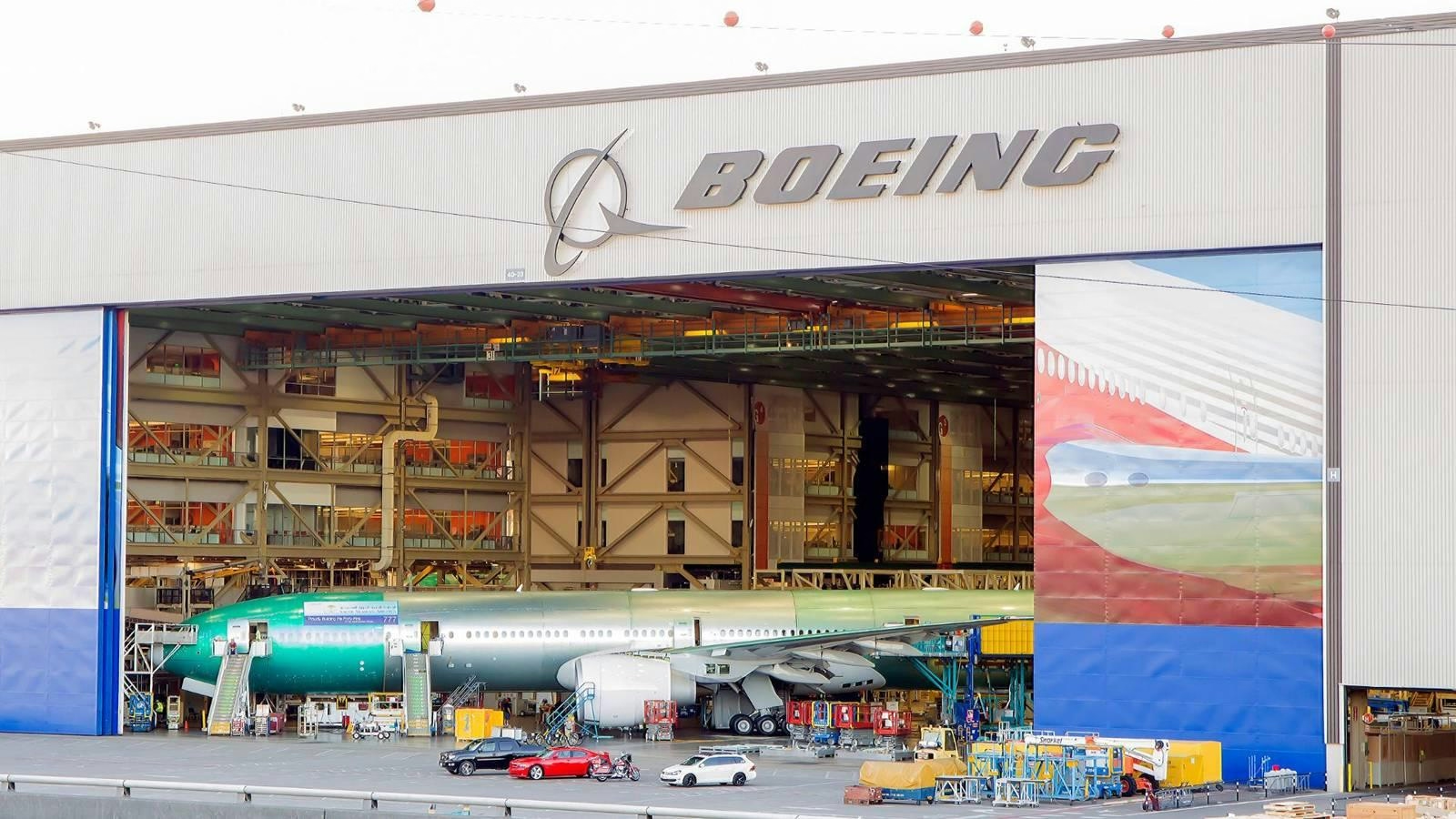
Boeing Surpasses Airbus in Orders and Deliveries at the Start of 2026
Boeing has established a decisive lead over Airbus in the initial months of 2026, signaling a notable shift in the competitive dynamics between the world’s two largest aircraft manufacturers. Data from January 2026 reveals that Boeing delivered 46 aircraft to customers, more than twice the 19 deliveries recorded by Airbus during the same period. This strong performance is mirrored in new order volumes, with Boeing outselling Airbus for the first time since 2018.
Strong Demand and Production Drive Boeing’s Early Success
Boeing’s robust start to the year is largely driven by heightened leasing activity and sustained global demand for commercial jets. In January alone, the company delivered 38 of its widely favored 737 MAX narrowbody aircraft alongside five 787 Dreamliners, underscoring renewed market confidence in its product range. Boeing’s total deliveries for 2026 are projected to reach 600 aircraft, marking the highest annual output the company has achieved in seven years.
This resurgence is widely attributed to Boeing’s recent “industrial reset” and a renewed emphasis on safety, particularly following previous challenges with the 737 MAX. These strategic efforts have strengthened customer trust in both the 737 MAX and the upcoming 777X widebody model, contributing to increased orders and deliveries.
Airbus Maintains Market Strength Amidst Boeing’s Momentum
Despite Boeing’s strong performance at the outset of 2026, Airbus remains a formidable competitor. The European manufacturer delivered more aircraft overall in 2025, although at a slower pace compared to its record-setting year in 2019. Airbus continues to dominate the single-aisle market with its A320neo family, while Boeing has made significant gains in the widebody segment.
Industry analysts observe that Boeing’s current momentum points to a highly profitable start to the fiscal year and could potentially alter the competitive landscape if sustained. Both manufacturers are expected to increase production to satisfy ongoing demand from airlines and leasing companies, as the global aviation sector continues its recovery from the pandemic.

Archer Aviation Confronts Setbacks Amid Declining Air Taxi Interest

Chinese Team Develops First Flight Control Software for Bamboo Drones
Government Moves Forward with Boeing Purchase, Considers Airbus Leasing
SkyHope Appoints Aviation Industry Leader to Board
The Challenges of Certifying Autonomous Aircraft
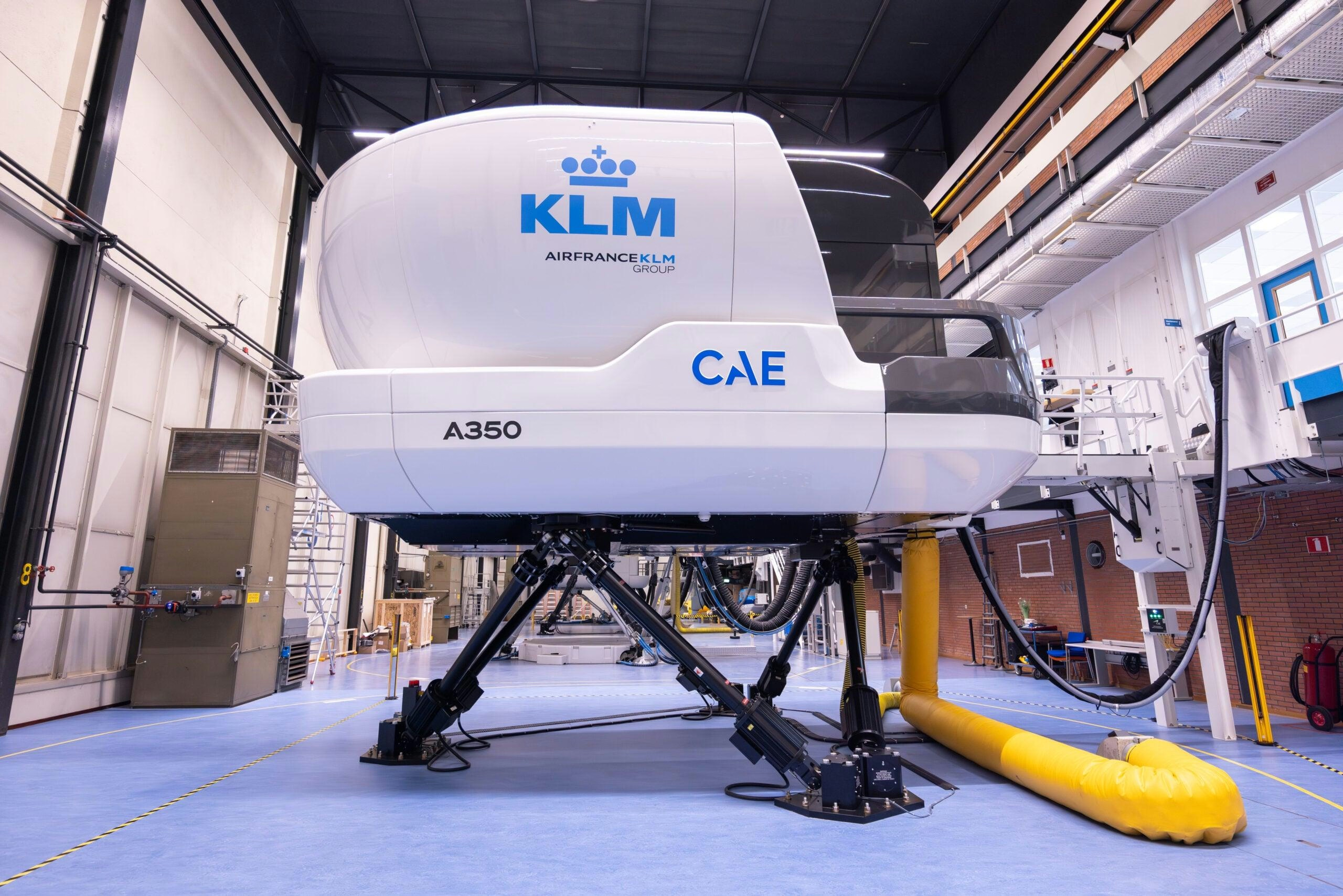
KLM to Receive First Airbus A350, Announces Initial Routes

Saxon Air Receives Clean and Green Energy Innovation Award
How BEB Tax Policies Impact Airlines’ International Leasing Contracts

Indonesia’s Danantara and Mandiri Partner with SMBC to Launch $800 Million Aviation Leasing Fund
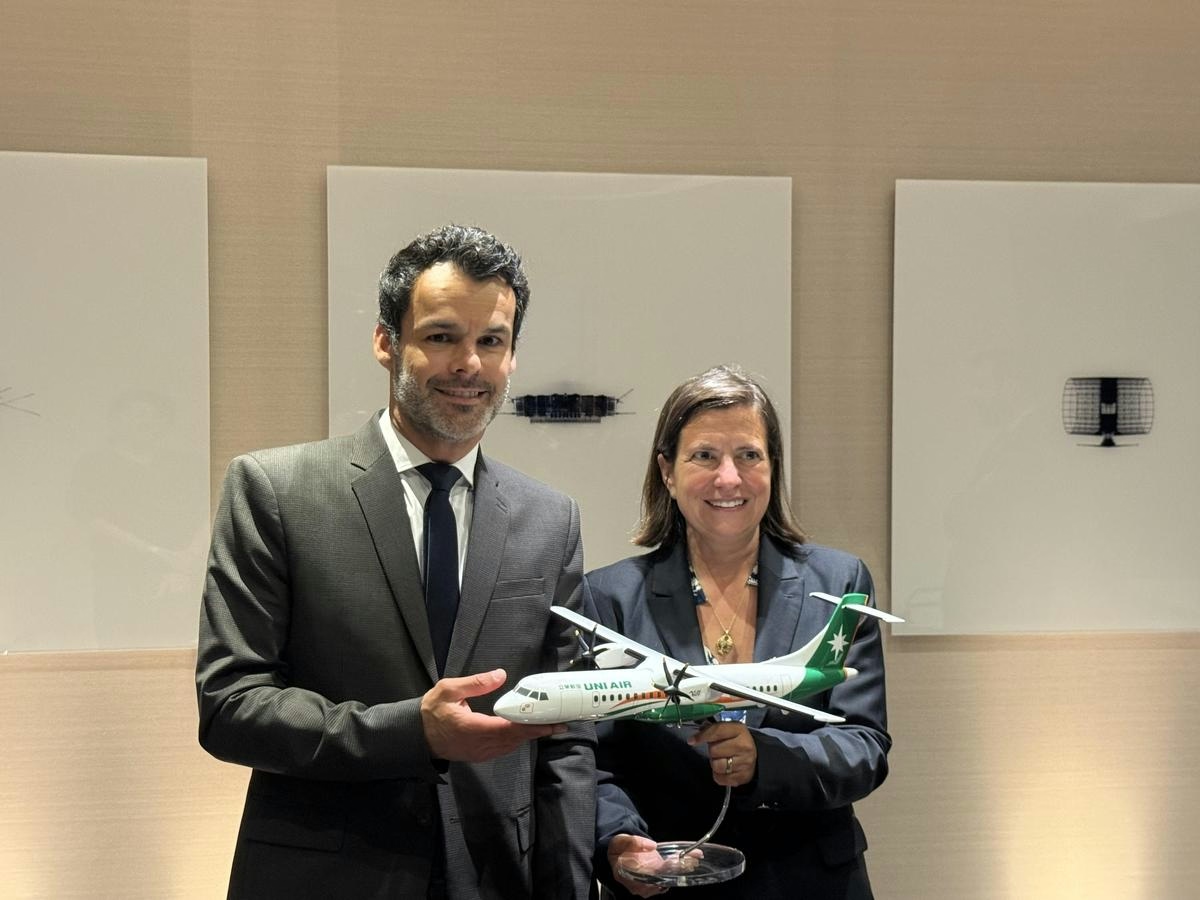
South Korea’s SUM Air Places Order for New ATR Aircraft
