
AeroGenie — Your Intelligent Copilot.

Trending
Categories
Aircraft Pump Demand Expected to Grow Through 2035 Amid Fleet Renewal and New Aircraft Programs
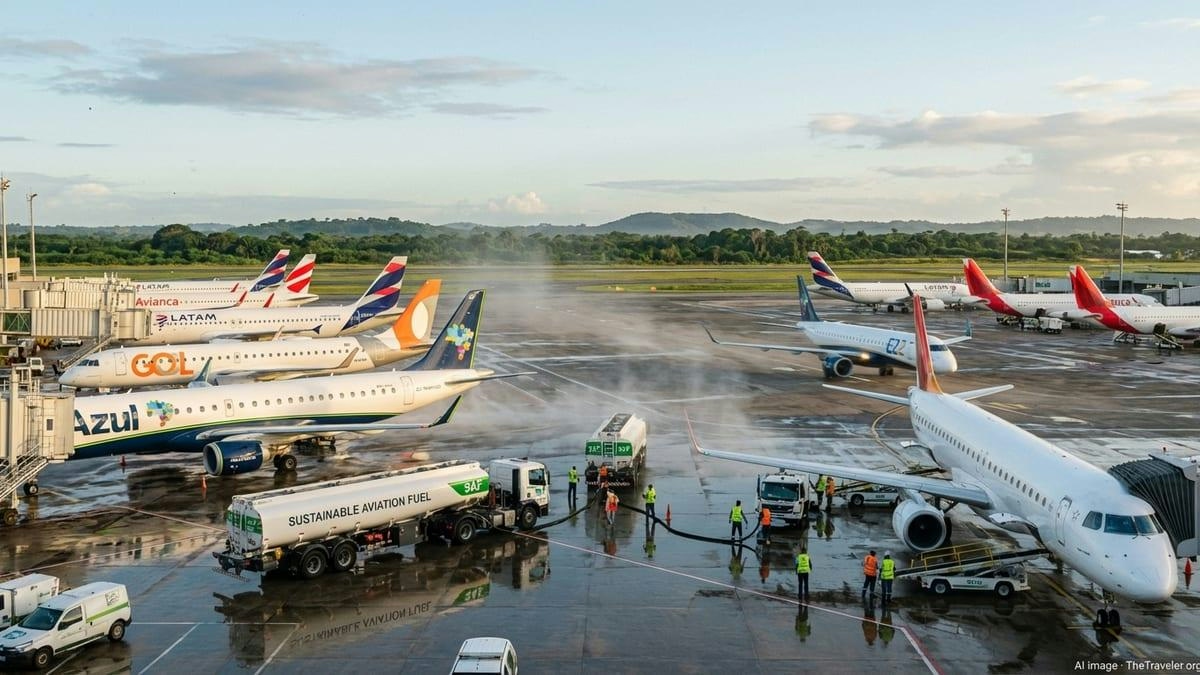
Aircraft Pump Demand Expected to Grow Through 2035 Amid Fleet Renewal and New Aircraft Programs
The global aircraft pumps market is projected to experience steady growth through 2035, driven by ongoing fleet renewal cycles, increasing air travel demand, and the advancement of next-generation, more-electric aircraft. As the aviation industry moves into 2026, the market is shaped by solid demand fundamentals, more disciplined procurement practices, and a geographically diversified supply base, according to the latest analysis from IndexBox.
Industry Dynamics and Demand Drivers
Aircraft pumps serve as essential components across various systems, including fuel, hydraulics, lubrication, air conditioning, and waste management. These pumps are supplied both as original equipment for new aircraft and as high-volume aftermarket parts for maintenance, repair, and overhaul (MRO). The sector’s growth is underpinned by rising production rates from major original equipment manufacturers (OEMs), the operational requirements of an expanding global fleet, and mandatory overhaul schedules that sustain aftermarket demand.
Several factors are propelling market expansion. The global commercial aircraft fleet is undergoing significant renewal and expansion, while higher aircraft utilization rates are intensifying aftermarket MRO needs. Military aviation modernization programs are also driving demand for advanced fluid system components. Additionally, the industry is witnessing a technological shift toward more-electric aircraft (MEA) architectures, which require innovative pump solutions. Regulatory pressures aimed at improving fuel efficiency and reducing emissions further stimulate demand. The growing use of unmanned aerial vehicles (UAVs) is creating a niche market for miniaturized pump technologies.
Leading airlines are actively pursuing fleet renewal initiatives to capitalize on these trends. For instance, Cathay Pacific and Qantas have accelerated their upgrade programs to incorporate more fuel-efficient aircraft. In the Middle East, carriers are adjusting strategies to mitigate risks associated with regional geopolitical tensions, such as the ongoing Iran crisis, which continues to influence travel demand patterns.
Market Challenges and Technological Outlook
Despite optimistic growth forecasts from industry players like ITP Aero, the aircraft pumps market faces several challenges. Supply chain constraints remain a significant concern, particularly in sourcing specialized materials and engine components amid global shortages. The high costs and lengthy qualification processes for certifying new pump designs add further complexity. Moreover, increasing competition from parts manufacturer approval (PMA) suppliers is reshaping the aftermarket landscape, intensifying pressure on traditional suppliers.
Technological advancements in the market are expected to be evolutionary rather than revolutionary. Efforts are concentrated on enhancing pump reliability, reducing weight, and improving energy efficiency. The adoption of new pump technologies will closely align with the development schedules of next-generation aircraft platforms, including potential midsize aircraft and sustainable aviation demonstrators featuring more-electric architectures.
Geopolitical developments, supply chain stability—especially concerning alloys and semiconductors—and the pace of regulatory certification for new designs and alternative parts will be critical factors influencing market dynamics. Pricing structures are anticipated to remain relatively rigid, with value increasingly derived from total cost of ownership models and long-term service agreements.
Resilient Market Supported by Dual Demand Streams
Overall, the aircraft pumps market is positioned for resilient growth, supported by the capital-intensive and highly regulated nature of the aerospace sector. Demand will continue to be driven by both new aircraft production and the maintenance requirements of the in-service fleet. This dual-stream demand is expected to sustain steady, non-discretionary growth aligned with the long-term recovery and expansion of global air traffic.
Chinese Team Develops First Flight Control Software for Bamboo Drones
SkyHope Appoints Aviation Industry Leader to Board
The Challenges of Certifying Autonomous Aircraft
KLM to Receive First Airbus A350, Announces Initial Routes
Saxon Air Receives Clean and Green Energy Innovation Award
How BEB Tax Policies Impact Airlines’ International Leasing Contracts

Indonesia’s Danantara and Mandiri Partner with SMBC to Launch $800 Million Aviation Leasing Fund
South Korea’s SUM Air Places Order for New ATR Aircraft
Benoît Rollier Named Vice President of KLM Engine Service
Azorra Expands Engine Portfolio Through Deal with DAE
