
AeroGenie — Your Intelligent Copilot.

Trending
Categories
A Small Tech Innovation That Transformed Air Travel
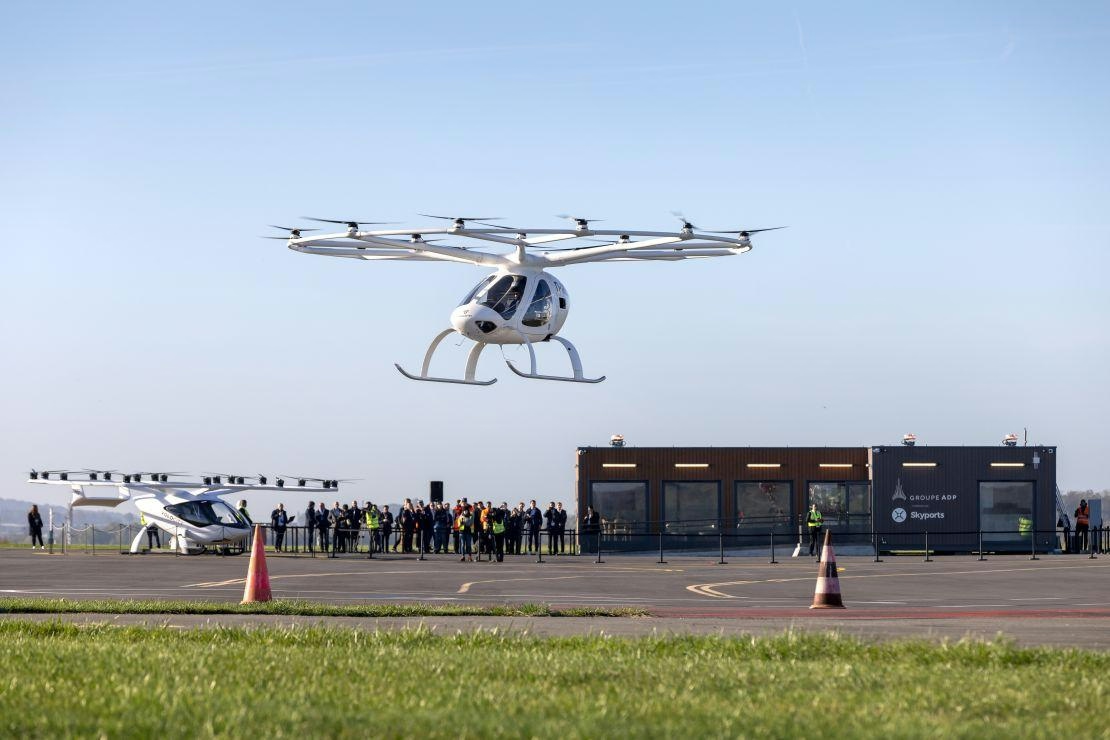
A Small Tech Innovation That Transformed Air Travel
Air travel has undergone remarkable evolution since the Wright brothers’ inaugural flight in 1903. While modern passengers often focus on comfort or entertainment, it is the sophisticated avionics systems operating behind the scenes that have fundamentally reshaped the industry. Among numerous technological advancements, the emergence of advanced digital avionics stands out as a transformative innovation, revolutionizing how aircraft navigate, communicate, and operate.
The Digital Shift in the Cockpit
The late 20th century marked a significant turning point in aviation with the introduction of digital avionics. Prior to this shift, aircraft depended on analog systems that, although functional, were susceptible to errors and demanded constant manual monitoring. The transition to digital technology gave rise to the "glass cockpit," replacing traditional dials and gauges with flat-panel displays. These digital interfaces provide pilots with real-time data, weather updates, and system alerts, greatly enhancing situational awareness and operational control.
Flight management systems (FMS), developed by companies such as Rockwell Collins, further automated routine tasks. Pilots gained the ability to input flight plans directly, streamline communications with air traffic control, and reduce manual workload. This advancement not only increased operational efficiency but also bolstered safety by minimizing the potential for human error.
Transforming Safety and Efficiency
The introduction of digital avionics has had a profound impact on air travel safety and efficiency. Automated navigation and real-time communication systems have lessened dependence on visual cues and manual calculations, which is especially critical in adverse weather conditions or congested airspace. Automation has also optimized flight operations, enabling airlines to refine routes, reduce delays, and improve fuel management.
Dr. John M. Stenbit, former Assistant Secretary of Defense for Networks and Information Integration, encapsulates this transformation by stating, “Technology is transforming the way we think about air travel. What seemed impossible just decades ago is now part of our everyday life.”
Navigating New Challenges
Despite these technological gains, the integration of digital avionics presents new challenges for the aviation industry. Economic downturns disproportionately affect price-sensitive travelers, placing particular strain on low-cost carriers that may find it difficult to invest in the latest technologies. This dynamic intensifies competition, with premium carriers leveraging advanced services and exclusive airport lounges to differentiate themselves.
In response, competitors often adopt similar innovations to maintain market share while exploring new routes and amenities to attract customers. However, achieving the profitability levels of major carriers such as Delta and United remains a significant challenge, especially as the costs associated with technological upgrades continue to rise.
Additionally, the increasing reliance on artificial intelligence for travel planning and discovery is reshaping how airlines engage with customers. As AI-driven platforms influence booking decisions, airlines must adapt their strategies to maintain visibility and competitiveness within an increasingly digital marketplace.
The Future of Flight
The digital revolution in avionics has rendered air travel safer, more efficient, and more reliable than ever before. Yet, as technological advancements continue at a rapid pace, airlines face a complex landscape marked by economic pressures, evolving consumer expectations, and ongoing innovation. While the digital systems in the cockpit operate silently, the challenges they introduce are tangible and will significantly influence the future trajectory of air travel.
Chinese Team Develops First Flight Control Software for Bamboo Drones
SkyHope Appoints Aviation Industry Leader to Board
The Challenges of Certifying Autonomous Aircraft
KLM to Receive First Airbus A350, Announces Initial Routes
Saxon Air Receives Clean and Green Energy Innovation Award
How BEB Tax Policies Impact Airlines’ International Leasing Contracts

Indonesia’s Danantara and Mandiri Partner with SMBC to Launch $800 Million Aviation Leasing Fund
South Korea’s SUM Air Places Order for New ATR Aircraft
Benoît Rollier Named Vice President of KLM Engine Service
Azorra Expands Engine Portfolio Through Deal with DAE
