
エアロジニー — あなたのインテリジェントな副操縦士。

現在のトレンド
Categories
Top 10 US-Canada to Europe Routes for Narrowbody Aircraft
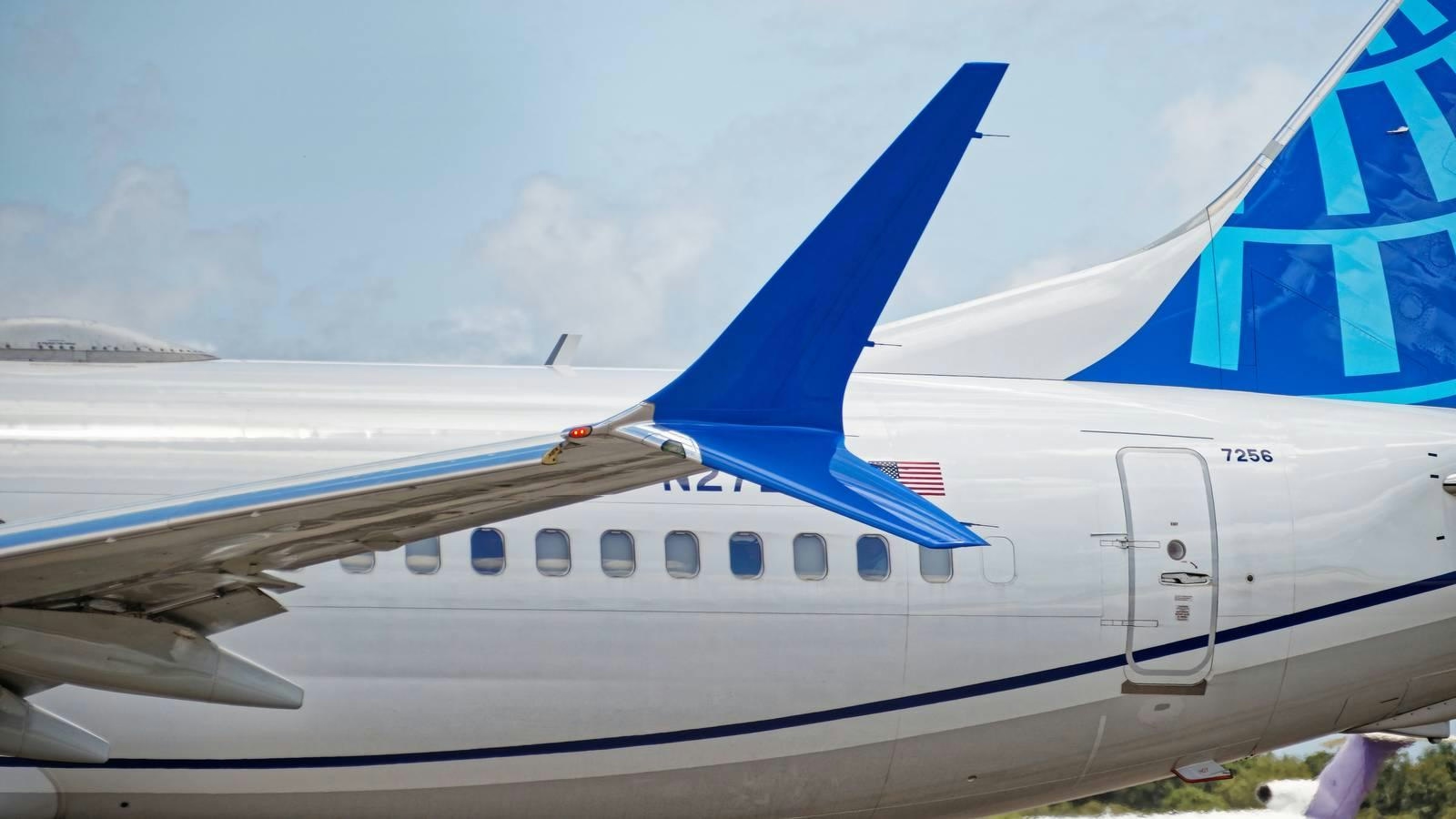
Top 10 US-Canada to Europe Routes for Narrowbody Aircraft
The Emergence of Narrowbody Jets on Transatlantic Routes
Traditionally, long-haul transatlantic flights have been dominated by widebody aircraft, designed to carry large numbers of passengers over extended distances. However, advancements in aircraft technology have begun to transform this landscape. New-generation narrowbody jets, such as the Airbus A321neo family and Boeing 737 MAX series, now offer extended range capabilities and enhanced fuel efficiency. These improvements enable airlines to operate long, thinner routes that do not justify the use of larger widebody aircraft. The Airbus A321XLR, for instance, has a published range of 4,700 nautical miles (8,700 kilometers), effectively extending the reach of single-aisle jets into long-haul territory, even if actual operational range is somewhat less.
Several major carriers, including American Airlines, JetBlue, Icelandair, Air Canada, SAS, United Airlines, and Aer Lingus, have incorporated narrowbody aircraft such as the A321neo, A321LR, A320neo, 737 MAX 8 and 9, and the Boeing 757-200 into their transatlantic fleets. According to scheduled data from Cirium for the period November 2025 through August 2026, more than 24,000 narrowbody flights are planned between Europe and North America, with the Airbus A321neo family accounting for over 15,000 of these flights. This trend underscores the growing role of narrowbodies in reshaping transatlantic air travel.
Leading Routes and Operational Highlights
The longest scheduled narrowbody route during this timeframe is Washington Dulles to Copenhagen, operated by Scandinavian Airlines (SAS) using the Airbus A321LR. Covering approximately 4,074 miles (6,556 kilometers), SAS deploys three A321LR aircraft across several US and Canadian routes, maintaining up to four weekly flights on this sector during the winter season. This route exemplifies the extended reach of narrowbody jets on transatlantic services.
Following closely is the Toronto to Berlin route, flown by Air Transat with the A321LR. This summer-seasonal service, inaugurated in June 2025, spans about 4,052 miles and operates twice weekly. La Compagnie, an all-business-class carrier, operates the third-longest narrowbody route between Newark and Milan Malpensa, also utilizing the A321LR. The airline offers similar services to Nice and Paris Orly, with frequencies that vary seasonally.
| Route | Airline | Aircraft | Distance (miles) | Frequency |
|---|---|---|---|---|
| Washington Dulles–Copenhagen | SAS | A321LR | 4,074 | Up to 4 weekly (Mon, Wed, Thurs, Sat) |
| Toronto–Berlin | Air Transat | A321LR | 4,052 | 2 weekly (Thurs, Sun); resumes May 2026 |
| Newark–Milan Malpensa | La Compagnie | A321LR | 4,010 | 6 weekly (except Wed); daily in March |
| Newark–Nice | La Compagnie | A321LR | 4,007 |
Market Dynamics and Strategic Developments
Despite the operational advantages offered by these narrowbody aircraft, transatlantic routes face significant market challenges. Recent softness in yields and passenger load factors has adversely affected airline financial performance, as evidenced by the negative market reaction to British Airways’ third-quarter earnings. Competition is intensifying, with American Airlines introducing the A321XLR to expand its long-haul narrowbody network, while Air Canada’s growth at Toronto Pearson Airport is increasing competitive pressure on regional carriers such as Porter Airlines.
Beyond the North Atlantic, airlines are also pursuing new strategic opportunities. Iberia’s planned nonstop service between Madrid and Monterrey in 2026 reflects a concerted effort to strengthen its presence in Latin America and the Caribbean, directly challenging Aeromexico’s dominance in the region.
As carriers continue to exploit the capabilities of new-generation narrowbody aircraft, the transatlantic market is undergoing rapid evolution. This shift is creating a broader array of route options while simultaneously intensifying competition and exposing airlines to emerging market risks.

Archer Aviation Confronts Setbacks Amid Declining Air Taxi Interest

Chinese Team Develops First Flight Control Software for Bamboo Drones
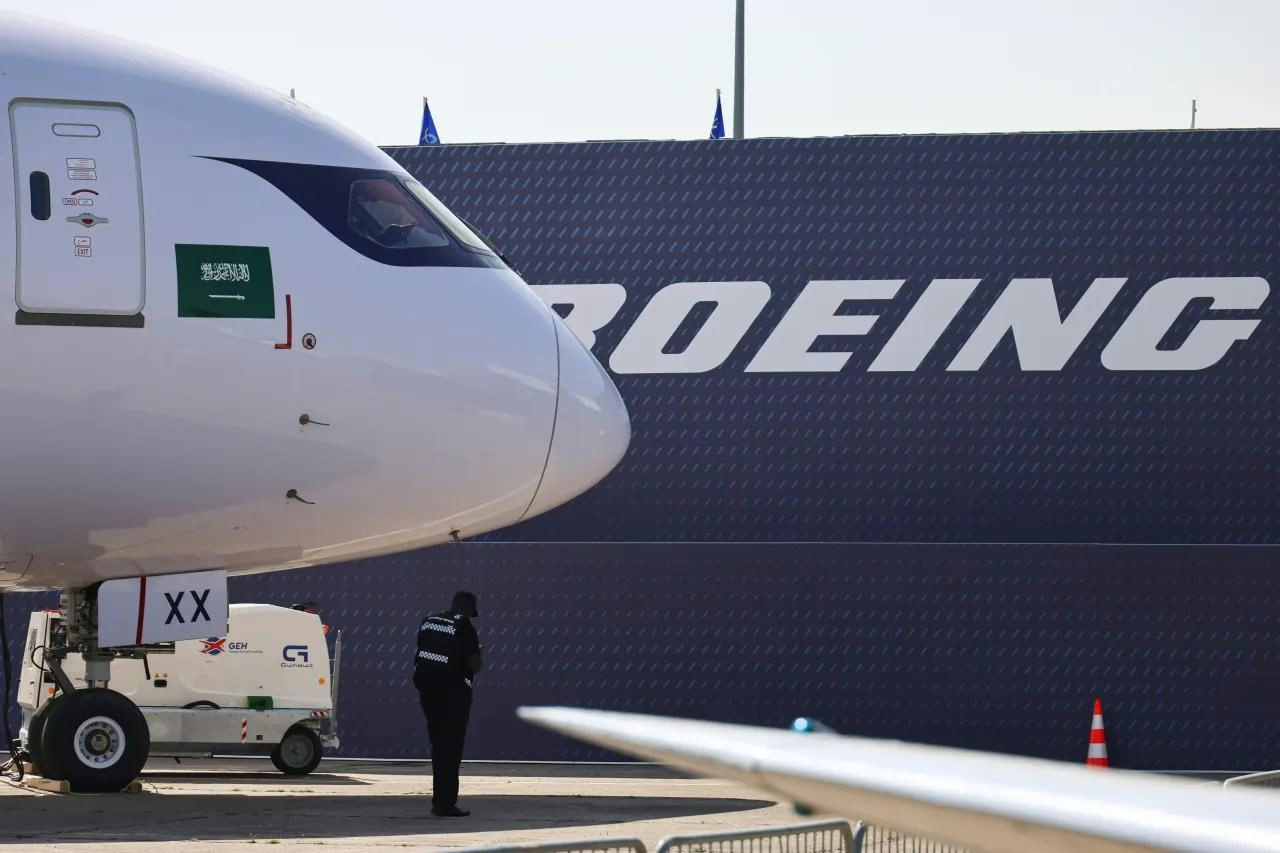
Government Moves Forward with Boeing Purchase, Considers Airbus Leasing
SkyHope Appoints Aviation Industry Leader to Board
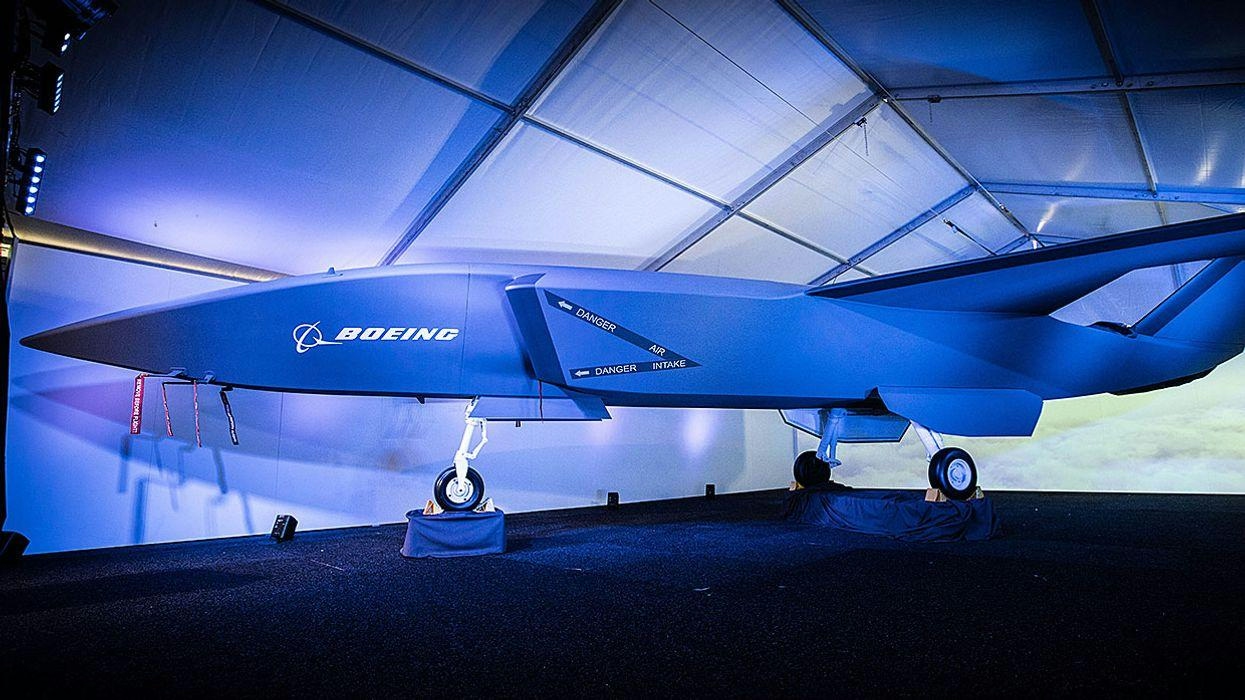
The Challenges of Certifying Autonomous Aircraft
KLM to Receive First Airbus A350, Announces Initial Routes

Saxon Air Receives Clean and Green Energy Innovation Award
How BEB Tax Policies Impact Airlines’ International Leasing Contracts

Indonesia’s Danantara and Mandiri Partner with SMBC to Launch $800 Million Aviation Leasing Fund

South Korea’s SUM Air Places Order for New ATR Aircraft
