
エアロジニー — あなたのインテリジェントな副操縦士。

現在のトレンド
Categories
The Cost of a Boeing 747 Engine
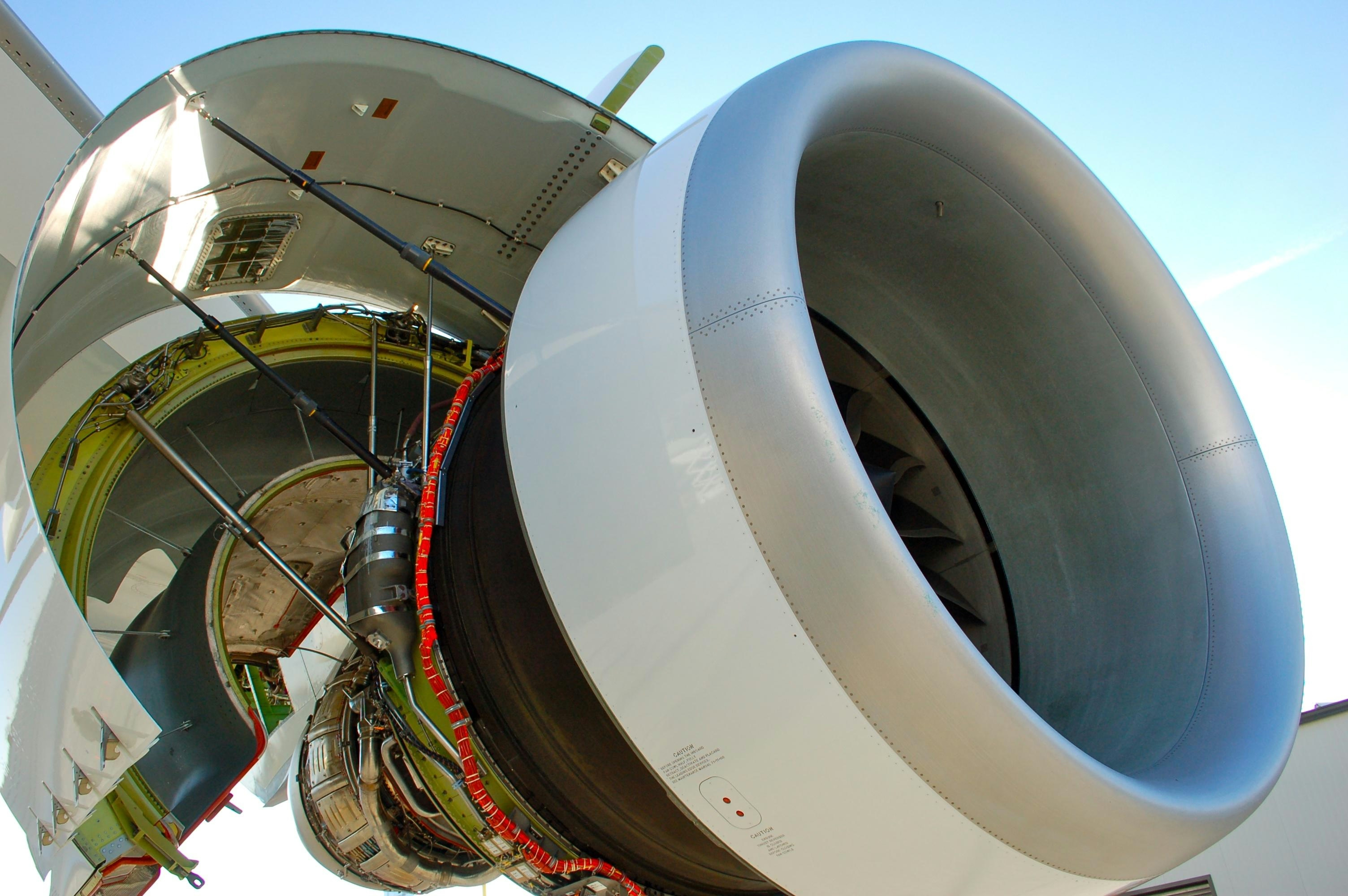
The Cost of a Boeing 747 Engine
The engine of a Boeing 747 remains one of the most substantial financial commitments for operators of this iconic aircraft. As the 747 has transitioned from a passenger workhorse to a specialized cargo transporter, the market for its engines has bifurcated into two primary segments: legacy powerplants for the 747-400 and advanced units for the 747-8. This division is clearly reflected in the multi-million dollar price tags attached to these massive turbofans, making the engine the single most expensive component of the aircraft.
Pricing and Market Segmentation
A new GEnx-2B engine designed for the 747-8 is currently priced between $25 million and $30 million per unit. By contrast, a used but serviceable CF6 or PW4000 engine for the older 747-400 can be acquired on the secondary market for anywhere from $2 million to $8 million, depending on its maintenance history and remaining flight cycles. This significant price disparity explains why many smaller cargo operators continue to favor the 747-400, despite the operational advantages offered by the newer 747-8 model.
The cost of these engines is influenced by more than just raw materials. Factors such as maintenance records, technical reliability, and the number of cycles remaining on life-limited components all contribute to whether an engine is valued at a modest $2 million or commands a premium of $25 million. Each engine cycle—comprising a start and shutdown—brings the engine closer to a mandatory overhaul, which can itself cost upwards of $5 million. For many 747-400 freighters still in operation, the expense of a major engine overhaul may even surpass the market value of the airframe.
Industry Dynamics and Technological Advances
The market for 747 engines is further shaped by broader industry forces. Fluctuating demand, competition from other engine manufacturers such as Rolls-Royce and Pratt & Whitney, and potential supply chain disruptions all affect pricing and availability. Airlines frequently adjust their purchasing decisions based on engine performance, cost efficiency, and the latest technological innovations. In response, competitors may modify pricing strategies, accelerate innovation, or pursue strategic partnerships to maintain or expand their market share. Notably, MTU Aero Engines has projected an increase in commercial business revenue by 2026, a development that could further influence market dynamics and pricing strategies across the sector.
Historically, the cost of engines has outpaced inflation, driven by the integration of advanced materials such as carbon fiber and 3D-printed alloys. In the 1970s, a JT9D engine for the original 747-100 was priced at approximately $1 million—equivalent to roughly $7 million in today’s dollars. Modern engines now cost about four times that amount in real terms, reflecting the increased complexity and performance requirements necessary to meet contemporary environmental and operational standards.
Ultimately, the final cost of a 747 engine is determined by a complex interplay of technical, economic, and market factors. For operators, navigating this landscape demands careful consideration not only of the initial purchase price but also of long-term maintenance, reliability, and the evolving dynamics of a highly competitive global market.

Archer Aviation Confronts Setbacks Amid Declining Air Taxi Interest

Chinese Team Develops First Flight Control Software for Bamboo Drones
Government Moves Forward with Boeing Purchase, Considers Airbus Leasing
SkyHope Appoints Aviation Industry Leader to Board
The Challenges of Certifying Autonomous Aircraft
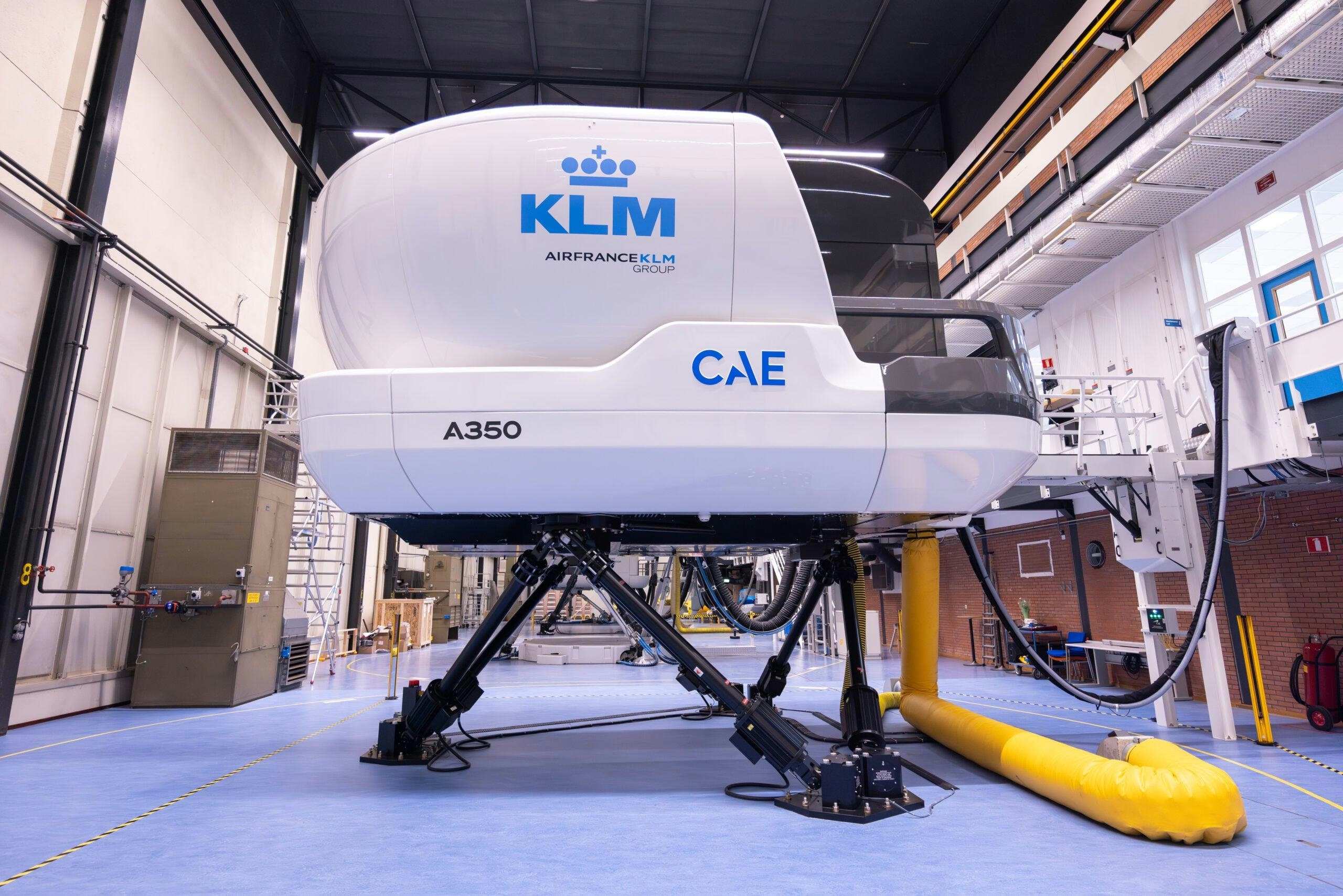
KLM to Receive First Airbus A350, Announces Initial Routes

Saxon Air Receives Clean and Green Energy Innovation Award
How BEB Tax Policies Impact Airlines’ International Leasing Contracts

Indonesia’s Danantara and Mandiri Partner with SMBC to Launch $800 Million Aviation Leasing Fund

South Korea’s SUM Air Places Order for New ATR Aircraft
