
エアロジニー — あなたのインテリジェントな副操縦士。

現在のトレンド
Categories
Amelia and Thales Complete Large-Scale Deployment of Contrail Avoidance Project
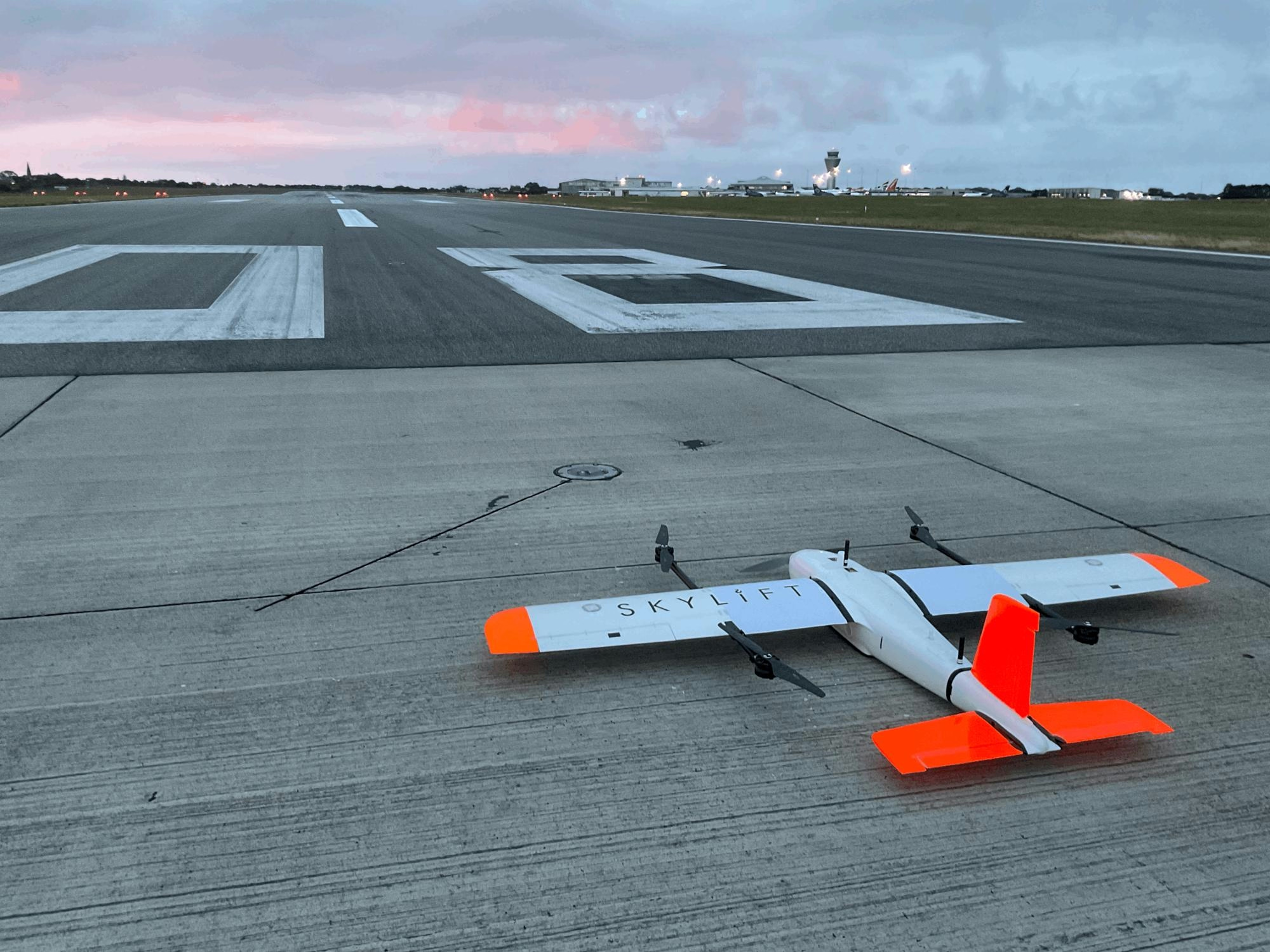
Amelia and Thales Complete Large-Scale Deployment of Contrail Avoidance Project
A Significant Advancement in Aviation Climate Mitigation
On March 19, 2026, airline Amelia and aerospace technology firm Thales announced the successful large-scale deployment of their contrail avoidance solution, marking a pivotal development in efforts to reduce aviation’s climate impact. Initially launched in 2024 on Amelia’s Paris–Valladolid route, the project optimizes flight plans by adjusting aircraft altitude rather than altering lateral routes. This targeted approach prevents the formation of condensation trails, or contrails, which are a significant yet often overlooked contributor to global warming.
By 2025, Amelia had expanded the contrail avoidance system to all eligible flights, including those operated by Airbus A319/320 and Embraer ERJ-145 aircraft. Climate impact estimation models indicate that this strategy prevented over 2,000 tonnes of CO₂ equivalent emissions in 2025 alone, reducing the average climate impact per flight by approximately 70%. The initiative forms part of the broader DECOR project, supported by the France 2030 investment plan.
Targeting High-Impact Flights to Maximize Environmental Benefits
Contrails, although produced by only about 5% of flights, are responsible for up to 80% of aviation’s non-CO₂ climate effects. Amelia’s approach focuses on these “big hits”—flights where atmospheric conditions are most conducive to persistent, warming contrails. By concentrating on these high-impact cases, the airline achieves substantial environmental benefits while minimizing operational disruptions and scientific uncertainties.
In 2025, only 59 flights out of more than 6,400 operated were modified under this program. Despite the limited number, the selective adjustments resulted in an estimated avoidance of 2,000 to 2,500 net tonnes of CO₂ equivalent emissions, as confirmed by advanced climate models. Importantly, the additional fuel consumption incurred by altitude changes remained below 0.1% of the annual total for affected flights, underscoring the efficiency of the solution.
Operational integration has been streamlined, with altitude adjustments incorporated directly into Amelia’s flight planning processes. The results underwent independent analysis by climate start-up Klima and were validated through spot checks using ground-based cameras in collaboration with SII and Reuniwatt. These efforts confirmed a direct correlation between predicted contrail avoidance and observed outcomes.
Adrien Chabot, Director of Sustainability at Amelia, emphasized the project’s focus on immediate action by targeting high-impact flights, thereby overcoming barriers related to scientific uncertainty. Yannick Assouad, Executive Vice President of Avionics at Thales, highlighted the integration of contrail avoidance into flight-planning tools as evidence that measurable climate benefits can be achieved at scale.
Challenges and Future Prospects
Despite these achievements, broader adoption of contrail avoidance faces several challenges. Regulatory approval processes, integration with existing flight planning systems, and the necessity for industry-wide uptake remain significant obstacles. Market reactions have included skepticism regarding the scalability and cost-effectiveness of the approach, particularly as major competitors such as Google and American Airlines develop AI-driven contrail avoidance solutions. This competitive environment may accelerate innovation but also underscores the need for establishing industry standards for contrail reduction.
Looking ahead, Amelia intends to continue deploying contrail avoidance solutions throughout 2026, aiming to embed non-CO₂ climate impacts into aviation’s decarbonization strategies and to prepare for forthcoming European regulatory requirements. The project’s progress exemplifies a pragmatic, data-driven approach to addressing aviation’s environmental footprint, setting a benchmark for the industry amid ongoing technological and regulatory evolution.
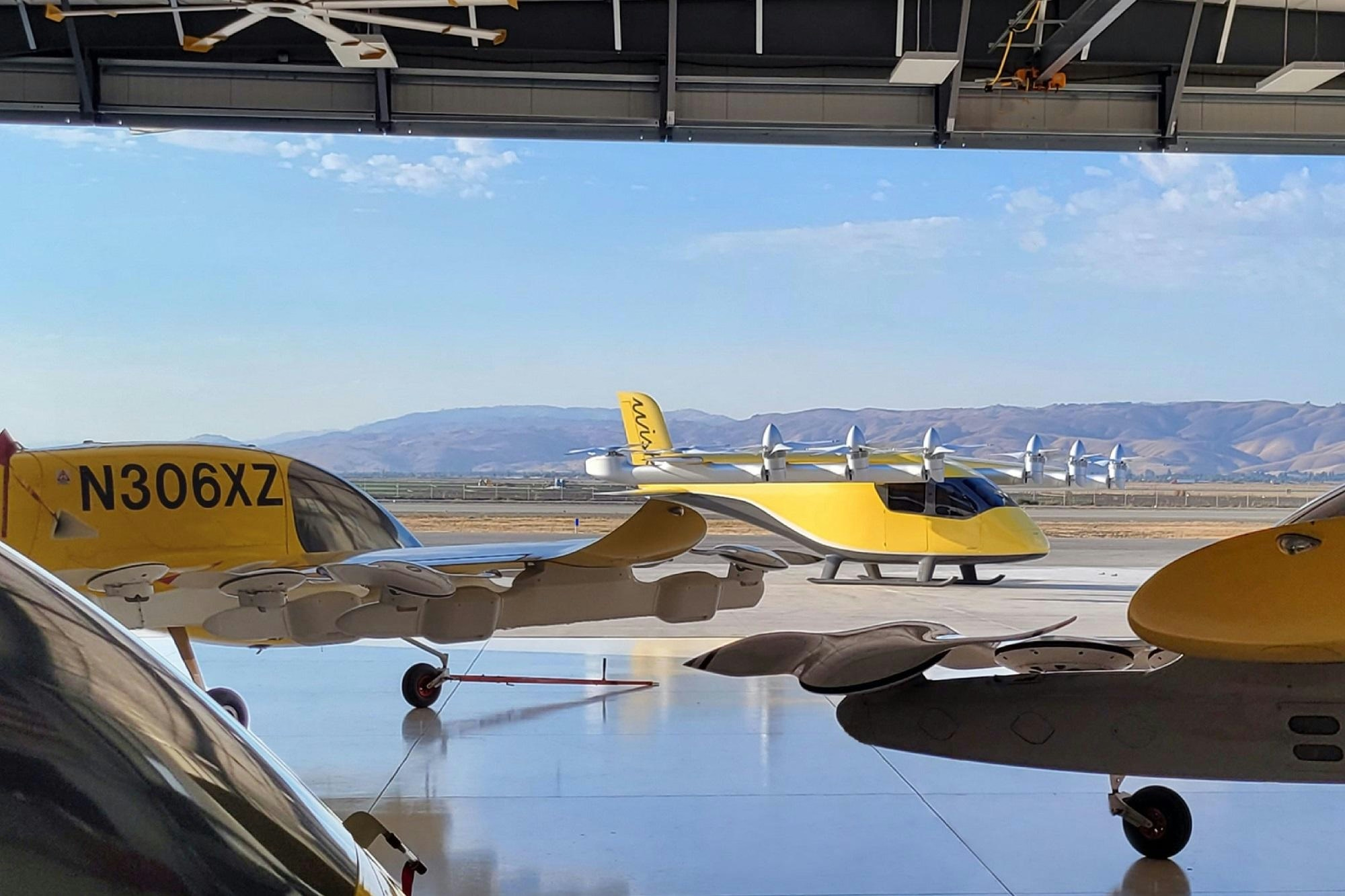
Archer Aviation Confronts Setbacks Amid Declining Air Taxi Interest
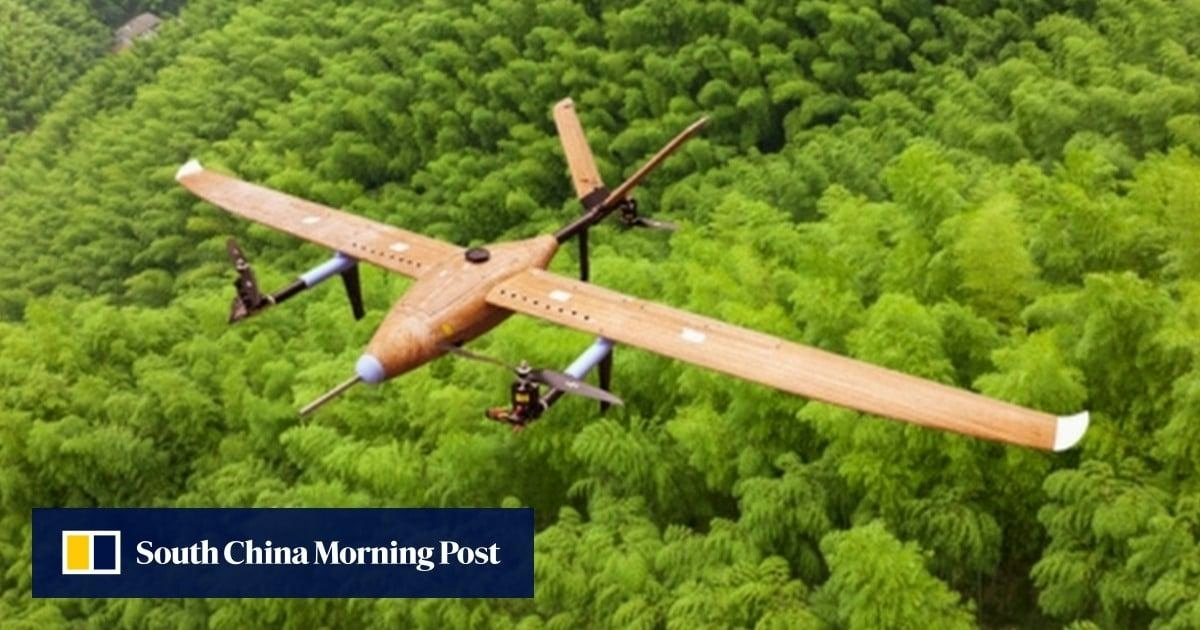
Chinese Team Develops First Flight Control Software for Bamboo Drones
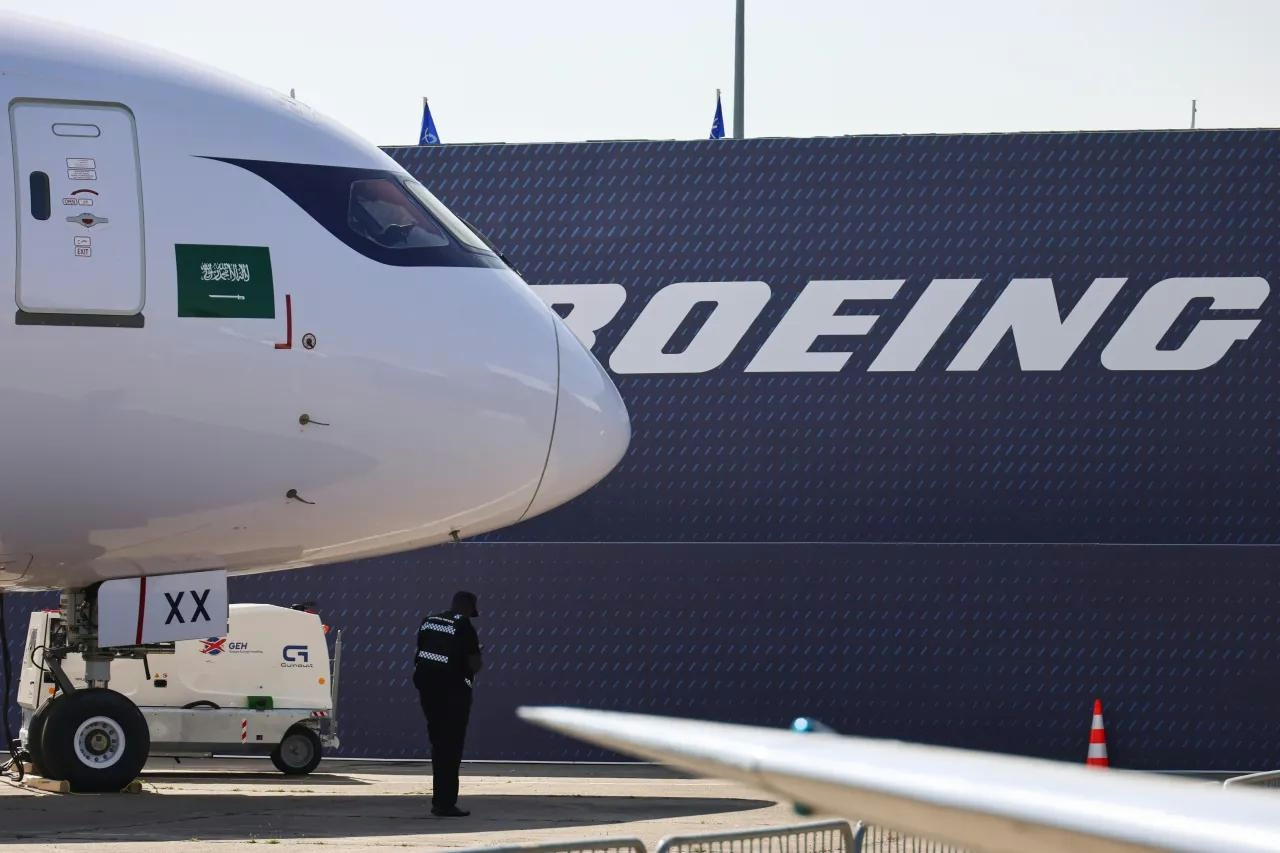
Government Moves Forward with Boeing Purchase, Considers Airbus Leasing
SkyHope Appoints Aviation Industry Leader to Board
The Challenges of Certifying Autonomous Aircraft
KLM to Receive First Airbus A350, Announces Initial Routes
Saxon Air Receives Clean and Green Energy Innovation Award
How BEB Tax Policies Impact Airlines’ International Leasing Contracts

Indonesia’s Danantara and Mandiri Partner with SMBC to Launch $800 Million Aviation Leasing Fund
South Korea’s SUM Air Places Order for New ATR Aircraft
