
エアロジニー — あなたのインテリジェントな副操縦士。

現在のトレンド
Categories
Advances in Digital Aviation Services
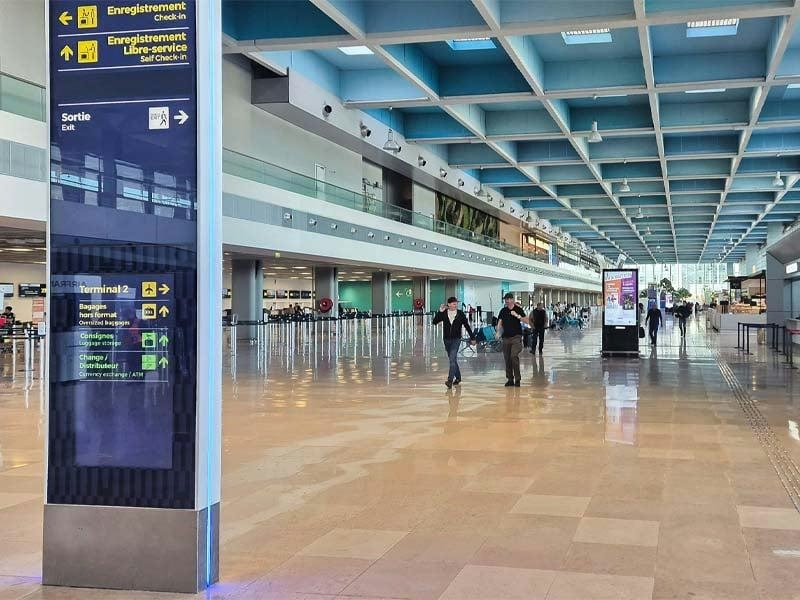
Advances in Digital Aviation Services
The aviation industry is undergoing a profound transformation driven by data-centric and digital services that are reshaping airport operations and passenger experiences globally. Confronted with a range of unprecedented challenges—including increasingly stringent regulations, shifting passenger expectations, cost constraints, and ambitious sustainability goals—airports and airlines are turning to digital technologies as essential tools for adaptation and growth. Among these technologies, artificial intelligence (AI) and machine learning (ML) stand out as pivotal in navigating the sector’s evolving complexities.
Navigating Complexity Through Strategic Digital Innovation
At the forefront of this transformation, Arup’s aviation and digital specialists collaborate closely with clients to ensure that innovation translates into tangible operational value. Central to this effort is the development of robust digital strategies tailored to the unique demands of each airport environment. By partnering with airport operators, Arup crafts strategic frameworks that address critical challenges such as creating seamless passenger journeys, maintaining business continuity, enhancing cybersecurity, increasing operational flexibility, and advancing sustainability objectives.
The aviation sector is also grappling with emerging operational risks, including supply chain disruptions, fuel supply limitations, and intensified cybersecurity and regulatory pressures. These factors necessitate digital solutions that not only improve efficiency but also strengthen resilience. For instance, during significant airline system outages, demand often shifts toward business aviation, prompting competitors to offer more adaptable and cost-effective charter services. Additionally, technology-driven companies are entering the market with innovative digital platforms that are redefining customer expectations and service delivery in the charter segment.
Harnessing AI and Machine Learning for Operational Excellence
To help clients remain competitive, Arup defines the strategic and infrastructural requirements for deploying advanced technologies such as AI and ML. These tools are revolutionizing airport operations by enabling predictive maintenance, optimizing resource allocation, and automating passenger services and inspections. However, the successful implementation of these technologies depends on a nuanced understanding of each airport’s specific operational context. Arup’s vendor- and technology-neutral approach ensures that digital solutions are customized to align with organizational goals, leverage existing data assets effectively, and deliver actionable insights to decision-makers.
A critical foundation for integrating AI and ML is the establishment of comprehensive data systems. Many airports currently lack a holistic view of their operations, including passenger flows and energy consumption. Arup supports clients by systematizing disparate data sources, addressing gaps in legacy systems, and designing end-to-end digital architectures. The predictive and interpretative capabilities of AI and ML can automate passenger inquiries, optimize resource utilization, and enhance safety protocols. Nevertheless, these technologies must be thoughtfully embedded within existing operational frameworks and organizational cultures to realize their full potential.
Ultimately, the success of digital transformation in aviation hinges not merely on technology adoption but on strategic alignment, deep industry expertise, and a thorough appreciation of operational realities. By serving as both strategists and technical advisors, Arup ensures that investments in digital services are firmly grounded in the practical demands of airport and airline operations, enabling the sector to adapt, compete, and thrive amid ongoing change.
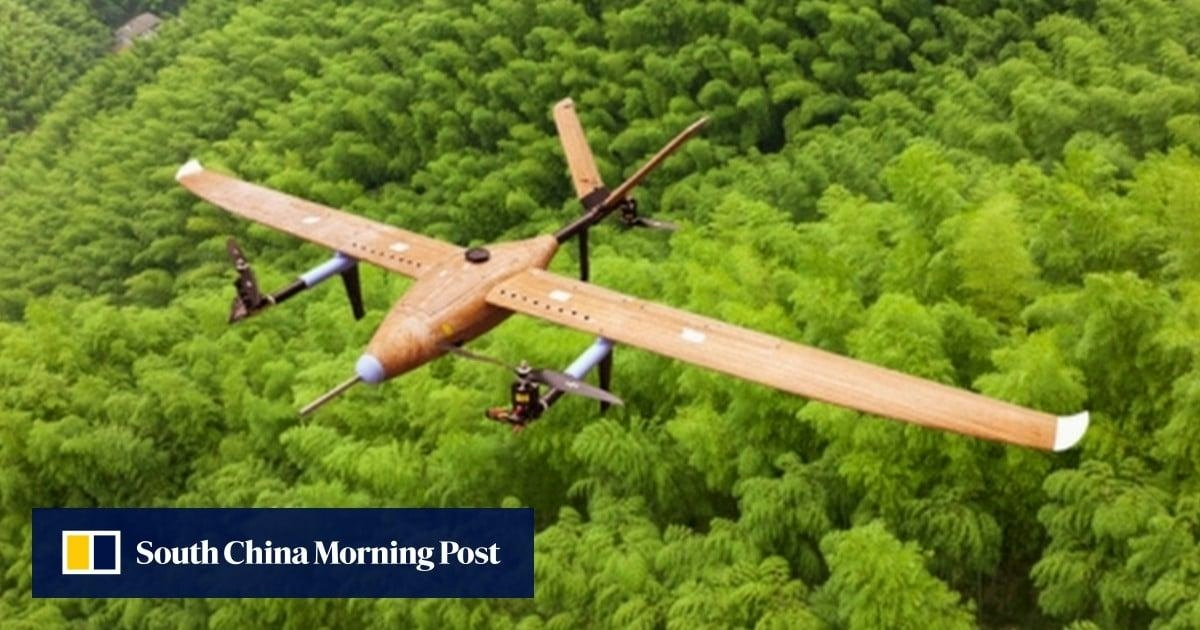
Chinese Team Develops First Flight Control Software for Bamboo Drones
SkyHope Appoints Aviation Industry Leader to Board
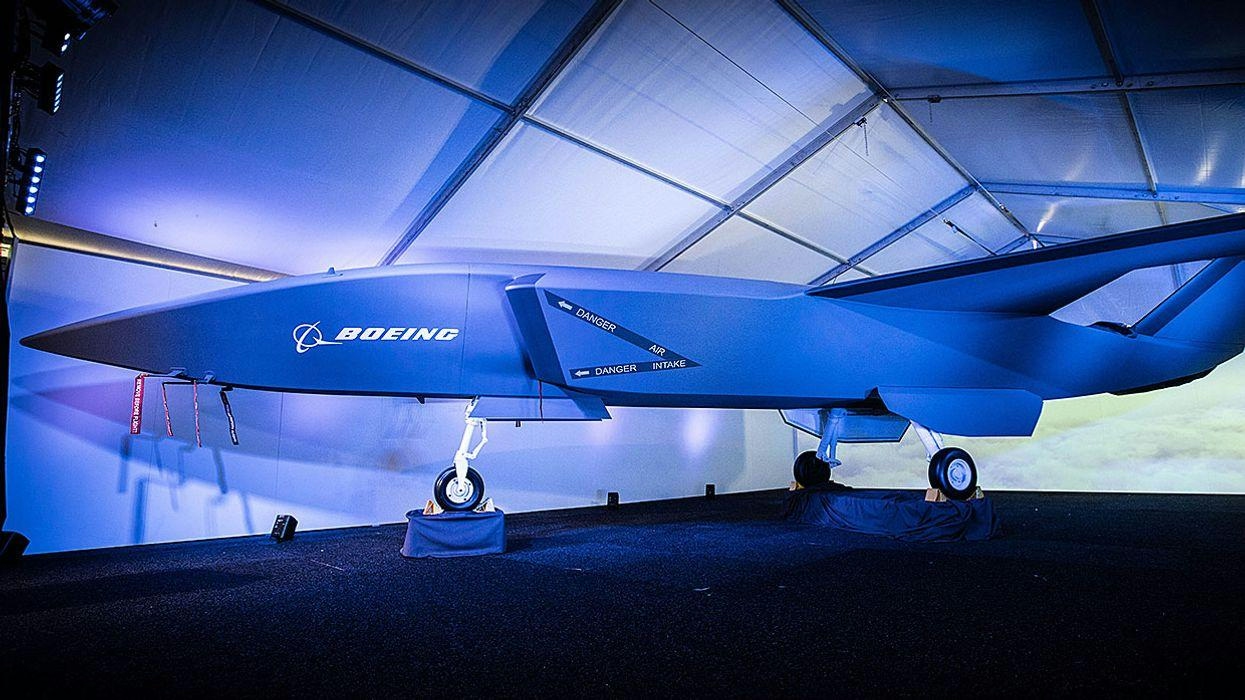
The Challenges of Certifying Autonomous Aircraft
KLM to Receive First Airbus A350, Announces Initial Routes
Saxon Air Receives Clean and Green Energy Innovation Award
How BEB Tax Policies Impact Airlines’ International Leasing Contracts
Indonesia’s Danantara and Mandiri Partner with SMBC to Launch $800 Million Aviation Leasing Fund
South Korea’s SUM Air Places Order for New ATR Aircraft
Benoît Rollier Named Vice President of KLM Engine Service
Azorra Expands Engine Portfolio Through Deal with DAE
