
AeroGenie — Il tuo copilota intelligente.

Tendenze
Categories
Why Emirates Is Reluctant to Adopt the Boeing 737 MAX
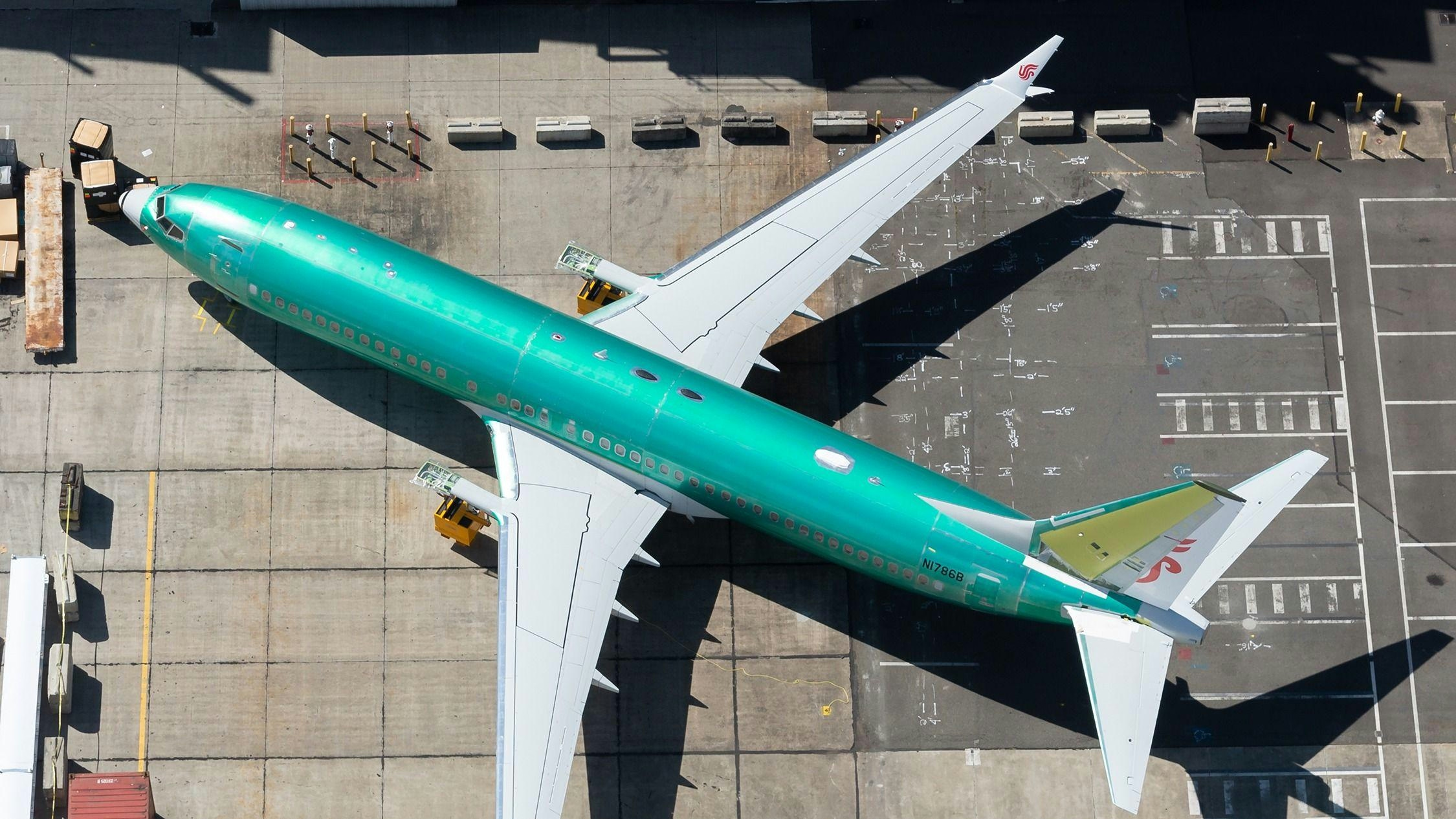
Why Emirates Is Reluctant to Adopt the Boeing 737 MAX
At first glance, the Boeing 737 MAX presents itself as an appealing choice for many major airlines due to its fuel efficiency, versatility, and suitability for short- and medium-haul routes. However, Emirates operates under a fundamentally different strategic philosophy. The Dubai-based carrier has established its global brand by transporting large volumes of long-haul passengers through a single, expansive hub—Dubai International Airport (DXB)—exclusively using widebody aircraft. Within this framework, the 737 MAX does not address a gap in Emirates’ network; rather, it serves a purpose the airline does not require.
Emirates’ Focused Fleet Strategy
This strategic distinction is key to understanding Emirates’ reluctance to incorporate the 737 MAX into its fleet. The decision reflects a commitment to a disciplined and focused fleet strategy rather than a rejection of Boeing as a manufacturer. Emirates’ current operations center on the Boeing 777 and Airbus A380, with the Airbus A350 recently introduced and additional Boeing 777X aircraft on order. The airline is also investing heavily in a multibillion-dollar retrofit program aimed at maintaining the competitiveness of its widebody fleet, underscoring its dedication to high-capacity, long-haul operations.
Narrowbody aircraft, including the 737 MAX, are already managed within Dubai’s aviation ecosystem by flydubai, Emirates’ sister airline. Flydubai operates a fleet of 737s, including the MAX variant, serving thinner regional routes and higher-frequency short-haul markets that feed traffic into Emirates’ long-haul network. This clear division of labor enables Emirates to avoid the complexities associated with introducing narrowbody aircraft—such as additional pilot training, maintenance challenges, scheduling complications, and variations in cabin products—while preserving fleet commonality and maintaining a premium experience on its core routes.
Impact of Boeing’s Production Challenges
Recent developments in Boeing’s production schedule have further influenced Emirates’ cautious approach. Boeing has encountered setbacks, including delays in first-quarter deliveries of the 737 MAX due to wiring flaws, raising concerns about the aircraft’s delivery timeline and reliability. These issues compound ongoing challenges with premium class seats for the 787 Dreamliner, complicating Boeing’s broader production efforts. Although Boeing is actively addressing these problems by increasing 737 MAX production rates, planning to raise monthly output to 47 jets, and opening a new assembly line in Washington, the uncertainty surrounding delivery schedules and product quality adds an additional layer of hesitation for Emirates.
Emirates’ fleet strategy remains distinctly clear: prioritize large widebody aircraft, build scale through a single global hub, and avoid unnecessary operational complexity. The introduction of the Airbus A350 and forthcoming 777X deliveries reinforce this approach. For Emirates, the 737 MAX does not align with its network design, brand positioning, or operational logic. As Boeing works to resolve its production challenges and restore confidence in the 737 MAX, Emirates appears content to adhere to its proven formula, delegating narrowbody operations to flydubai and maintaining its status as a leader in long-haul, high-capacity air travel.

Oklahoma’s Aerospace Industry Expands and Its Impact on the State Economy
Archer Aviation Confronts Setbacks Amid Declining Air Taxi Interest

FAA and EASA Mandates to Influence Flight Line Testing Equipment Market Through 2035
Willis Lease Operates as a Leveraged Spread Business with Moderate Returns

Chinese Team Develops First Flight Control Software for Bamboo Drones
Government Moves Forward with Boeing Purchase, Considers Airbus Leasing
SkyHope Appoints Aviation Industry Leader to Board
The Challenges of Certifying Autonomous Aircraft
KLM to Receive First Airbus A350, Announces Initial Routes
Saxon Air Receives Clean and Green Energy Innovation Award
