
AeroGenie — Il tuo copilota intelligente.

Tendenze
Categories
VSE Corporation Focuses on Aviation Growth Amid Earnings Challenges

VSE Corporation Focuses on Aviation Growth Amid Earnings Challenges
Financial Performance and Revenue Growth
VSE Corporation (NASDAQ: VSEC), a prominent provider of aftermarket parts distribution and maintenance, repair, and overhaul (MRO) services for air transportation assets, reported its third-quarter earnings for the period ending September 30, 2025. The company recorded total revenues of $282.9 million, marking a substantial increase from $203.6 million in the same quarter the previous year. Product revenues rose to $176 million from $118.4 million, while service revenues increased to $106.9 million from $85.3 million year-over-year.
Despite this notable revenue growth, VSE’s net income from continuing operations declined sharply to $3.6 million, down from $8.7 million a year earlier. When including discontinued operations, the company reported a net loss of $1.9 million. Operating expenses surged to $272.8 million, up from $183.6 million, reflecting higher costs and the financial impact of recent strategic initiatives.
Strategic Transformation and Industry Challenges
VSE’s financial results were heavily influenced by its ongoing transformation into a pure-play aviation business. The company completed the divestiture of its Fleet and Federal & Defense segments, which contributed to losses from discontinued operations but aligned with its strategic focus on high-margin, high-growth opportunities within the aviation sector. Recent acquisitions, including Turbine Weld Industries, LLC for $49.9 million, alongside the integration of Turbine Controls, Inc. and Kellstrom Aerospace, have expanded VSE’s MRO capabilities and diversified its customer base.
This strategic pivot occurs amid broader challenges facing the defense services industry. Structural issues such as inflationary pressures and a slowdown in mergers and acquisitions, as noted by Washington Technology, suggest that traditional firms like VSE may encounter significant headwinds in adapting to evolving market conditions. Investor sentiment has been mixed, with some expressing skepticism regarding VSE’s dependence on established sectors. Meanwhile, emerging technology-driven competitors are positioned to exploit opportunities arising from the difficulties faced by traditional players, potentially intensifying competition and threatening VSE’s market share.
Outlook and Future Prospects
Looking forward, VSE’s management remains optimistic about leveraging recent acquisitions to enhance its service offerings and expand its presence in the aviation aftermarket sector. The company aims to manage rising costs and operational challenges while capitalizing on growth opportunities. As VSE continues its transition, its capacity to adapt to shifting industry trends and respond effectively to competitive pressures will be crucial to sustaining long-term growth.

Plane lands on Pennsylvania highway due to ‘engine issues,’ FAA says
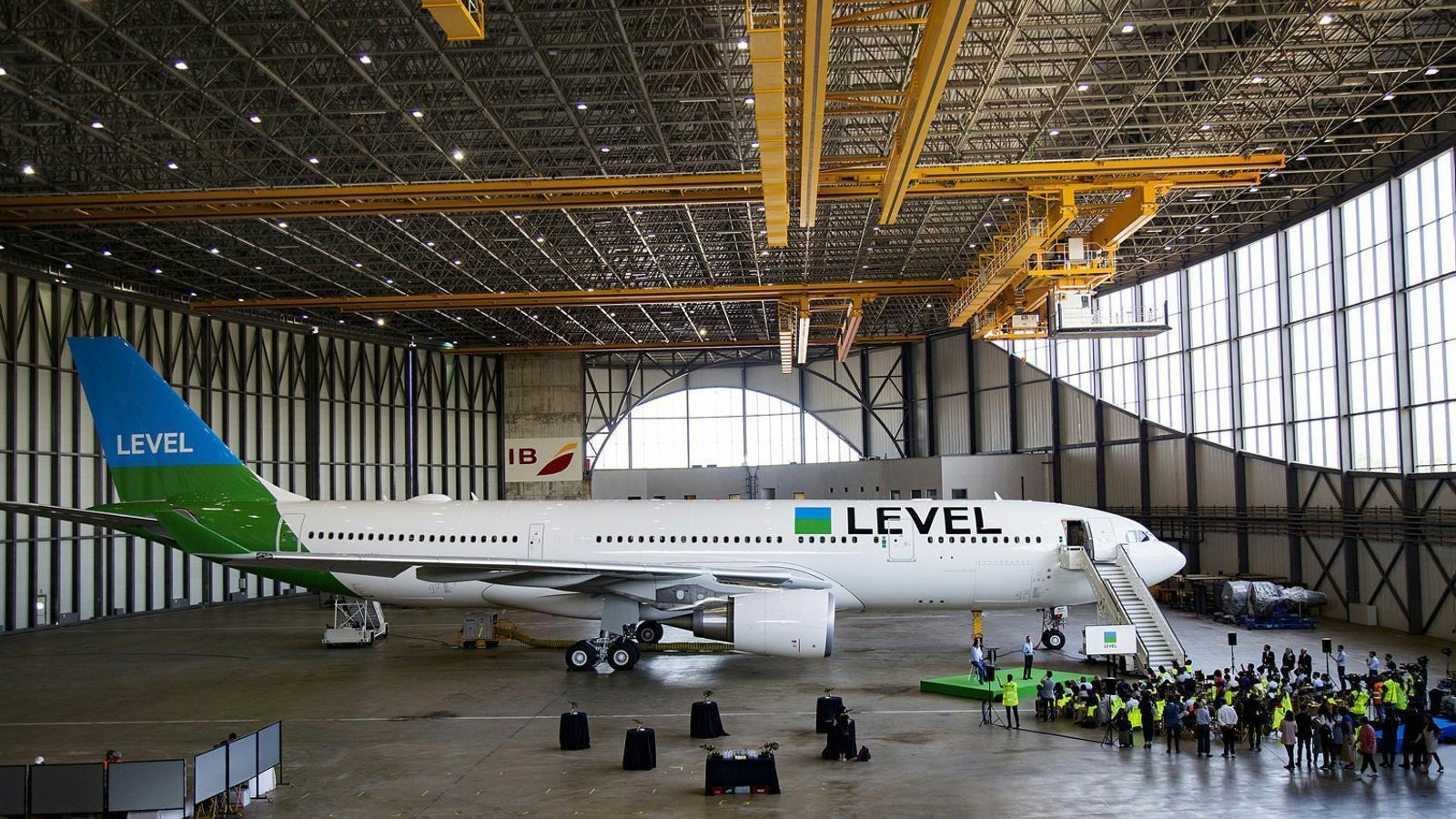
LEVEL Suspends San Francisco Flights Due to Engine Shortage

China Conducts First Flight Test of Megawatt Hydrogen Turboprop Engine

Oklahoma’s Aerospace Industry Expands and Its Impact on the State Economy

Archer Aviation Confronts Setbacks Amid Declining Air Taxi Interest

FAA and EASA Mandates to Influence Flight Line Testing Equipment Market Through 2035
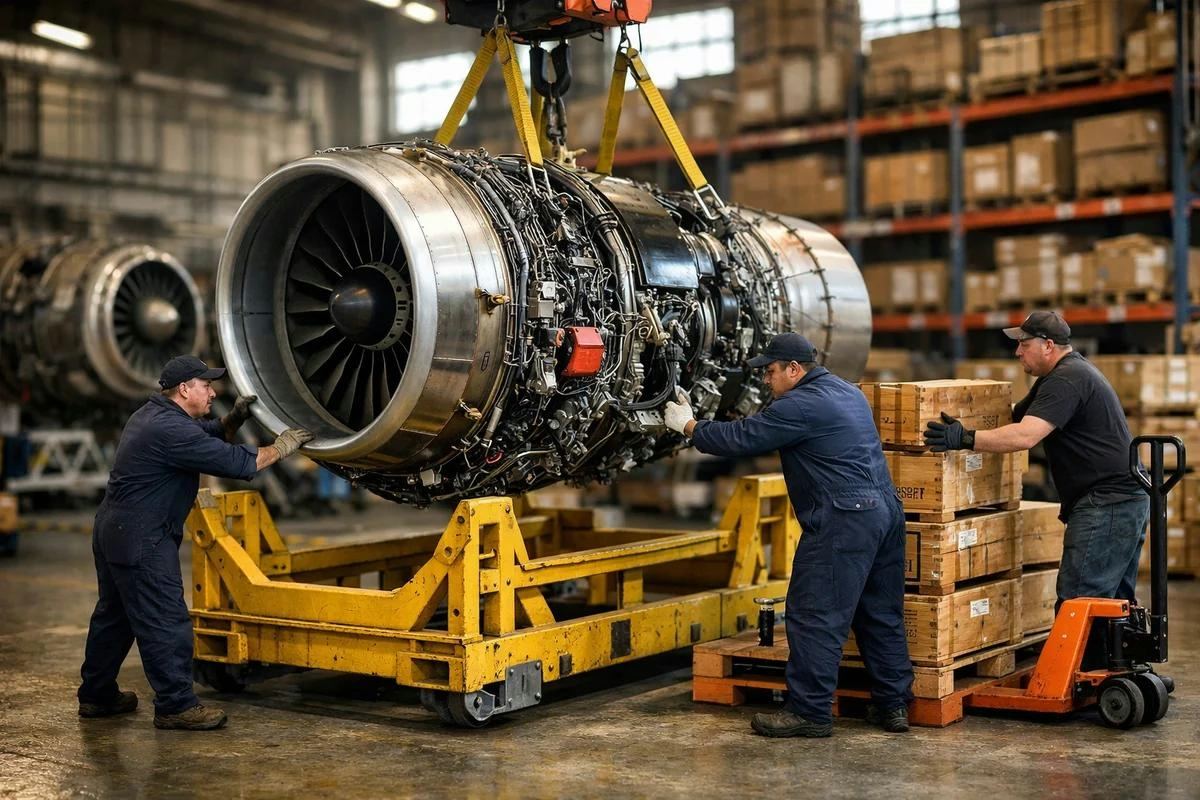
Willis Lease Operates as a Leveraged Spread Business with Moderate Returns

Chinese Team Develops First Flight Control Software for Bamboo Drones
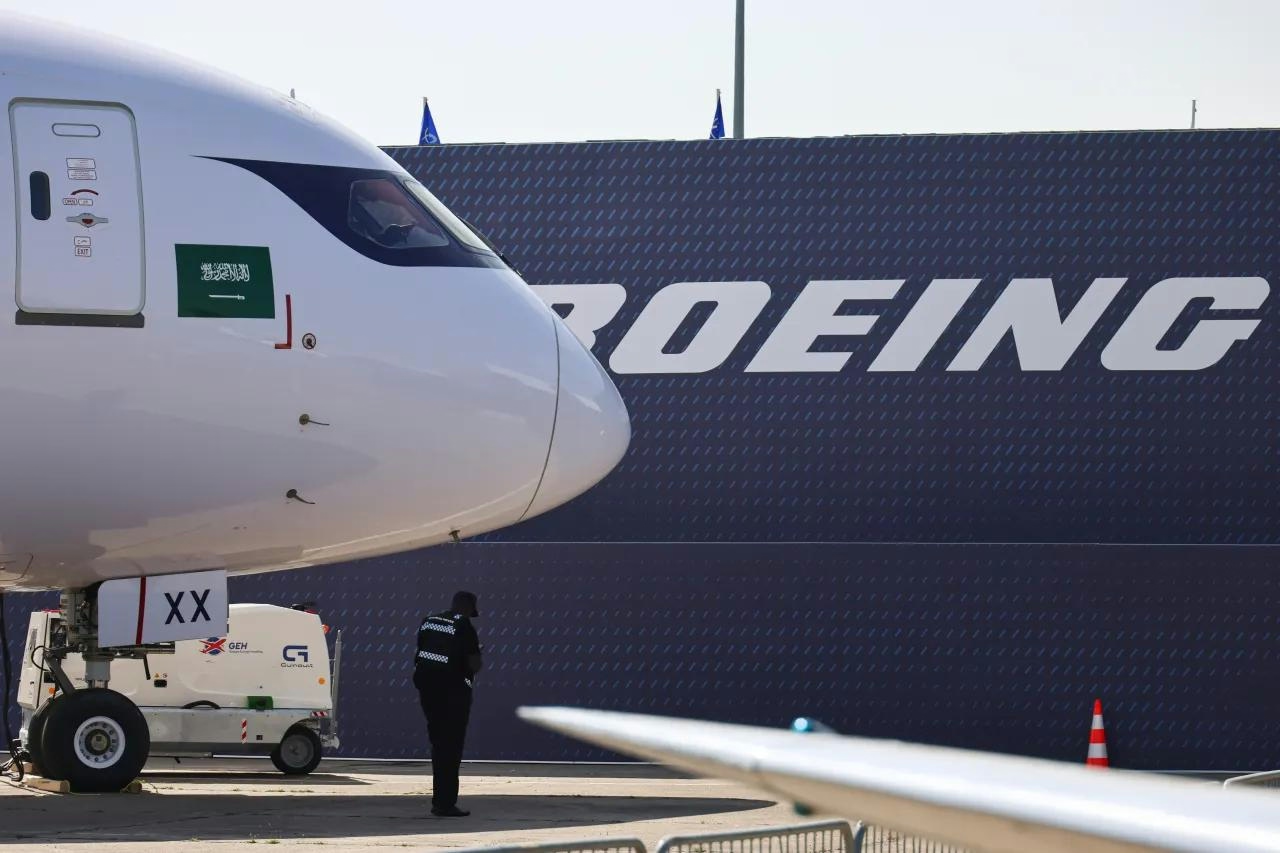
Government Moves Forward with Boeing Purchase, Considers Airbus Leasing

Changes in Airline Industry Leadership, Alliances, and AI
