
AeroGenie — Il tuo copilota intelligente.

Tendenze
Categories
UAE Plans to Launch First Flying Taxi Service
UAE Plans to Launch First Flying Taxi Service
Partnership to Pioneer Urban Air Mobility in Dubai
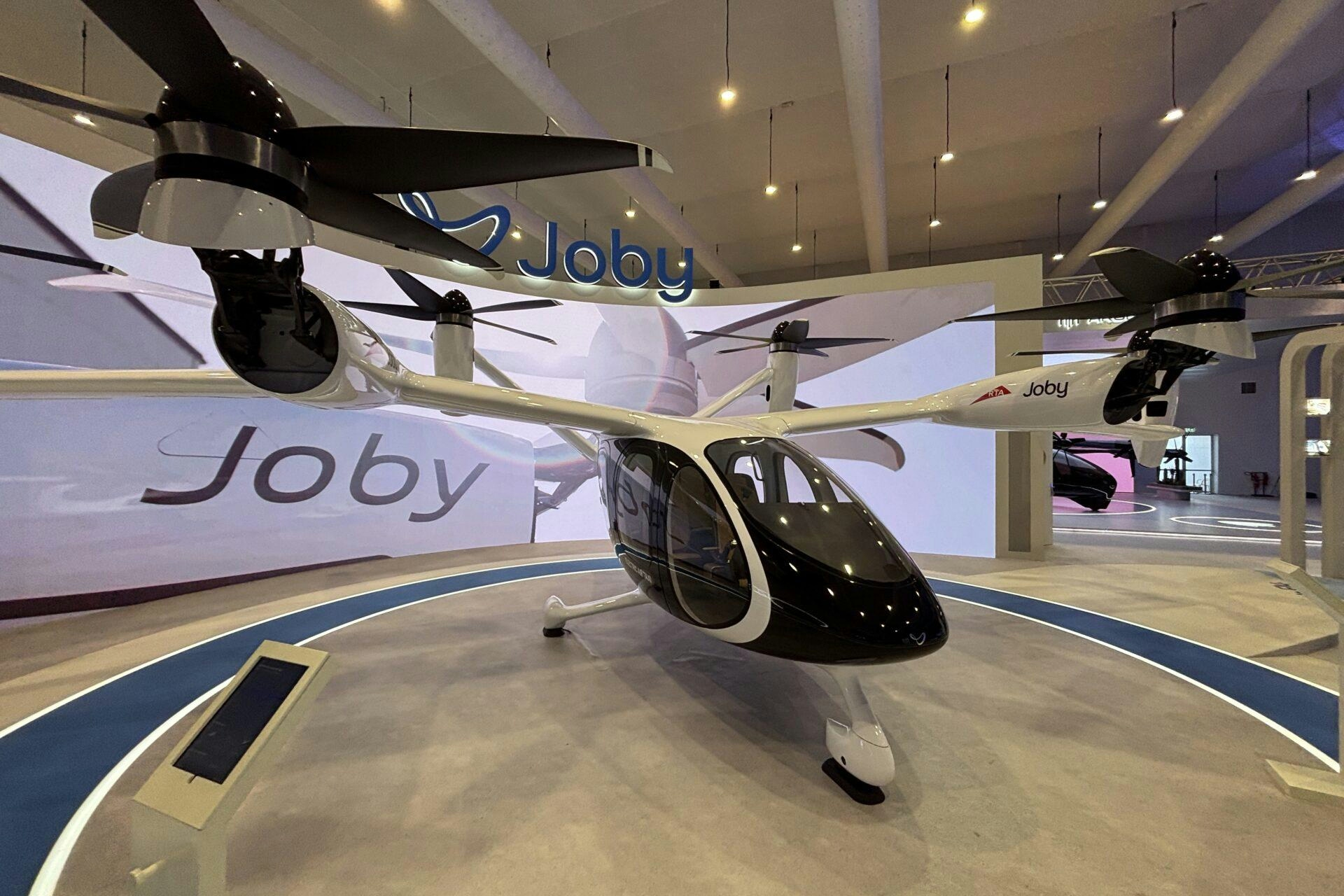
Joby Aviation, a U.S.-based company supported by Toyota Motor and other investors, has entered into a six-year exclusive agreement with Dubai’s Roads & Transport Authority (RTA) to introduce the emirate’s inaugural flying taxi service. This collaboration places Dubai at the forefront of the burgeoning advanced air mobility sector, as cities around the world compete to deploy electric vertical takeoff and landing (eVTOL) aircraft designed for urban transportation.
At the Dubai Air Show in November, Joby Aviation showcased its six-propeller electric aircraft with a demonstration flight lasting 15 minutes from Al Maktoum International Airport. Engineered specifically for urban environments, the aircraft achieves a top speed of 200 miles per hour and a range of 100 miles, all while operating with zero emissions. Notably, its acoustic footprint is substantially quieter than that of conventional helicopters, registering just 45.2 A-weighted decibels (dBA) at 1,640 feet—quieter than a typical conversation—based on tests conducted in partnership with NASA.
Service Details and Environmental Considerations
The initial flying taxi route will connect Al Maktoum International Airport to Palm Jumeirah, covering a distance of 37 kilometers in approximately ten minutes. The fare for this journey is set at $95. The aircraft’s quiet operation and environmentally friendly design are intended to address longstanding concerns about noise pollution and emissions that have limited the viability of traditional helicopter services in densely populated urban areas.
Challenges and Competitive Landscape
Despite the ambitious nature of the UAE’s plan, several challenges remain. The advanced air mobility industry is still nascent, with the first eVTOL air taxis anticipated to enter commercial service in 2025. Progress may be impeded by regulatory complexities and the need to secure public acceptance. The global market is becoming increasingly competitive, with key players such as EHang in China and Archer, Joby, and Beta Technologies in the United States making significant strides. Additionally, countries including Saudi Arabia and the United Kingdom are exploring similar initiatives, intensifying the competitive environment.
Establishing a comprehensive regulatory framework and ensuring market readiness will be critical for Dubai to maintain a leadership position in this emerging sector. Joby Aviation’s partnership with Delta Airlines to introduce flying taxis in New York exemplifies the global momentum behind eVTOL technology, while also highlighting the challenges involved in scaling these services beyond initial pilot programs.
As Dubai moves forward with its flying taxi service, the emirate faces the complex task of navigating technological, regulatory, and market dynamics to realize its vision of urban air mobility. The coming years will be pivotal in determining whether Dubai can sustain its role as a pioneer in the future of transportation.
Archer Aviation Confronts Setbacks Amid Declining Air Taxi Interest
Chinese Team Develops First Flight Control Software for Bamboo Drones
Government Moves Forward with Boeing Purchase, Considers Airbus Leasing
SkyHope Appoints Aviation Industry Leader to Board
The Challenges of Certifying Autonomous Aircraft
KLM to Receive First Airbus A350, Announces Initial Routes
Saxon Air Receives Clean and Green Energy Innovation Award
How BEB Tax Policies Impact Airlines’ International Leasing Contracts

Indonesia’s Danantara and Mandiri Partner with SMBC to Launch $800 Million Aviation Leasing Fund
South Korea’s SUM Air Places Order for New ATR Aircraft
