
AeroGenie — Il tuo copilota intelligente.

Tendenze
Categories
TxDOT Aims to Develop Air Taxi Services
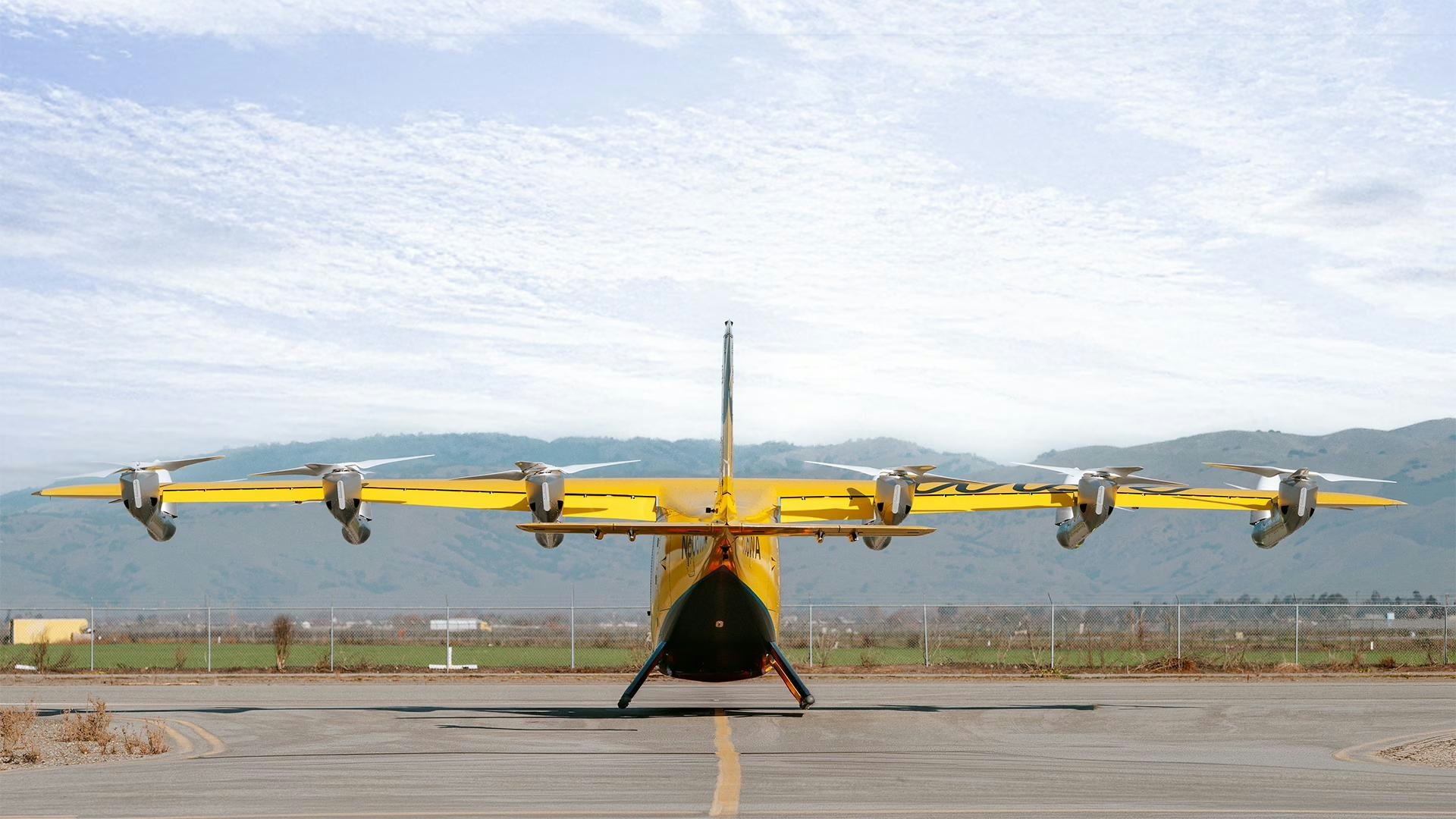
TxDOT Advances Development of Air Taxi Services in Central Texas
The Texas Department of Transportation (TxDOT) is actively pursuing the development of air taxi services across Central Texas, positioning the state at the forefront of this emerging mode of transportation. Texas is one of eight states selected by the U.S. Department of Transportation to contribute to shaping the future of electric vertical takeoff and landing (eVTOL) aircraft, commonly referred to as “air taxis.” These vehicles have the potential to revolutionize daily travel by offering rapid, quiet, and environmentally friendly alternatives to traditional ground transportation.
Testing and Infrastructure Development
Recently, at The Long Center in downtown Austin, 14-year-old Weston Rhoden and his family observed test flights of LIFT Aircraft’s single-seat eVTOL vehicles. Rhoden’s reaction—expressing a mix of curiosity and skepticism about the prospect of seeing hundreds of such aircraft in the city skyline—reflects the broader public sentiment toward this futuristic technology.
TxDOT has established a coalition dedicated to advancing air taxi development, focusing on critical infrastructure such as sensors, electric charging stations, and prototype designs. Sergio Roman, representing TxDOT’s Aviation Division, emphasized the agency’s role in collecting data to assist federal regulators, including the Federal Aviation Administration (FAA), in formulating safety and reliability standards. “We have the space, and we have the conditions to answer the questions about pretty much everything that they're looking for,” Roman stated.
The Austin region’s extensive network of general aviation airports, combined with its proximity to the Texas Hill Country, makes it an ideal location for early air taxi infrastructure. Roman envisions dedicated vertiports capable of accommodating multiple aircraft simultaneously, with designs that prioritize noise reduction through the use of electric propulsion. He highlighted the quiet nature of these aircraft, noting that “goods and passengers [will be] loaded onto these aircraft quietly departing because these are electric aircraft.”
Potential Benefits and Challenges
Beyond urban applications, the coalition is exploring how air taxis could enhance connectivity for rural communities, improving access to essential resources and enabling faster medical transport during emergencies. However, significant challenges remain before air taxis can become a mainstream transportation option. Regulatory complexities, safety concerns, and technological limitations must be addressed comprehensively. TxDOT and its partners are working toward statewide policy harmonization to ensure consistent standards across Texas.
Market responses to air taxi technology are expected to evolve as the sector matures. While initial public skepticism is common, successful test flights and demonstrated safety could shift perceptions and generate enthusiasm. The transportation industry may respond with either collaboration or increased investment, depending on individual readiness to engage with this new market.
Affordability remains a central objective for TxDOT. Roman expressed the goal that, at scale, air taxi services would be priced comparably to rideshare options, making them accessible to a broad demographic of Texans.
Outlook for Air Taxi Services in Texas
Recent projections suggest that limited air taxi operations could commence in Texas cities later this year, with plans to expand to commercial passenger flights within two to three years. Nonetheless, widespread adoption of air taxi services is anticipated to be a longer-term development, potentially becoming commonplace over the next decade. Reflecting on this timeline, Rhoden remarked, “I guess that will probably be the future, in my adulthood,” as he watched the aircraft navigate Austin’s skyline.
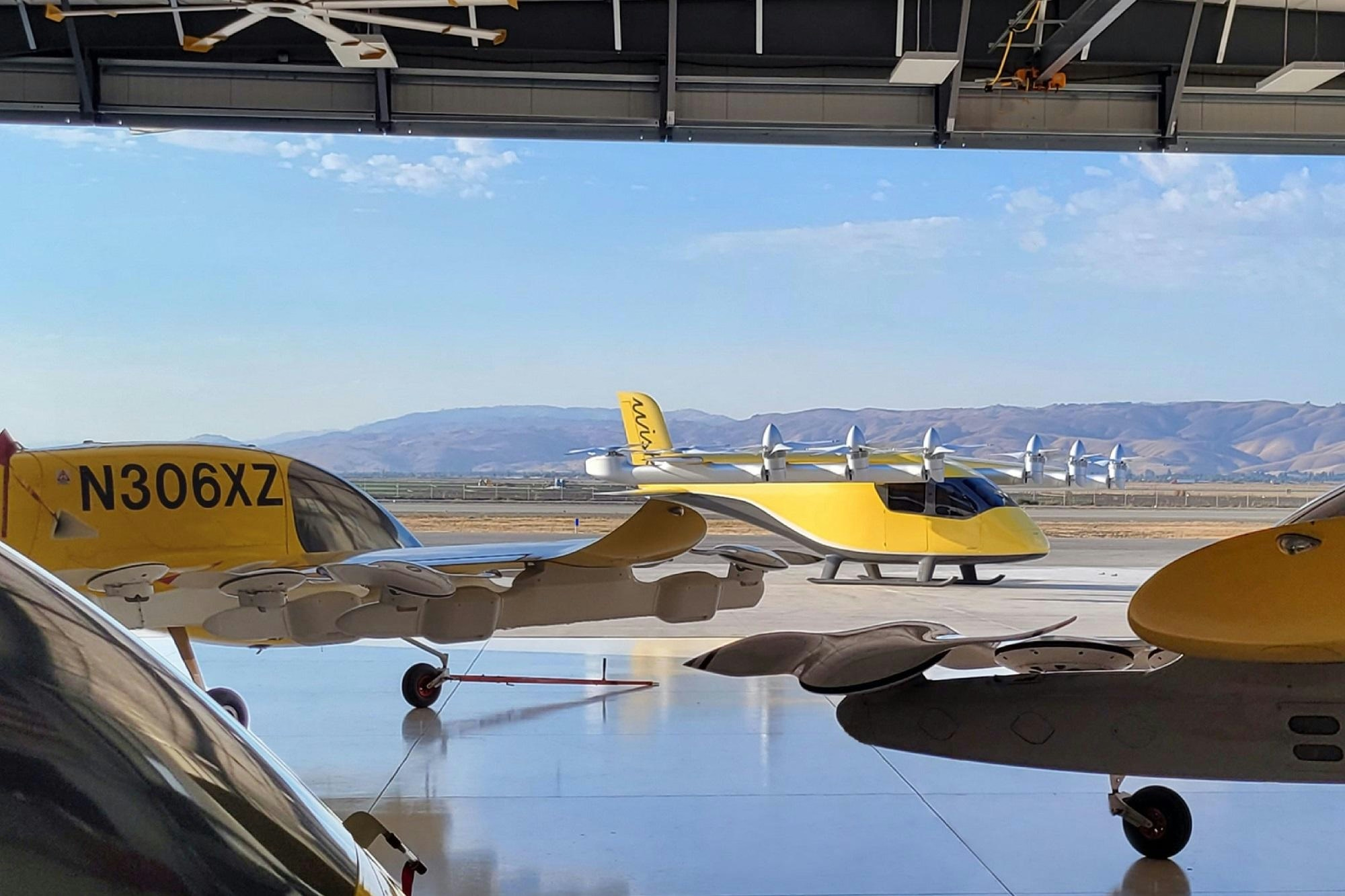
Archer Aviation Confronts Setbacks Amid Declining Air Taxi Interest
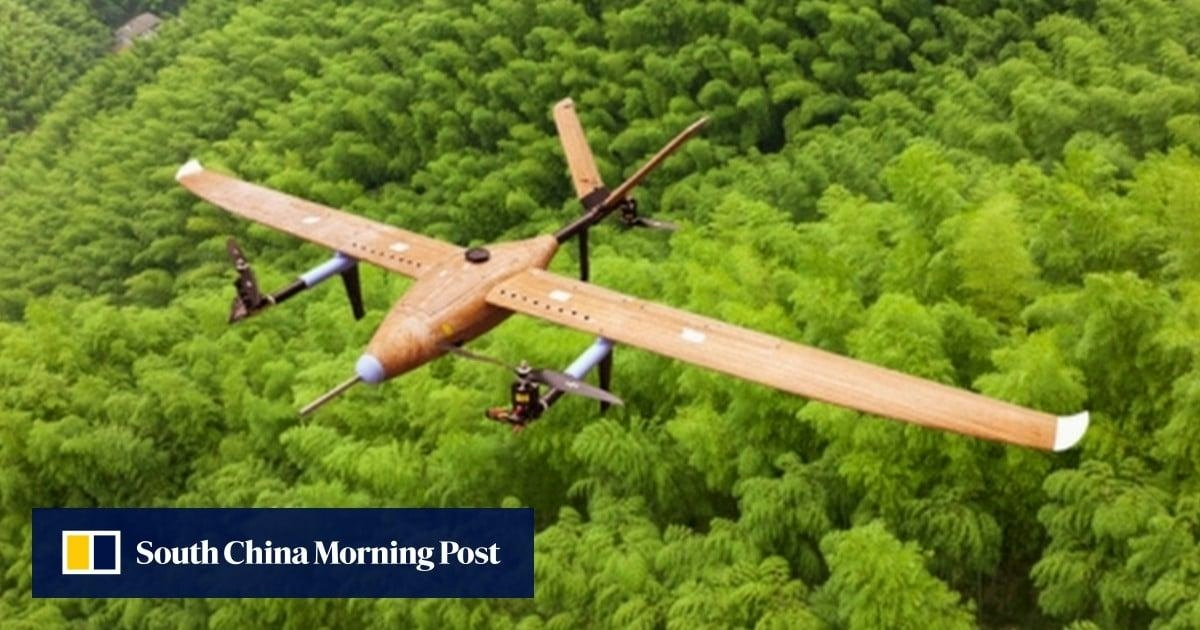
Chinese Team Develops First Flight Control Software for Bamboo Drones
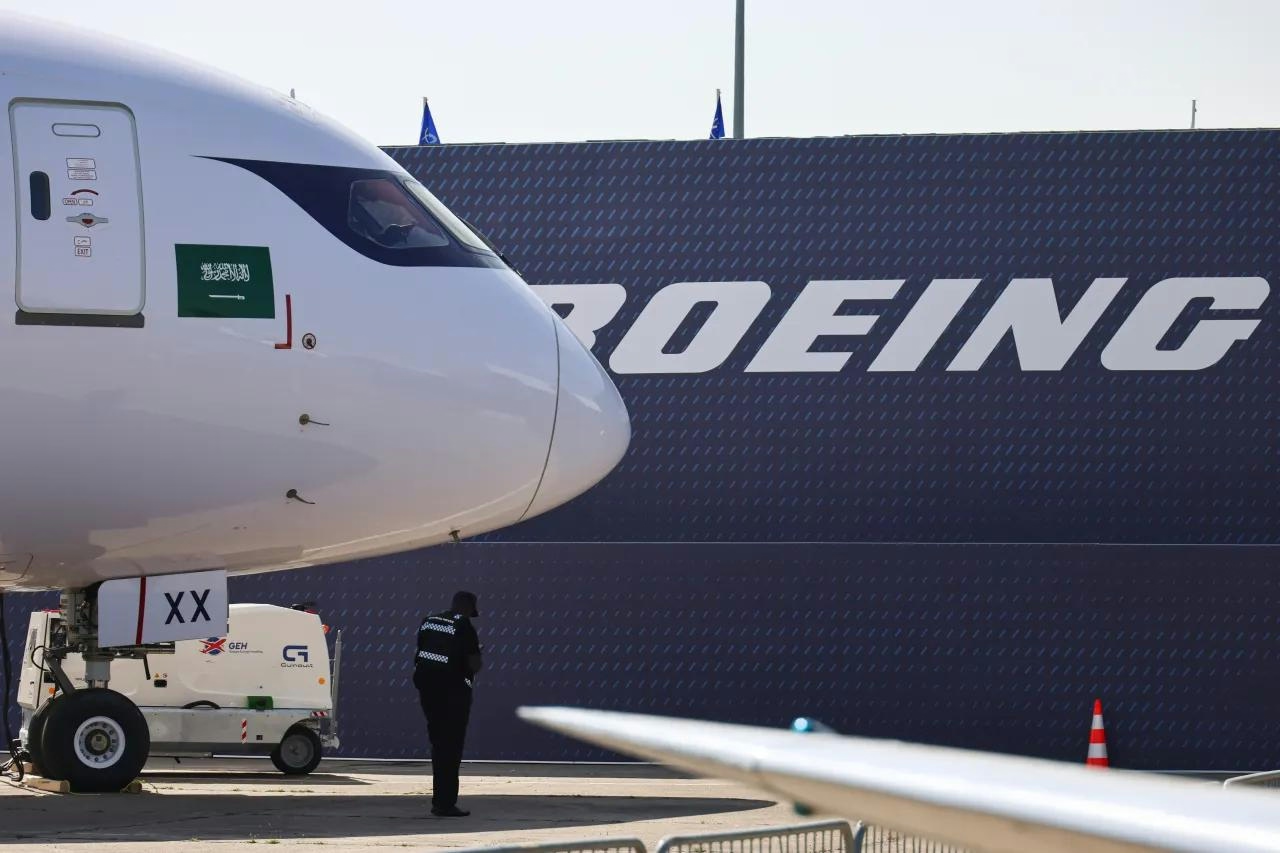
Government Moves Forward with Boeing Purchase, Considers Airbus Leasing
SkyHope Appoints Aviation Industry Leader to Board
The Challenges of Certifying Autonomous Aircraft
KLM to Receive First Airbus A350, Announces Initial Routes
Saxon Air Receives Clean and Green Energy Innovation Award
How BEB Tax Policies Impact Airlines’ International Leasing Contracts

Indonesia’s Danantara and Mandiri Partner with SMBC to Launch $800 Million Aviation Leasing Fund
South Korea’s SUM Air Places Order for New ATR Aircraft
