Immagine

AeroGenie — Il tuo copilota intelligente.

Chiedi qualsiasi cosa. Analizza tutto. Agisci immediatamente.

Tendenze

Categories

The Turbocharged Mooney M20K Remains a Reliable Choice for Efficient Travel

November 3, 2025By ePlane AI
The Turbocharged Mooney M20K Remains a Reliable Choice for Efficient Travel
0
0
Mooney M20K
Turbocharged Aircraft
Used Aircraft Market

The Turbocharged Mooney M20K: A Reliable Option for Efficient Travel

The Mooney M20-series has long been recognized for its combination of speed and efficiency, but the introduction of a turbocharged engine elevated the M20K to a higher tier of performance. Despite facing stiff competition in today’s competitive used aircraft market—particularly from models like the Cirrus SR22T—the M20K, especially the 231 and 252 variants, remains a preferred choice among pilots who appreciate its balance of velocity and fuel economy. This preference persists even though the M20K demands more maintenance than the naturally aspirated M20J 201, and despite Mooney’s cessation of new aircraft production and an uncertain future.

Market Context and Industry Developments

The broader luxury travel sector continues to expand, driven by travelers seeking bespoke and remote experiences. This trend has catalyzed innovation within the aviation industry, including advancements in aircraft technology and strategic international partnerships. For instance, the joint venture between Hindustan Aeronautics Ltd and Russia to produce the SJ-100 jet exemplifies the increasing competition faced by established manufacturers such as Boeing and Airbus. Concurrently, the jet engine market is becoming more accessible to new entrants, with emerging trends in hybrid propulsion and advanced energy storage systems poised to reshape the industry’s future.

Within this evolving landscape, the Mooney M20K distinguishes itself through its proven reliability and operational efficiency. Early turbocharging efforts initially earned the M20K a reputation for being maintenance-intensive, but subsequent refinements have largely mitigated these concerns. The aircraft now comfortably cruises between 160 and 200 knots while maintaining commendable fuel efficiency, making it an attractive option for pilots who prioritize both speed and economy. However, the M20K’s single door and relatively compact cabin may not appeal to all, and its turbocharged engine still requires diligent upkeep. These characteristics, though, are well understood and accepted by the Mooney community.

Historical Development of the M20K

Mooney was a later entrant into the turbocharged single-engine market, which was pioneered by Cessna with the T210 in 1966 and followed by Beechcraft’s V35TC. Mooney’s initial attempt, the 310-horsepower M22 Mustang introduced in 1967, met with limited success. Throughout the 1970s, the company concentrated on efficient, Lycoming-powered models, culminating in the 1977 release of the M20J 201. This model marked a significant advancement, largely due to aerodynamic improvements by Roy LoPresti.

In response to competition from Piper’s Turbo Arrow, Mooney launched the M20K 231 in 1979. Essentially a turbocharged version of the 201, the 231 was powered by a 210-horsepower Continental TSIO-360-GB engine. Its robust welded 4130 steel airframe, durable landing gear, and pilot-friendly handling contributed to its strong reputation. By contemporary standards, the M20K was a notable success.

As the aviation industry continues to evolve with technological innovation and shifting traveler expectations, the turbocharged Mooney M20K remains a compelling choice for those seeking fast, efficient, and reliable personal aircraft. Its enduring appeal lies in its ability to deliver high performance without compromising fuel economy, maintaining relevance in a changing market.

More news
Plane lands on Pennsylvania highway due to ‘engine issues,’ FAA says
Plane lands on Pennsylvania highway due to ‘engine issues,’ FAA says

Small Plane Makes Emergency Landing on Pennsylvania Highway Following Engine Trouble A Rockwell Commander aircraft was forced to make an emergency landing on Interstate 78 in Weisenberg Township, Lehigh County, Pennsylvania, on the morning of April 4 after the pilot reported engine issues. Preliminary information from the Federal Aviation Administration (FAA) and Pennsylvania State Police indicates that the incident occurred around 9:19 a.m. when the pilot encountered “unknown engine problems” while en route from Solberg, New Jersey, to Indiana. Details of the Incident and Response The aircraft, carrying a 65-year-old pilot from Michigan and a 34-year-old female passenger from New Jersey, attempted to divert to a nearby airport but was unable to reach it. As a result, the pilot executed an emergency landing on the eastbound lanes of I-78 at mile marker 45.6. Both occupants escaped the incident unharmed, according to State Police reports. Following the emergency landing, authorities closed the eastbound lanes of I-78 and rerouted traffic to Exit 40 (Krumsville Road) in Greenwich Township, Berks County. The highway was reopened to traffic by 1 p.m. that day. Ongoing Investigation and Aviation Safety Implications The FAA, working alongside Pennsylvania State Police, has initiated an investigation to determine the precise cause of the engine malfunction and the circumstances leading to the emergency landing. While immediate market or industry reactions were not reported, such events often prompt renewed attention to aviation safety protocols, including the importance of rigorous maintenance and preparedness for in-flight emergencies. This incident highlights the critical nature of emergency response procedures and the ongoing challenges faced in ensuring aircraft safety. The investigation remains active as authorities seek to understand the factors involved.
LEVEL Suspends San Francisco Flights Due to Engine Shortage
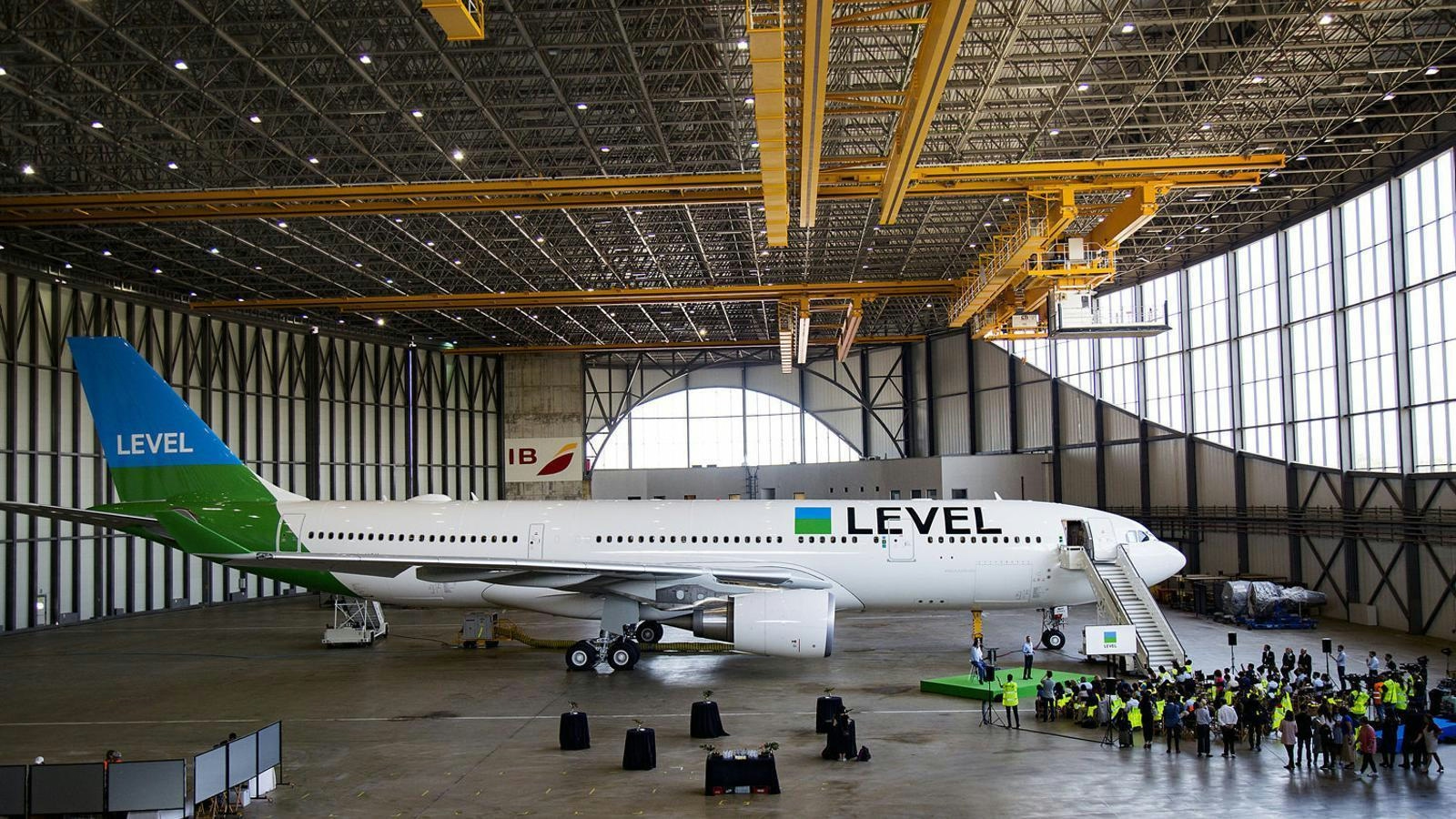
LEVEL Suspends San Francisco Flights Due to Engine Shortage

LEVEL Suspends San Francisco Flights Amid Engine Shortage and Industry Challenges LEVEL, the long-haul, low-cost carrier under the International Airlines Group (IAG), has announced the suspension of its seasonal flights between Barcelona and San Francisco. This decision stems from an ongoing shortage of engines affecting its Airbus A330 fleet, which has imposed significant operational constraints as the airline approaches the peak summer travel season. Operational Impact and Route Suspension LEVEL operates seven Airbus A330 aircraft, originally transferred from IAG sister airline Iberia. The suspension of the San Francisco route, initially reported by Spanish media outlet La Vanguardia, is attributed to a global shortage of aircraft engines rather than geopolitical tensions in West Asia. The airline had planned to maintain two to three weekly flights on this route through April, with the final service scheduled for April 26. From May onward, all flights to San Francisco will be halted, according to data from aviation analytics firm Cirium. LEVEL had initially intended to increase the frequency to four weekly flights this season but was compelled to revise these plans due to the supply chain disruptions. The airline cited the need to "guarantee a more stable operation" as the primary rationale behind the suspension, highlighting the impact of the engine supply shortage. Compounding these challenges, LEVEL’s anticipated fleet expansion with the delivery of an eighth aircraft this year has been delayed, further restricting its capacity to maintain and grow its route network. Market Implications and Industry Context The suspension of the San Francisco service is likely to create opportunities for competing carriers to capture the displaced passenger demand, potentially leading to fare adjustments and strategic repositioning on transatlantic routes. LEVEL’s decision to prioritize more established destinations reflects a broader industry trend, where airlines are compelled to adapt to persistent supply chain disruptions and evolving market conditions. Despite the suspension, data from the US Department of Transportation indicates that LEVEL’s San Francisco flights achieved strong load factors last year, averaging 89%, second only to its New York-JFK service. However, high load factors do not necessarily equate to profitability, and the airline’s move suggests a strategic focus on routes with more consistent financial performance. Since the end of the COVID-19 pandemic, LEVEL has experienced rapid growth, with year-on-year increases of 25% in 2024 and 11% projected for 2025. Nevertheless, growth is expected to slow to just 2% in 2026 due to the delayed fleet expansion. The airline continues to broaden its network, recently announcing new services to Lima, Peru. Broader Industry Pressures LEVEL’s challenges are emblematic of wider pressures facing the aviation sector. Rising fuel costs have prompted carriers such as Scandinavian Airlines and Alaska Air Group to explore alternative fuel sourcing strategies. Additionally, the industry remains sensitive to economic and political developments, as illustrated by Delta Air Lines’ recent suspension of special services for US Congress members amid a government shutdown. The suspension of LEVEL’s San Francisco flights underscores the complex interplay of supply chain constraints, competitive dynamics, and broader industry challenges that continue to shape the global aviation landscape.
China Conducts First Flight Test of Megawatt Hydrogen Turboprop Engine

China Conducts First Flight Test of Megawatt Hydrogen Turboprop Engine

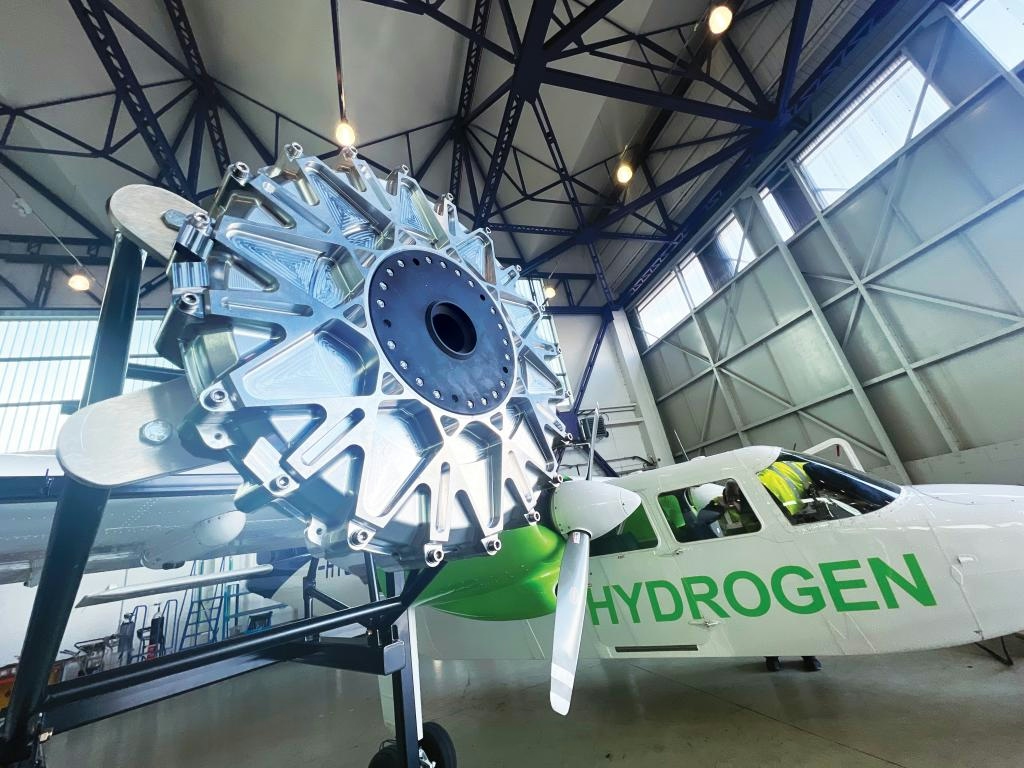
China Conducts First Flight Test of Megawatt Hydrogen Turboprop Engine China has reached a pivotal milestone in sustainable aviation with the successful inaugural flight of its first megawatt-class hydrogen-fueled turboprop engine. Developed independently by the Aero Engine Corporation of China (AECC), the AEP100 engine powered a 7.5-tonne unmanned cargo aircraft during a 16-minute test flight conducted in Zhuzhou, central China, according to state media reports. Details of the Flight Test During the test, the aircraft covered a distance of 36 kilometers at a cruising speed of 220 km/h while maintaining an altitude of 300 meters. Engineers overseeing the operation confirmed that the hydrogen engine performed smoothly throughout the flight, executing all planned maneuvers before the aircraft returned safely to base. This demonstration is regarded by experts as the world’s first successful flight of a megawatt-class hydrogen turboprop engine, underscoring China’s advancements in integrating hydrogen propulsion technology into practical aviation applications. Project leaders emphasize that this achievement establishes a comprehensive technological framework for hydrogen aviation engines within China, encompassing everything from critical components to full system integration. This development positions China as a potential frontrunner in the global effort to decarbonize aviation, a sector widely recognized as one of the most difficult to transition away from fossil fuels. Strategic and Economic Implications The breakthrough coincides with a continued decline in the cost of green hydrogen production, enhancing the economic and strategic viability of hydrogen-powered aviation. Hydrogen engines promise improved energy security by reducing reliance on conventional aviation fuels and diversifying supply chains. Initial deployment is expected to focus on low-altitude, unmanned cargo transport and logistics operations in remote or island regions, with prospects for future expansion into regional and potentially commercial passenger aviation. Beyond aviation, this development is anticipated to stimulate growth across related sectors, including hydrogen production, storage, transportation, refueling infrastructure, advanced materials, and high-end manufacturing. Industry experts suggest that such progress could accelerate the transition toward a greener aviation industry and support broader objectives for sustainable economic development. Global Competition and Ongoing Challenges China’s advancement emerges amid intensifying international competition in hydrogen aviation technology. Leading aerospace companies such as Airbus are advancing their own hydrogen propulsion initiatives, including the ZEROe hydrogen fuel cell aircraft concept, while Germany has increased funding for hydrogen propulsion systems. Additionally, firms like ZeroAvia are actively working to commercialize hydrogen-powered aircraft, reflecting a global shift toward sustainable aviation solutions. Despite the successful test, significant challenges remain. Scaling hydrogen fuel systems for larger aircraft, navigating complex regulatory approval processes, and meeting stringent certification standards present formidable obstacles. Established aerospace manufacturers are also expected to accelerate their hydrogen initiatives in response to China’s progress, potentially reshaping the competitive landscape. Market reactions to China’s breakthrough may include heightened interest in sustainable aviation fuels and increased investment in hydrogen technologies worldwide. While commercial hydrogen-powered flight remains in development, this achievement marks a substantial step forward in advancing cleaner and more sustainable aviation technologies.
Oklahoma’s Aerospace Industry Expands and Its Impact on the State Economy
Oklahoma’s Aerospace Industry Expands and Its Impact on the State Economy

Oklahoma’s Aerospace Industry Expands and Its Impact on the State Economy A Growing Economic Powerhouse Oklahoma’s aerospace industry has emerged as a critical driver of the state’s economic diversification, now ranking as the second-largest industry after oil and gas, surpassing agriculture. During Aerospace Week, state officials highlighted the sector’s expanding influence, emphasizing its role in positioning Oklahoma as a national leader in aviation and space development. Grayson Ardies, executive director of the Oklahoma Department of Aerospace and Aeronautics, noted that the industry contributes daily to broadening the state’s economic base. Industry Milestones and Community Engagement The recent Aerospace Day event at the Oklahoma State Capitol drew over 1,500 attendees, showcasing the industry’s significant contributions to workforce development, innovation, and economic growth. The gathering underscored the expanding opportunities the aerospace sector offers to Oklahomans, reflecting a deep-rooted legacy that dates back to aviation pioneers such as Wiley Post and astronaut Thomas Stafford. Oklahoma continues to maintain one of the highest numbers of astronauts per capita and remains actively involved in contemporary space exploration efforts. Local companies like Frontier Electronic Systems are playing a pivotal role in NASA’s Artemis II mission, the agency’s first crewed lunar mission in decades. The mission has generated considerable excitement across the state, with communities organizing watch parties and other engagement activities to celebrate this milestone in space exploration. Infrastructure and Future Prospects Central to Oklahoma’s aerospace ambitions is the Oklahoma Air and Space Port, located in western Oklahoma. Originally established as a World War II naval air station and later serving as a Strategic Air Command base, the facility was repurposed as a spaceport in the early 2000s. Recent legislative reforms have brought the Oklahoma Space Industry Development Authority under the Department of Aerospace and Aeronautics, streamlining oversight of space-related initiatives. The spaceport remains fully operational, supporting ongoing aviation activities including maintenance and repair. State officials anticipate that a New Zealand-based company will commence suborbital launches from the site as early as 2027, with the possibility of the first spaceflight occurring as soon as next year. This development signals a significant step forward in Oklahoma’s role within the commercial spaceflight sector. Maintenance, Repair, and Overhaul: The Industry’s Foundation Maintenance, repair, and overhaul (MRO) operations continue to serve as the backbone of Oklahoma’s aerospace industry. The state is internationally recognized for its MRO capabilities, which support both commercial and military aviation sectors. Major employers such as American Airlines in Tulsa exemplify the critical importance of MRO activities to the state’s aerospace economy, providing stable employment and technical expertise. Challenges Amid Expansion Despite the industry’s robust growth and positive market reception, Oklahoma faces several challenges. The demand for a skilled workforce is intensifying, making talent acquisition and retention a top priority for sustaining expansion. Additionally, the state must navigate increasing competition from other regions that are also investing heavily in aerospace development. Regulatory complexities at both the federal and state levels further complicate the industry’s trajectory. State leaders and industry stakeholders remain committed to addressing these challenges to ensure that Oklahoma’s aerospace sector continues to be a catalyst for economic growth and innovation in the years ahead.
Archer Aviation Confronts Setbacks Amid Declining Air Taxi Interest

Archer Aviation Confronts Setbacks Amid Declining Air Taxi Interest

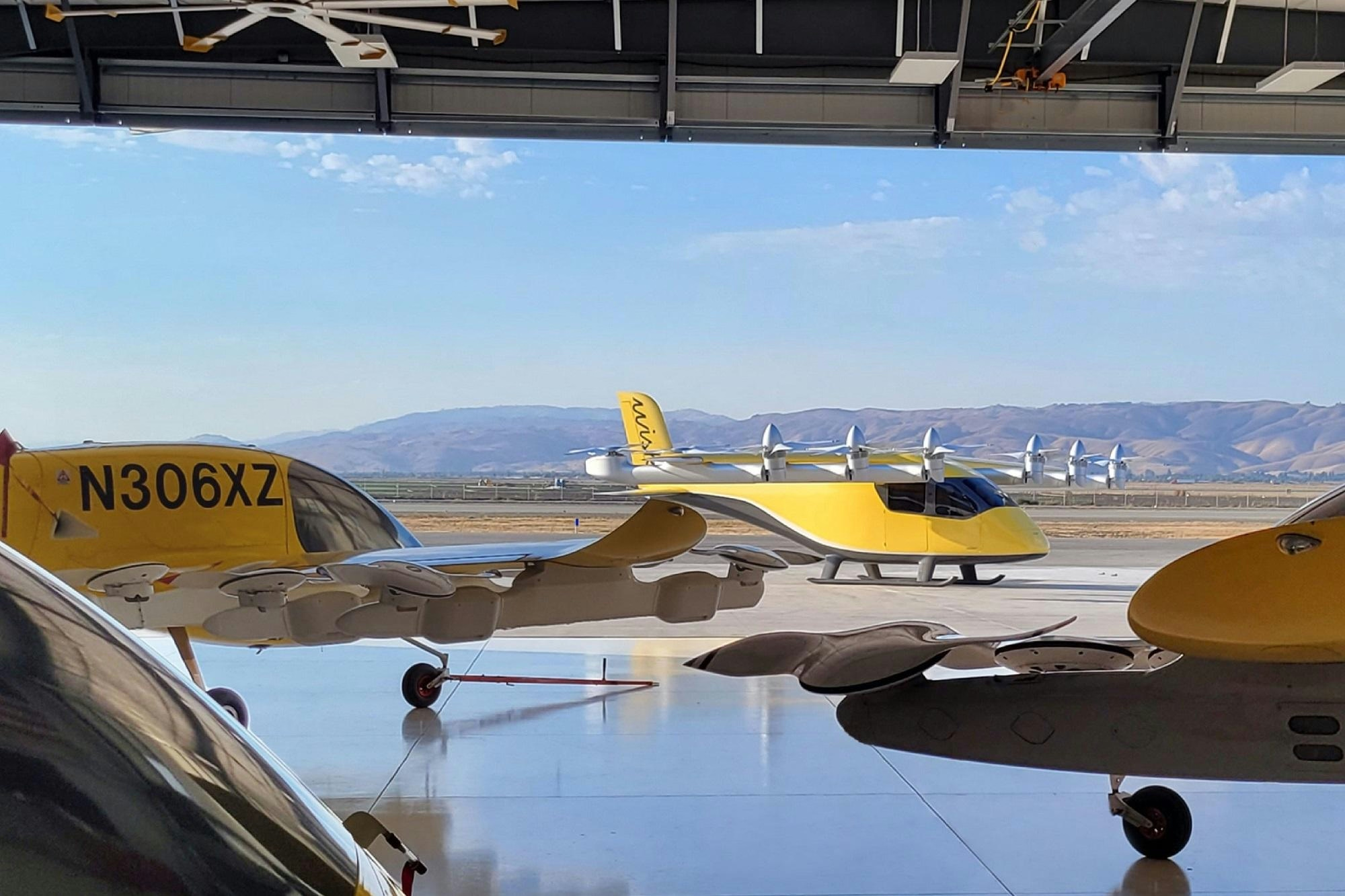
Archer Aviation Confronts Setbacks Amid Declining Air Taxi Interest Financial Challenges and Market Uncertainty Archer Aviation, once heralded as a leading innovator in the electric air taxi sector, is now facing significant obstacles as investor enthusiasm for the industry wanes. The company’s stock has fallen sharply, declining 62% from its peak in 2025, reflecting growing skepticism toward high-risk, pre-revenue technology ventures. Despite achieving full compliance with Federal Aviation Administration (FAA) requirements for its Midnight aircraft, Archer remains pre-revenue and continues to incur substantial losses. In 2025 alone, the company reported an operating loss of $729 million and has resorted to diluting shareholder equity to maintain its operations. While Archer is actively pursuing the launch of air taxi networks in key urban markets such as New York, Florida, and Texas, the timeline and ultimate viability of these initiatives remain uncertain amid the challenging financial landscape. Industry Risks and Legal Disputes The air taxi industry is widely regarded as a potential disruptor of urban transportation, yet it remains fraught with considerable risk. Archer’s ongoing cash burn and absence of revenue highlight the difficulties faced by startups attempting to commercialize advanced aviation technologies. These struggles mirror broader challenges within the sector, as investor sentiment shifts away from speculative and capital-intensive enterprises. Adding to Archer’s operational and financial pressures is a prominent legal dispute with rival Joby Aviation. Archer has filed a counterclaim accusing Joby of fraud, alleging that Joby concealed ties to Chinese entities in order to secure U.S. government contracts. This legal confrontation threatens to divert critical resources and management focus away from Archer’s core mission of developing and deploying air taxis. The dispute has the potential to weaken Archer’s market position and further erode investor confidence. Market reactions to the lawsuit have been mixed; some investors express concern that the legal battle may distract from Archer’s primary business objectives, while others view the action as a necessary defense of the company’s interests. The case has also intensified scrutiny of Joby’s operations, potentially influencing investor sentiment toward both companies. Outlook and Future Prospects Archer Aviation remains committed to advancing its regulatory efforts and launching air taxi networks in New York, Florida, and Texas. However, the company’s future is clouded by ongoing financial losses, shareholder dilution, and the distractions posed by its legal dispute with Joby. The resolution of these regulatory and legal challenges will be critical in shaping Archer’s trajectory within the evolving air taxi market.
FAA and EASA Mandates to Influence Flight Line Testing Equipment Market Through 2035
FAA and EASA Mandates to Influence Flight Line Testing Equipment Market Through 2035

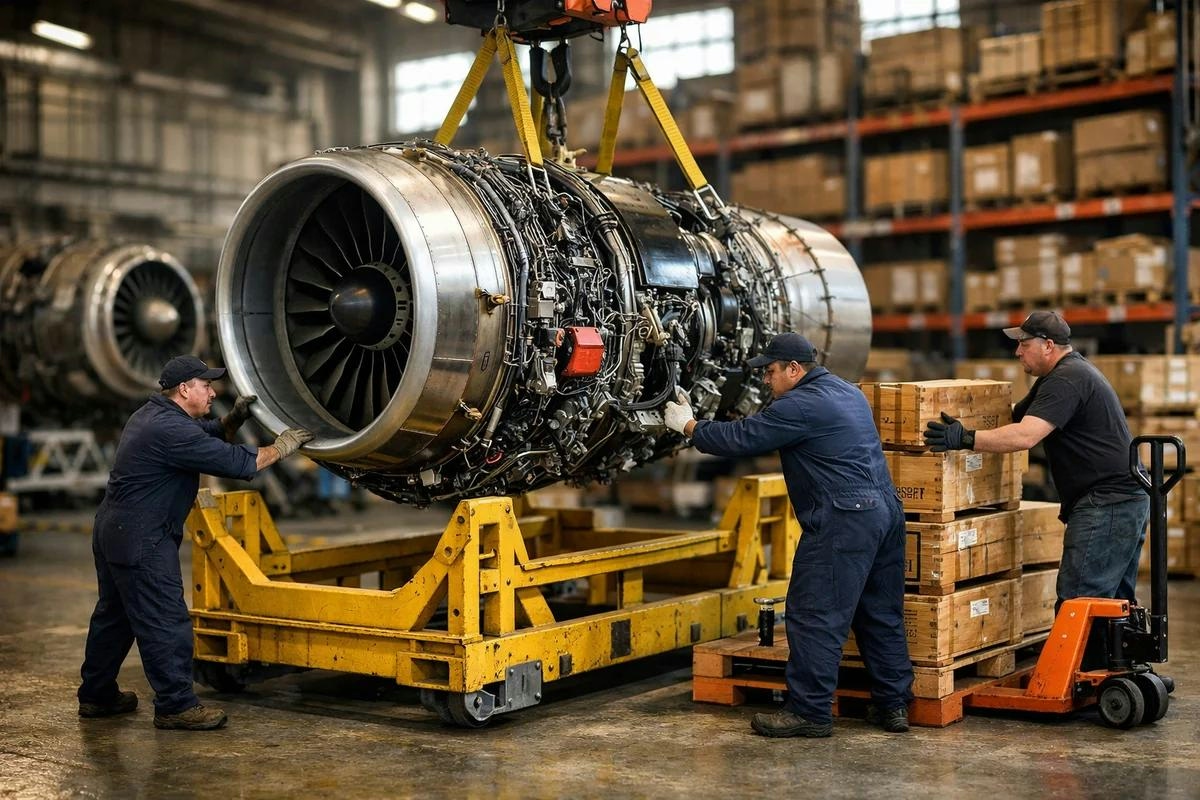
FAA and EASA Mandates to Influence Flight Line Testing Equipment Market Through 2035 The global Flight Line Testing Equipment market is poised for significant transformation through 2035, driven by a recovering commercial aviation sector, accelerating military modernization, and increasingly stringent regulatory mandates from the Federal Aviation Administration (FAA) and the European Union Aviation Safety Agency (EASA). As the industry moves into 2026, demand fundamentals are broadening, procurement practices are becoming more disciplined, and supply chains are diversifying on a regional basis. Market Evolution and Regulatory Impact The market is shifting from a traditional hardware-centric model toward an integrated, data-driven service paradigm. This transition is fueled by the imperative to maintain operational readiness and reduce aircraft turnaround times amid projections that global air traffic will surpass pre-pandemic levels and continue to grow. The sector is bifurcating into two primary segments: a high-volume market for standardized, cost-effective test sets that support frequent maintenance, repair, and overhaul (MRO) operations, and a premium segment focused on advanced, connected diagnostic systems designed for next-generation aircraft. Regulatory pressures from the FAA and EASA are emerging as persistent demand drivers. New mandates requiring enhanced testing protocols compel manufacturers and operators to upgrade existing equipment, resulting in increased compliance costs and necessitating significant technological adaptation. While these requirements are expected to stimulate demand for advanced testing solutions, they also introduce challenges related to budget constraints and the pace of innovation. In response, equipment suppliers are intensifying competition by accelerating innovation, investing in advanced testing technologies, and exploring collaborative approaches to share compliance burdens. Airlines and third-party MRO providers, facing cost pressures, are consolidating purchasing power through procurement consortia, further steering the market toward efficient and cost-effective solutions. Growth Drivers and Market Challenges The forecast period is expected to be characterized by steady, technology-driven growth anchored in global fleet expansion and heightened maintenance intensity. Commercial aviation, the largest segment, will see demand closely linked to the growth of narrow-body fleets and the retirement of older, less efficient aircraft, which require more frequent and complex testing. Military aviation demand will be shaped by specific modernization programs and the integration of sophisticated avionics, necessitating specialized testing equipment. A notable trend is the increasing digitization of maintenance processes, which elevates the importance of testing equipment capable of seamless integration with airline health monitoring systems. This development creates a premium for connectivity and software capabilities, even as demand persists for reliable, portable test sets that fulfill basic operational requirements. However, the market faces significant constraints. Compliance with evolving FAA and EASA mandates raises costs for both manufacturers and operators, while supply chain resilience and the availability of skilled technicians remain critical challenges. The baseline forecast assumes no major global economic disruptions and anticipates a gradual resolution of supply chain bottlenecks affecting critical electronic components. Profit pools are expected to shift gradually from pure hardware sales toward integrated service contracts that encompass calibration, software updates, and technical support. The market’s trajectory will not be uniform, with regional divergence and sector-specific cycles influencing growth patterns. In conclusion, the Flight Line Testing Equipment market is set for disciplined, innovation-driven growth through 2035, as regulatory mandates, technological advancement, and evolving procurement strategies collectively redefine the competitive landscape.
Willis Lease Operates as a Leveraged Spread Business with Moderate Returns

Willis Lease Operates as a Leveraged Spread Business with Moderate Returns

Willis Lease Operates as a Leveraged Spread Business with Moderate Returns Market Valuation and Financial Metrics Willis Lease Finance is currently valued by the market through a lens of low multiples and high leverage, reflecting cautious investor sentiment despite clear signs of portfolio expansion and improving utilization projected for 2025. The company’s enterprise value metrics reveal depressed multiples relative to its asset base and earnings potential. Most recent figures show an Enterprise Value to EBITDA (EV/EBITDA) ratio near 8.8, which is notably lower than those of its peers in the leasing and aviation services sectors. Similarly, the Enterprise Value to Revenue (EV/Revenue) ratio stands at approximately 5.2. While profit margin indicators confirm positive earnings conversion from revenue, the market appears to anticipate limited multiple expansion from current levels. Operational Performance and Portfolio Growth For the quarter ending March 31, 2025, Willis Lease reported revenue of approximately $157.7 million, marking a robust 33% increase year-over-year. This growth underscores strong momentum in its core engine leasing business. The expansion of the company’s engine portfolio remains a critical driver of cash flow potential, with the total owned engine portfolio reaching about $2.82 billion, an increase from previous periods. Engine utilization also improved significantly to 86.4%, up from below 80% a year earlier. This higher utilization rate directly supports increased lease rental income and maintenance revenue, enhancing overall cash flow. Leverage and Credit Profile Despite these operational improvements, Willis Lease’s credit profile is characterized by substantial leverage. Independent analyses indicate that the company’s net debt to EBITDA ratio exceeds 9, well above typical corporate averages. This high leverage suggests that a significant portion of the enterprise value is financed through fixed obligations rather than equity, requiring earnings to cover both interest and principal payments. Although Willis Lease demonstrates strong cash conversion—generating more than $2.50 in operating cash for every dollar of reported earnings—its interest coverage remains narrow. Operating income only modestly exceeds interest expenses, leaving the company vulnerable to earnings volatility that could materially affect its debt servicing capacity. Recent Operational Developments Disclosures from the third quarter of 2025 highlight continued operational progress. Lease rent revenue increased nearly 18% year-over-year, driven by portfolio growth and improved utilization. Maintenance income experienced a sharp rise, climbing from $1.2 million in 2024 to $29.5 million in the same period of 2025. This surge reflects the growing contribution of maintenance reserves and end-of-lease activities to the company’s cash flow. Market Sentiment and Broader Industry Context Despite these positive developments, market valuation multiples suggest skepticism regarding the sustainability of long-term cash flow growth. Investors appear to discount the durability of lease income, anticipating that earnings and utilization rates may revert to historical lows rather than remain elevated. This cautious outlook is compounded by broader market dynamics. As a leveraged spread business, Willis Lease faces challenges amid ongoing volatility in the US leveraged loan market, which recorded a 0.49% loss year-to-date in the first quarter of 2026. This downturn, influenced by weakness in the software sector and a general risk-off sentiment, has driven investors toward safer assets, complicating the transition from repricing to merger and acquisition-driven issuance. Competitors are adjusting capital allocation and underwriting strategies to navigate this fragile risk environment and the disruptive impact of AI-driven changes. Current Market Positioning Willis Lease currently trades near $203 per share, with a market capitalization of approximately $1.56 billion. This valuation is close to the upper end of its 52-week trading range of $114 to $211, dispelling any notion of distressed equity pricing. The stock has been significantly re-rated from its annual low, yet even at this 12-month high, valuation multiples remain subdued. This reflects persistent market caution regarding the company’s leveraged business model and the uncertain outlook within the broader industry.
Chinese Team Develops First Flight Control Software for Bamboo Drones
Chinese Team Develops First Flight Control Software for Bamboo Drones

Chinese Researchers Develop First Flight Control Software for Bamboo Drones A team at Northwestern Polytechnical University’s School of Civil Aviation in China has announced the creation of what they describe as the world’s first open-source flight control system specifically designed for bamboo-frame drones. This development represents a significant stride toward producing low-cost, environmentally sustainable unmanned aerial vehicles (UAVs), addressing the technical challenges associated with integrating natural materials like bamboo into high-performance drone frameworks. Engineering Innovations for Bamboo-Based UAVs Traditional UAVs typically utilize composite materials, but bamboo airframes introduce distinct engineering complexities. The natural structure of bamboo generates low-frequency vibrations, generally between 8 and 20 hertz, which conventional flight controllers are not equipped to handle effectively. The research team detailed in a paper published on February 28 in the journal *Heilongjiang Science* that existing commercial flight controllers tend to be either closed-source and inflexible or open-source but inadequately adapted to meet local development requirements. These limitations have impeded the wider industrial adoption of bamboo-based drones. To address these issues, the researchers engineered a bespoke flight control board featuring an industrial-grade chip and a dual inertial measurement unit system. Crucially, they redesigned the control algorithms to accommodate the unique structural properties of bamboo. By refining an extended Kalman filter and exploiting bamboo’s natural vibration-damping qualities, the new system reduces control latency from 15–20 milliseconds to approximately 8–10 milliseconds. This improvement significantly enhances the drone’s responsiveness and stability during flight. Geopolitical Context and Security Concerns The introduction of this bamboo drone flight control system occurs amid intensified global scrutiny regarding the security implications of Chinese drone technology. The extensive deployment of Chinese-manufactured drones in both civilian and military spheres has raised concerns about data privacy and potential cybersecurity risks. Recent events, including the strategic vulnerabilities exposed by Chinese drones in Israel, have heightened these apprehensions. In response, several nations are reassessing their procurement policies. The United States, for instance, is considering legislation such as the American Security Robotics Act, which aims to restrict federal acquisitions of drones from companies linked to the Chinese military. Concurrently, international competitors are accelerating the development of more secure and autonomous flight control technologies. Notably, Mitsubishi Heavy Industries and Shield AI have recently demonstrated the successful integration of advanced autonomy software in Japan, signaling a broader shift toward domestically controlled UAV systems. China’s advancement in bamboo drone flight control technology thus underscores both the promise of sustainable innovation and the complex geopolitical dynamics influencing the future of unmanned aerial vehicles. The intersection of technological progress and security considerations is poised to shape not only the adoption of bamboo-based drones but also the overall direction of the global drone industry.
Government Moves Forward with Boeing Purchase, Considers Airbus Leasing

Government Moves Forward with Boeing Purchase, Considers Airbus Leasing

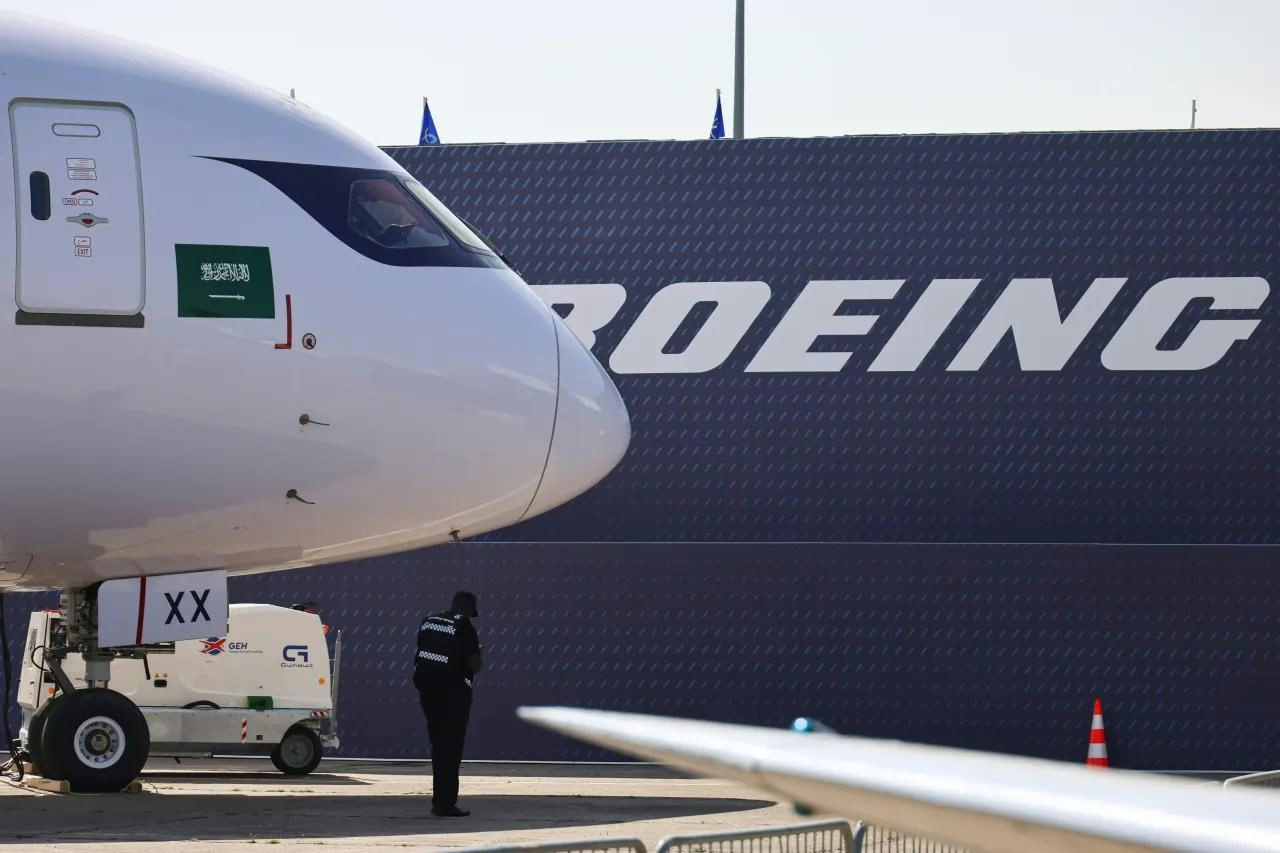
Government Advances Boeing Purchase, Weighs Airbus Leasing Amid Industry Challenges The government is progressing toward finalizing the purchase of 14 Boeing aircraft for Biman Bangladesh Airlines, while simultaneously considering leasing Airbus planes to address immediate fleet requirements during a projected five-year delivery interval. This dual approach forms part of a comprehensive strategy to modernize Biman’s fleet and expand its operational capacity in response to growing passenger demand. Boeing Acquisition and Strategic Considerations State Minister for Civil Aviation and Tourism M Rashiduzzaman Millat confirmed that the interim government has granted in-principle approval for the Boeing acquisition, with only the formal signing of the agreement remaining. He emphasized that the procurement, valued at approximately $3.7 billion, includes a combination of Boeing 787 Dreamliners and 737 MAX aircraft. This mix is intended to enhance both long-haul and regional route capabilities over the coming decade. Millat also noted that purchasing from the United States could contribute to narrowing the trade imbalance between Dhaka and Washington. However, the minister acknowledged that the incoming government may undertake a review of the Boeing offer prior to finalizing the deal. Given the anticipated delivery timeline of up to five years, the government is exploring interim leasing options to maintain operational continuity. Interim Leasing and Industry Challenges To bridge the gap before Boeing deliveries commence, the government is considering leasing aircraft, preferably through dry leasing arrangements, primarily from Airbus. This strategy not only ensures uninterrupted service but also reflects a deliberate effort to diversify Biman’s fleet composition. Nonetheless, Airbus is currently confronting significant industry challenges. The European manufacturer has experienced delivery delays compared to the previous year and has yet to secure substantial widebody orders in 2026. These difficulties are exacerbated by ongoing insider trading investigations and a contentious European space merger involving Airbus, Leonardo, and Thales, which has met resistance from local competitors. Such factors may affect aircraft availability and influence the dynamics of future negotiations. Fleet Expansion and Organizational Reforms At present, Biman operates approximately 14 aircraft on international routes, a figure considerably below the estimated requirement of 30 to 35 planes necessary to meet rising passenger demand and support planned network expansion. The government’s combined approach of long-term acquisition and short-term leasing aims to stabilize operations and establish a foundation for sustained growth. In addition to fleet modernization, Millat highlighted ongoing reforms within Biman, including comprehensive reviews of operational structures to address inefficiencies and improve passenger services. Recruitment efforts are underway to fill critical manpower gaps and strengthen the airline’s organizational framework. Regarding Hajj operations, the minister assured that preparations are complete, with necessary staff deployed to ensure smooth and uninterrupted flights for pilgrims. The government’s overarching objective remains to transform Biman into an international-standard airline through structural reforms, fleet expansion, and enhanced service quality, despite the evolving challenges in the global aerospace sector.
Changes in Airline Industry Leadership, Alliances, and AI

Changes in Airline Industry Leadership, Alliances, and AI

Changes in Airline Industry Leadership, Alliances, and AI The airline industry is undergoing a profound transformation characterized by shifts in leadership, the restructuring of alliances, and the accelerated adoption of artificial intelligence (AI). These developments are fundamentally altering operational strategies, competitive dynamics, and the overall experience for travelers worldwide. Leadership Transitions and Strategic Shifts In recent months, several leading airlines have appointed new chief executives, signaling a strategic realignment aimed at addressing evolving market demands. These leadership changes prioritize sustainability initiatives, the enhancement of customer experience, and the rapid integration of technological innovations. However, such transitions are not without challenges. Workforce adjustments and supply chain disruptions have emerged as significant concerns, exemplified by layoffs at companies like Supernal, which underscore the broader industry difficulties in workforce development and training. Investor confidence and business strategies have also been affected, reflecting the market’s response to these leadership shifts as airlines strive to maintain stability and foster growth. Alliance Restructuring and Market Competition Airline alliances are being reevaluated and restructured as carriers seek to optimize route networks and improve service offerings. By realigning partnerships, airlines aim to expand their global reach, offer more competitive pricing, and provide passengers with more seamless travel experiences. These strategic realignments are critical for preserving market share amid changing consumer preferences. In response, competitors are forging new partnerships and investing in innovative solutions, intensifying the competition for connectivity and customer loyalty across the industry. The Growing Role of Artificial Intelligence Artificial intelligence is increasingly central to airline operations, with applications spanning customer service, flight management, predictive maintenance, and fuel optimization. Airlines are deploying AI-driven chatbots and virtual assistants to streamline customer interactions, enabling faster and more personalized service. While AI promises enhanced efficiency and cost savings, it also presents challenges related to workforce adaptation. The expanding reliance on AI is reshaping job requirements, particularly in areas such as data analysis, cybersecurity, and AI development, compelling both the industry and its workforce to acquire new skills and adjust to evolving roles. Implications for Travelers For passengers, these industry changes offer both opportunities and uncertainties. Leadership transitions may lead to improved services and more sustainable travel options, while alliance restructuring can provide more convenient and cost-effective routes. The integration of AI is expected to enhance customer service and create smoother, more personalized travel experiences. Nonetheless, ongoing workforce and operational adjustments may result in transitional periods as airlines implement new strategies and technologies. --- *Disclaimer: Travel information and restrictions are subject to change based on operational conditions. Travelers are advised to verify details with official sources before planning their trips.*
line