
AeroGenie — Il tuo copilota intelligente.

Tendenze
Categories
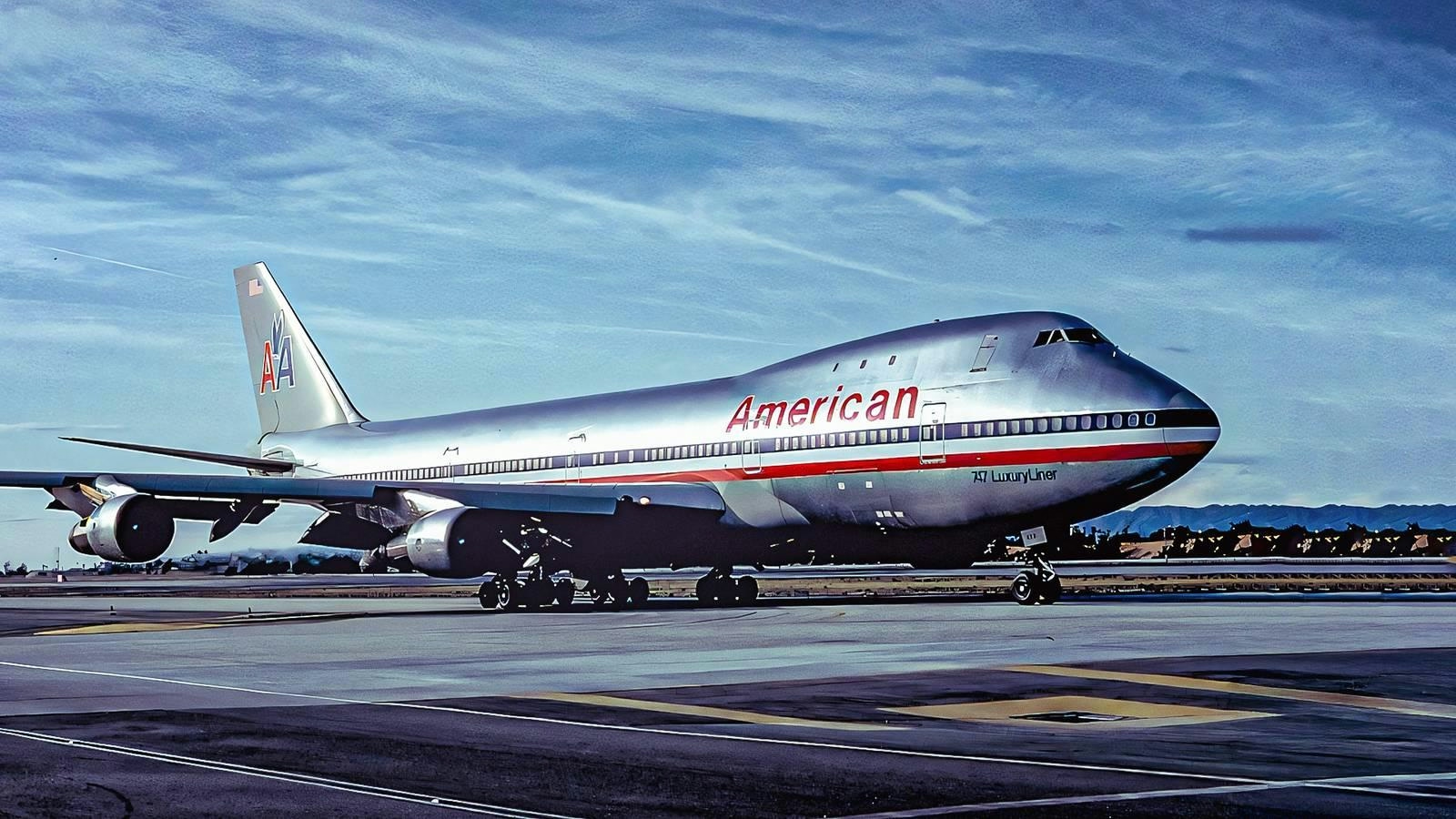
The History of American Airlines' Boeing 747 Operations
The History of American Airlines' Boeing 747 Operations
By the mid-1980s, the Boeing 747 had become the dominant aircraft for transatlantic flights, accounting for 60% of all U.S. airline crossings between the United States and Europe. Revered as the “Queen of the Skies,” the 747 revolutionized long-haul air travel by enabling airlines to carry hundreds of passengers per flight, thereby reducing costs and enhancing global connectivity. Although American Airlines operated a smaller 747 fleet compared to Pan Am and United Airlines, it strategically deployed the jumbo jet on its most vital transpacific and transatlantic routes, underscoring the aircraft’s importance in its international operations.
American Airlines’ Entry into the Jumbo Jet Era
American Airlines entered the 747 market shortly after the initial adopters such as Pan Am. In early 1970, the airline leased two early 747s from Pan Am, which facilitated the launch of its first branded 747 service, known as the “Astroliner,” on March 2, 1970. Later that year, American placed an order for sixteen Boeing 747s, significantly expanding its route network and enhancing passenger experience with the spacious cabins and multiple service classes that widebody jets offered. This move allowed American to compete more effectively with established rivals including Pan Am, TWA, and United Airlines.
The early adoption of the 747 enabled American Airlines to increase passenger capacity and improve cost efficiency on high-demand international routes. This strategic investment laid the foundation for nearly two decades of 747 operations, during which the aircraft became a central component of the airline’s long-haul strategy.
Operational Challenges and Competitive Pressures
Despite the advantages offered by the 747, American Airlines encountered considerable operational challenges. Gate allocation at major hubs such as Chicago O’Hare became a contentious issue, with internal communications from the period revealing frustrations over competitors—particularly United Airlines—saturating key airports to limit American’s gate access. These competitive tactics forced American to continuously adjust its gate assignments and operational strategies to maintain efficiency and service reliability.
In addition to logistical hurdles, American faced scrutiny over its internal policies, including compensation practices for passengers who were involuntarily bumped from flights. These challenges highlighted the complexities of managing large-capacity aircraft within a fiercely competitive and evolving market environment.
Fleet Evolution and Retirement
American Airlines operated its Boeing 747 fleet from 1970 through the mid-1980s, with some aircraft remaining in service into the 1990s. The fleet comprised three primary variants: the 747-100, 747-200, and the 747-SP. These aircraft were deployed on heavily trafficked domestic routes such as New York to Los Angeles, New York to San Francisco, and Dallas/Fort Worth to Honolulu, as well as on ultra-long-haul international flights.
Ultimately, a combination of operational inefficiencies, competitive pressures, and shifting market demands led American Airlines to retire its 747 fleet earlier than some of its competitors. The appointment of John DeLeeuw to the National Transportation Safety Board (NTSB) during this period reflected the increasing focus on safety oversight within the industry, indirectly influencing operational decisions related to widebody aircraft like the 747.
Lasting Impact
Although American Airlines’ tenure with the Boeing 747 was relatively brief, the aircraft played a crucial role in shaping the airline’s approach to long-haul travel and advancing commercial aviation standards. The legacy of the 747 era remains evident in American’s continued emphasis on innovation, operational efficiency, and passenger service within a highly competitive global industry.

Plane lands on Pennsylvania highway due to ‘engine issues,’ FAA says
LEVEL Suspends San Francisco Flights Due to Engine Shortage

China Conducts First Flight Test of Megawatt Hydrogen Turboprop Engine

Oklahoma’s Aerospace Industry Expands and Its Impact on the State Economy
Archer Aviation Confronts Setbacks Amid Declining Air Taxi Interest

FAA and EASA Mandates to Influence Flight Line Testing Equipment Market Through 2035
Willis Lease Operates as a Leveraged Spread Business with Moderate Returns

Chinese Team Develops First Flight Control Software for Bamboo Drones
Government Moves Forward with Boeing Purchase, Considers Airbus Leasing

Changes in Airline Industry Leadership, Alliances, and AI
