
AeroGenie — Il tuo copilota intelligente.

Tendenze
Categories
Huawei and China Eastern Airlines Advance AI Integration in Aviation
Huawei and China Eastern Airlines Advance AI Integration in Aviation
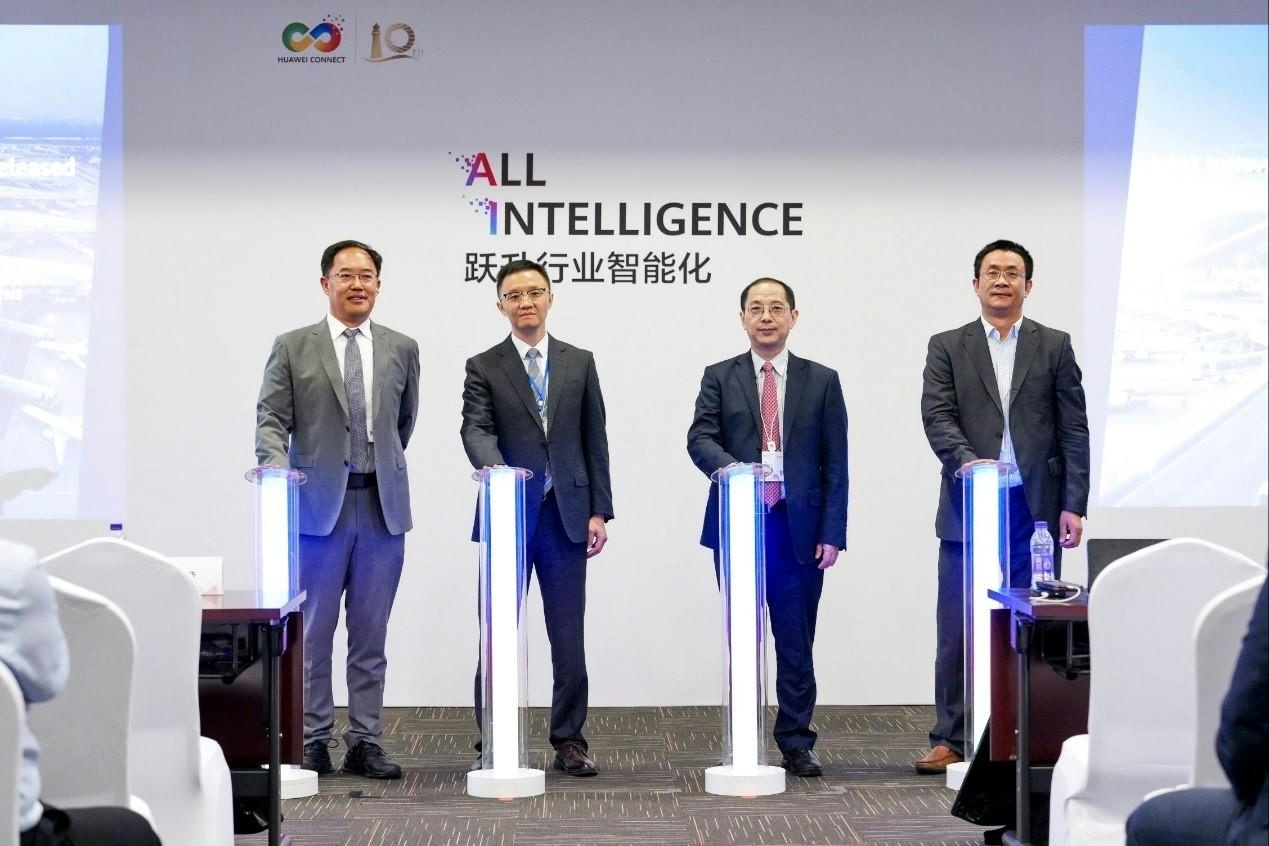
Huawei and China Eastern Airlines are spearheading efforts to integrate artificial intelligence (AI) into the aviation sector, with the goal of enhancing safety, operational efficiency, and the overall passenger experience. At the recent HUAWEI CONNECT 2025 event, the two companies, in collaboration with Xiamen Airlines, introduced scenario-specific AI models and smart aviation solutions, marking a significant milestone in the ongoing digital transformation of the industry.
Innovations in AI-Driven Aviation
The global aviation session, themed “AI Drives Joyful Air Journey,” brought together industry leaders and experts to explore the transformative potential of AI and digital technologies in aviation. Shen Surong, Chief Operating Officer of Huawei’s Smart Transportation Business Unit, underscored that AI represents more than a technological upgrade; it is a strategic initiative aimed at redefining passenger experiences and reshaping the aviation landscape. Huawei is deploying advanced AI applications across a broad spectrum of service scenarios, including airport operations, passenger services, airline management, and security control.
Li Zongling, Director of the Air Logistics Working Committee under the China Air Transport Association, highlighted a significant trend in China’s aviation market: the rapid increase in air travel demand originating from lower-tier cities. Since 2019, Tier 3 and Tier 4 cities have emerged as key contributors to new passenger traffic, surpassing growth rates in major metropolitan areas. Li emphasized that each technological breakthrough, such as AI integration, offers an opportunity to transform the industry. He expressed a strong commitment to collaborating with Huawei and its partners to implement precise and controllable AI capabilities within core civil aviation scenarios, aiming to enhance safety while improving efficiency and passenger satisfaction.
Gao Zhidong, Chairperson of Shanghai China Eastern Airlines Digital Technology, detailed the airline’s AI 2.0 initiative, which utilizes private cloud infrastructure and large AI models as its digital foundation. This initiative encompasses 227 high-value scenarios and promotes service intelligence through the collaboration of large and small AI models. Gao highlighted key advancements including digital apron construction, intelligent vehicle dispatch, flight support node detection, and scheduling optimization. These developments contribute to a coordinated, data-driven flight support system designed to improve operational coherence and responsiveness.
Global Implications and Competitive Dynamics
The rapid progress made by Huawei and China Eastern Airlines in AI integration has attracted global attention, eliciting both interest and concern among competitors and investors. As China narrows the AI gap with Western technology leaders, the strategic implications are profound. Market reactions have been mixed, with some investors expressing apprehension about the ability of technology stocks to justify substantial AI-related expenditures. Additionally, concerns about AI-driven inflation have emerged as a notable risk factor.
In response to these developments, competitors worldwide are intensifying efforts to develop more affordable and widely deployable AI systems. There is a growing focus on embedding AI into physical products targeted for export to emerging markets. This escalating competition highlights the global race to harness AI’s transformative potential not only in aviation but across multiple industries.
As Huawei and China Eastern Airlines continue to advance intelligent transformation within aviation, the industry confronts both promising opportunities and significant challenges, marking a pivotal moment in the evolution of air travel.
Chinese Team Develops First Flight Control Software for Bamboo Drones
SkyHope Appoints Aviation Industry Leader to Board
The Challenges of Certifying Autonomous Aircraft
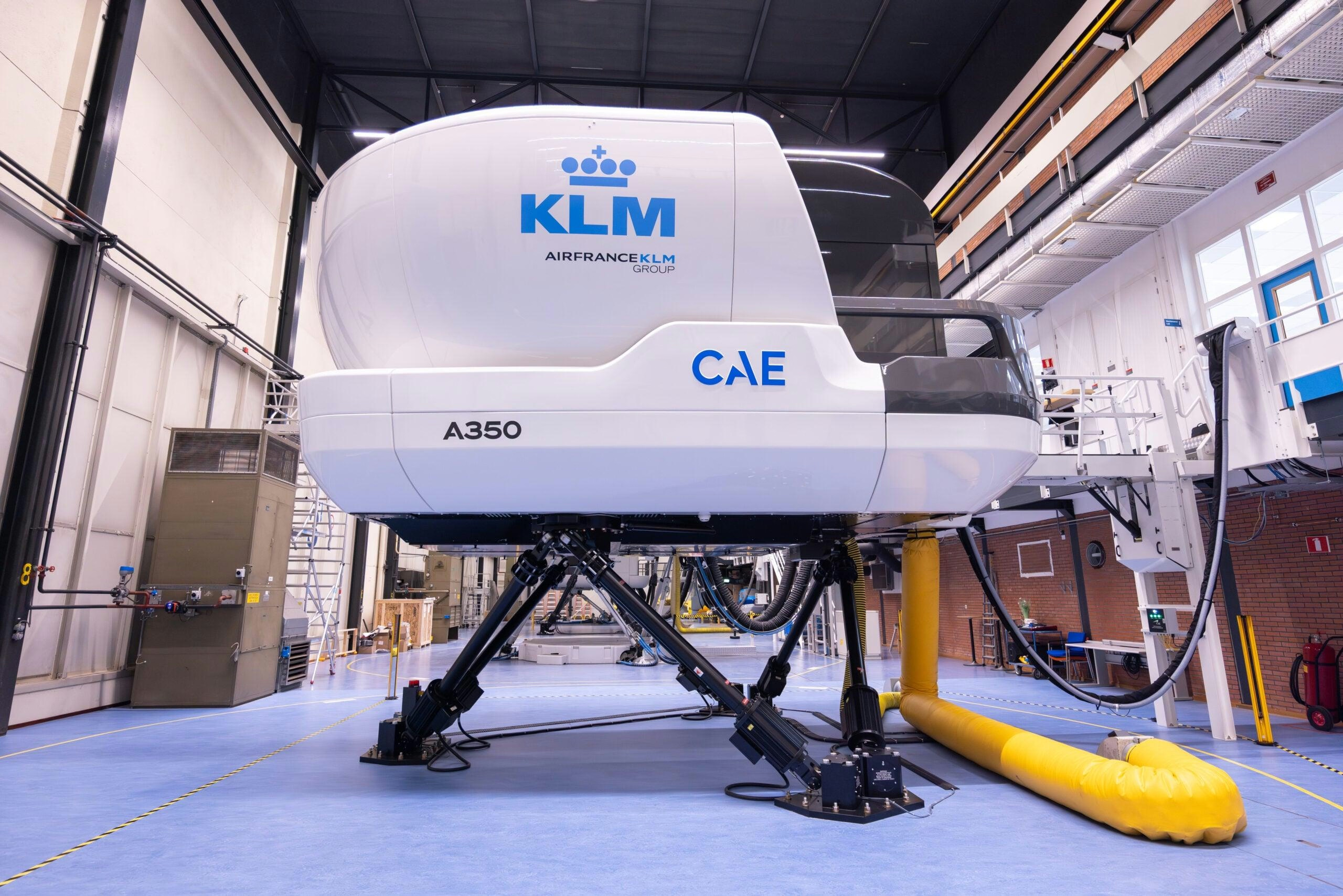
KLM to Receive First Airbus A350, Announces Initial Routes
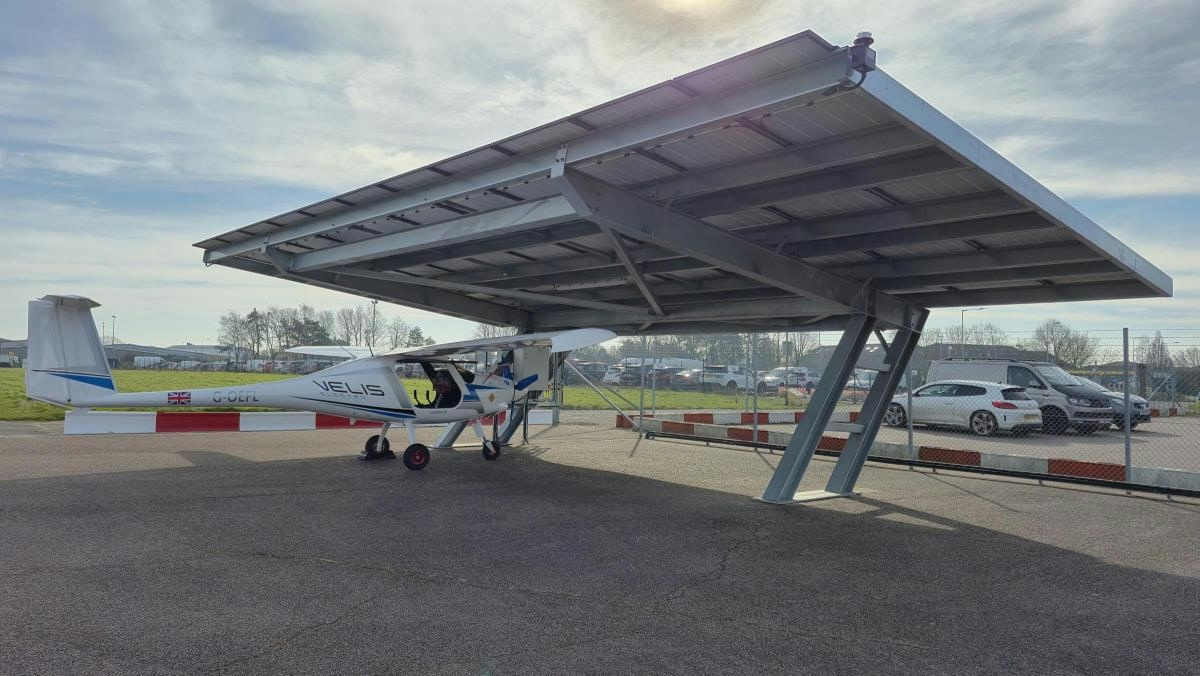
Saxon Air Receives Clean and Green Energy Innovation Award
How BEB Tax Policies Impact Airlines’ International Leasing Contracts

Indonesia’s Danantara and Mandiri Partner with SMBC to Launch $800 Million Aviation Leasing Fund
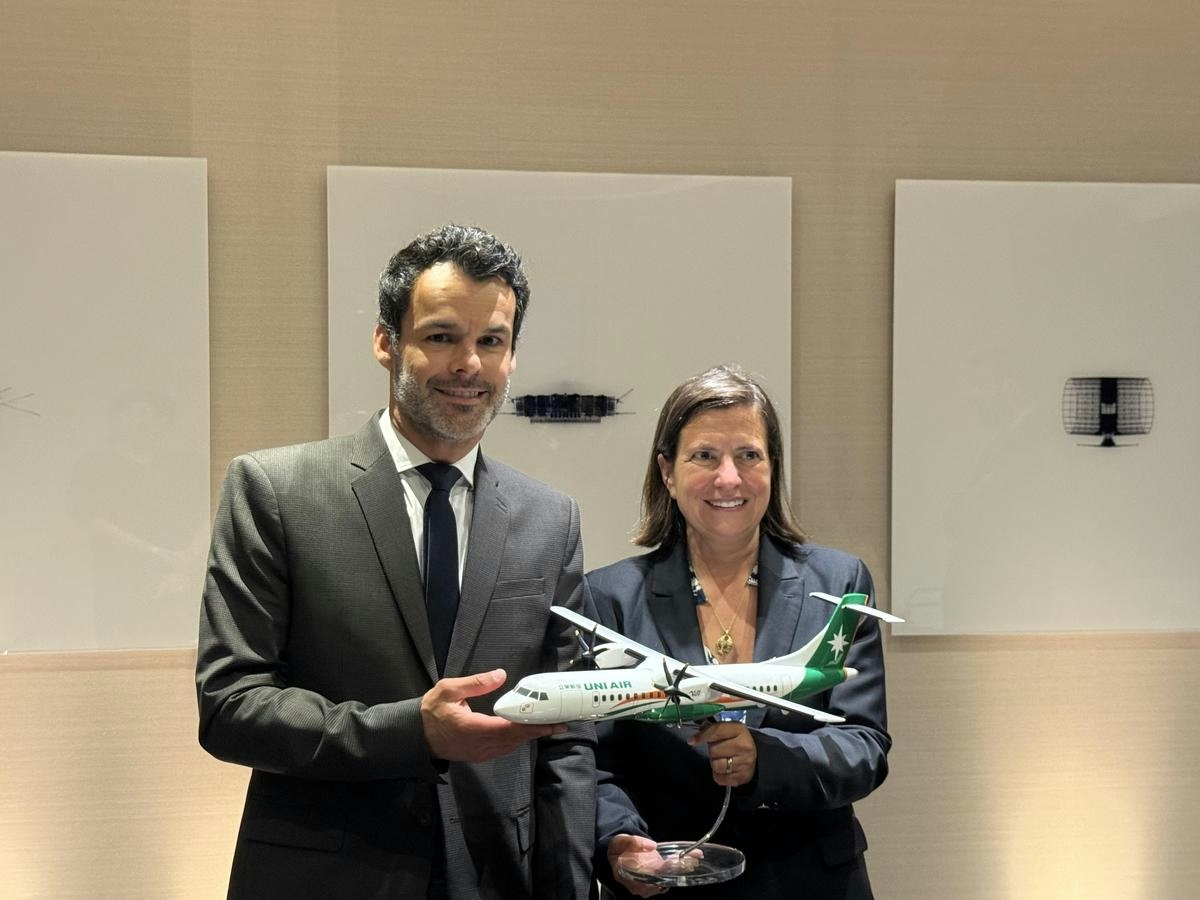
South Korea’s SUM Air Places Order for New ATR Aircraft
Benoît Rollier Named Vice President of KLM Engine Service
Azorra Expands Engine Portfolio Through Deal with DAE
