
AeroGenie — Il tuo copilota intelligente.

Tendenze
Categories
How U.S. Airlines Are Using Artificial Intelligence
How U.S. Airlines Are Integrating Artificial Intelligence
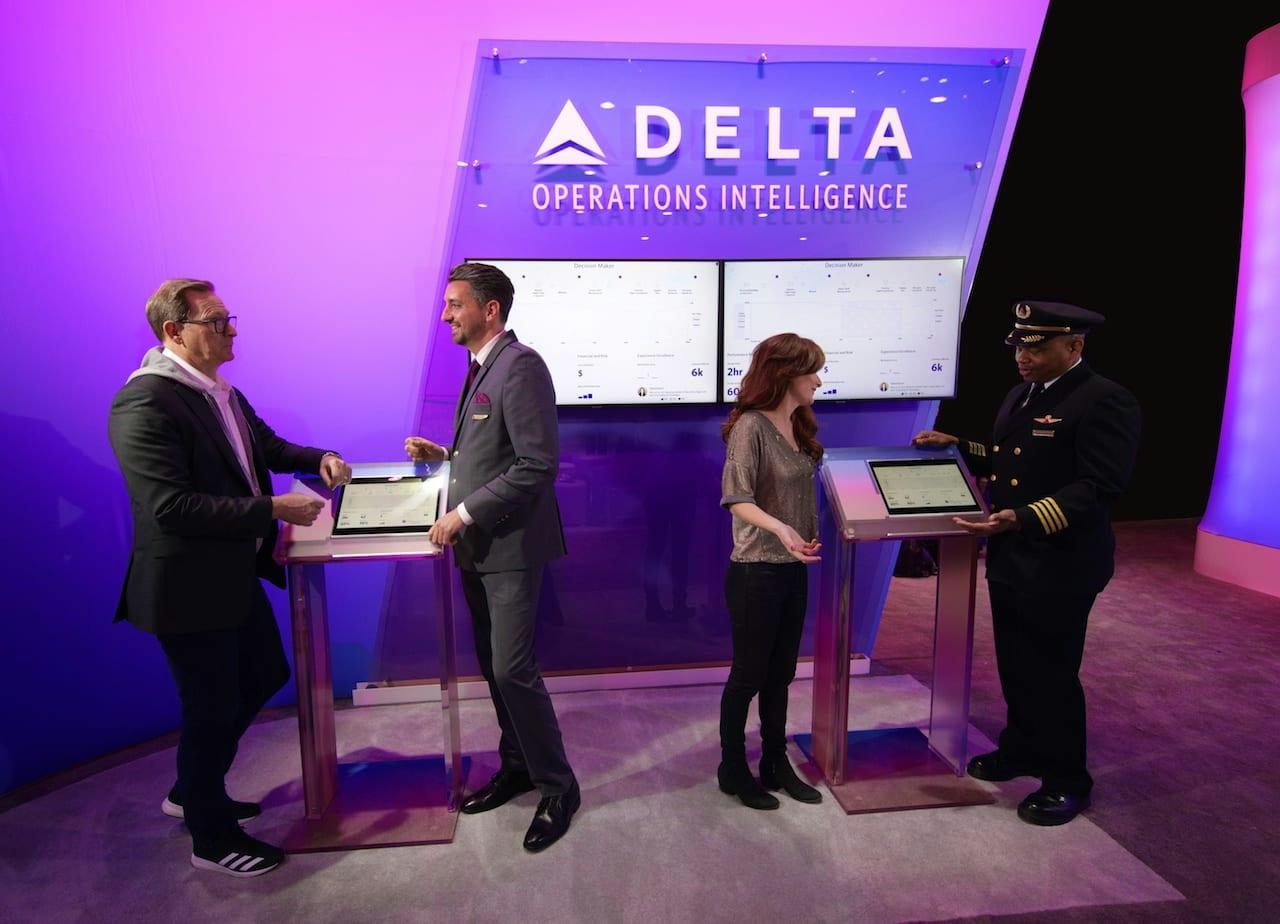
Major U.S. airlines, including Delta Air Lines, United Airlines, and Southwest Airlines, are increasingly incorporating artificial intelligence (AI) into their operations, reflecting the technology’s growing influence within the aviation sector. In their recently published 2025 annual reports, these carriers detailed a variety of AI applications spanning baggage handling, marketing, and flight operations optimization. Alongside these advancements, airlines have also acknowledged the inherent risks associated with AI, such as cybersecurity vulnerabilities and potential reputational damage.
Enhancing Operational Efficiency and Customer Experience
Delta Air Lines has employed AI to improve baggage routing, particularly for flights with tight connections, thereby enhancing on-time performance. The airline also utilizes AI to optimize maintenance schedules, aiming to reduce delays and increase reliability. Similarly, Southwest Airlines applies AI to boost operational efficiency and tailor marketing efforts, striving to deliver more personalized experiences to its customers.
United Airlines has adopted a more measured approach, linking its AI integration to workforce reductions. The carrier emphasizes both the operational benefits of AI, such as increased efficiency, and the ethical challenges it presents. United’s disclosures highlight the importance of managing AI’s impact on employment and corporate reputation with caution.
Industry Adoption and Emerging Challenges
The adoption of AI is expanding rapidly across the travel industry’s value chain, with practical applications showcased at forums like the Skift Data + AI Summit. Airlines are leveraging AI not only to enhance operational performance but also to refine marketing strategies and improve customer service.
However, this swift integration introduces significant challenges. Cybersecurity remains a primary concern, as improper AI use could expose sensitive information or harm an airline’s public image. The industry also faces a shortage of skilled personnel; only 6% of U.S. hiring managers report having adequate expertise on staff to execute critical AI projects. Furthermore, the proliferation of AI-generated job applications complicates recruitment efforts, making it increasingly difficult for airlines to identify genuinely qualified candidates.
Market Context and Broader Implications
The broader market environment is shaped by global economic uncertainties, including bond market volatility and tariff threats from the U.S. administration. Despite these challenges, sectors such as defense, which are actively integrating AI, are viewed as promising investment opportunities.
As AI becomes more deeply embedded in aviation, airlines are navigating the balance between harnessing its potential to improve efficiency and customer service and addressing the associated risks and ethical considerations. The industry’s growing transparency regarding AI use underscores both its significance and the complexities it introduces to airline operations.
Archer Aviation Confronts Setbacks Amid Declining Air Taxi Interest
Chinese Team Develops First Flight Control Software for Bamboo Drones
Government Moves Forward with Boeing Purchase, Considers Airbus Leasing
SkyHope Appoints Aviation Industry Leader to Board
The Challenges of Certifying Autonomous Aircraft
KLM to Receive First Airbus A350, Announces Initial Routes
Saxon Air Receives Clean and Green Energy Innovation Award
How BEB Tax Policies Impact Airlines’ International Leasing Contracts
Indonesia’s Danantara and Mandiri Partner with SMBC to Launch $800 Million Aviation Leasing Fund
South Korea’s SUM Air Places Order for New ATR Aircraft
